
Foundational ID and biometric binding underpin digital trust
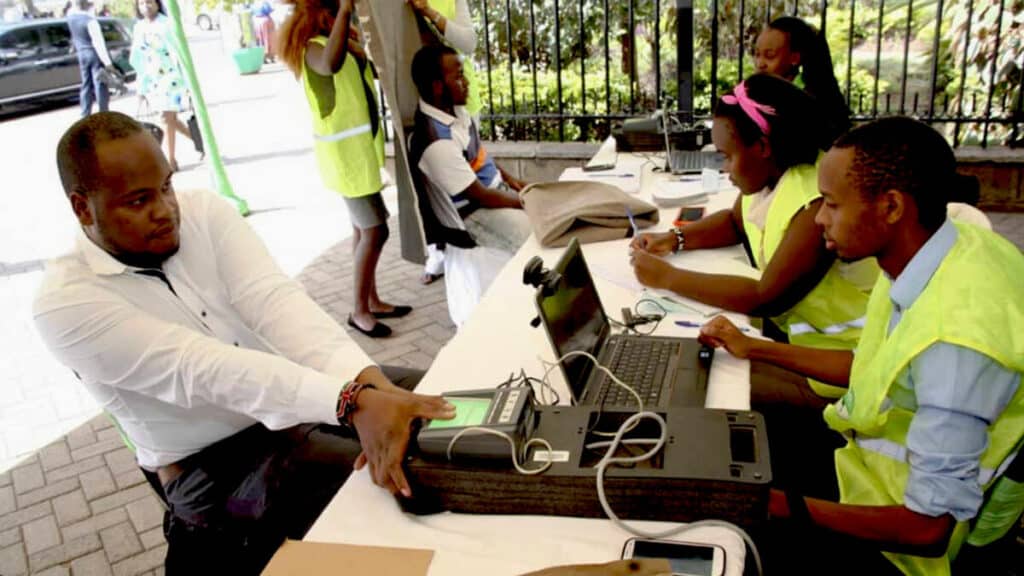
Biometric fundamentals and foundational ID are considerations at the very beginning of the identity lifecycle that are sometimes overlooked. If organizations can handle them better the rewards are improved trustworthy service delivery and stronger defenses against fraud.
Fundamental considerations for biometrics include accuracy, but also scalability and other performance details. And crucially, if they are not bound to IDs when they are created, those credentials are vulnerable to compromise.
When the credentials are created matters too, particularly since public services affect children and families.
Countries that digitalize their birth registration systems can not only improve their civil registration and vital statistics (CRVS) systems but also funnel people towards national ID systems that serve as a pillar of digital public infrastructure. The system must be trustworthy, however, or downstream costs pile up quickly.
Two of the top stories of the week on Biometric Update illustrate this tension.
Case studies on Rwanda and Thailand by advocacy group Vital Strategies show birth and death registration can contribute to trusted DPI that can be used in service delivery. On Africa CRVS Day Monday, observers credited Burundi’s example and ACSA’s promise as reasons for optimism that the continent is headed in the right direction.
An attempt by Cameroon’s government to support public servants with the costs of raising a family has led to an investigation into almost a million birth certificates, many of which are suspected of being fraudulent. A recent increase in a monthly child allowance for government workers led to what authorities say is a statistically impossible spike in claims.
UNICEF sees schools playing a potentially pivotal role in reducing the global birth registration gap of some 200 million children under five years old.
The beginning of the identity credential lifecycle, likewise, depends on solid foundations, which means privacy-preserving biometric binding, Prove GM for New Market Initiatives Frances Zelazny emphasizes in an interview with Biometric Update. Bringing that piece of the digital identity puzzle to Prove with new IP including MCP and advanced cryptography is her new role with the company.
Foundational identity is also becoming the platform for broader digital public infrastructure. This week, Biometric Update examined how Caribbean nations are building a cross-border layer of interoperable DPI, Sri Lanka is advancing its MOSIP-based digital identity with support from development partners, and a new framework argued that trustworthy government AI depends on strong digital public infrastructure.
Biometric trust through operational performance and scalability
New editions of both the NIST FRTE 1:1 and 1:N show significant convergence in accuracy among the best developers.
The 1:1 results indicate that differentiation among the leading face biometrics algorithm providers at this point is more a matter of operational performance, demographic and capture considerations than overall accuracy. Similarly, metrics for scalability, which is crucial for biometric deduplication, and unconstrained capture environments, which are critical for law enforcement scenarios, are becoming the keys to picking winners for particular applications in the 1:N assessment.
Extending trust to applications
Mexico’s banking industry is switching to face biometrics for account-holder authentication to make use of government identity records, closing the circle with national ID. Identy CEO and Co-founder Jesús Aragón offers guidance for financial institutions looking to comply with the new regulations in a guest post for Biometric Update.
The problem of continuous identity trust is behind the account-sharing rampant among gig workers, Trua Founder and CEO Raj Ananthanpillai writes in a guest post. Only strong binding between the credential and the worker can prove the person who passed the background check is the same one making the delivery.
Nobody likes friction in banking. But in online marketplaces? Dating? GuyID Founder Ravi Shankar tells Biometric Update that robust identity verification that includes a little friction helps make online dating trustworthy by discouraging the kinds of catphishing and identity fraud that have plagued the industry.
One of the effects of AI on scams and identity fraud is that the value of static identity signals is falling, Feedzai VP of Product Planning and Strategy Dan Holmes argues in a guest post. Continuous adaptive trust is the logical next step for identity verification, according to Holmes.
On the latest episode of the Biometric Update Podcast, Aragón and Resemble.ai’s Zohaib Ahmed discuss how the growing availability of AI fraud tools is birthing whole new fraud categories, and making IAD and deepfake detection based on how the real world works table stakes for businesses online.
Please let us know if you come across any podcasts, thought leadership pieces or other content you think we should share with those in biometrics and the digital identity community via the comments below or social media.
Related Posts
-
 January 5, 2026
-
 April 10, 2026
-
 July 15, 2026
-
 January 26, 2026
-
 October 20, 2025
-
 August 12, 2026
Article Topics
biometric binding | biometrics | digital ID | digital identity | week in review

Comments