
How domestic technology is normalizing biometric surveillance
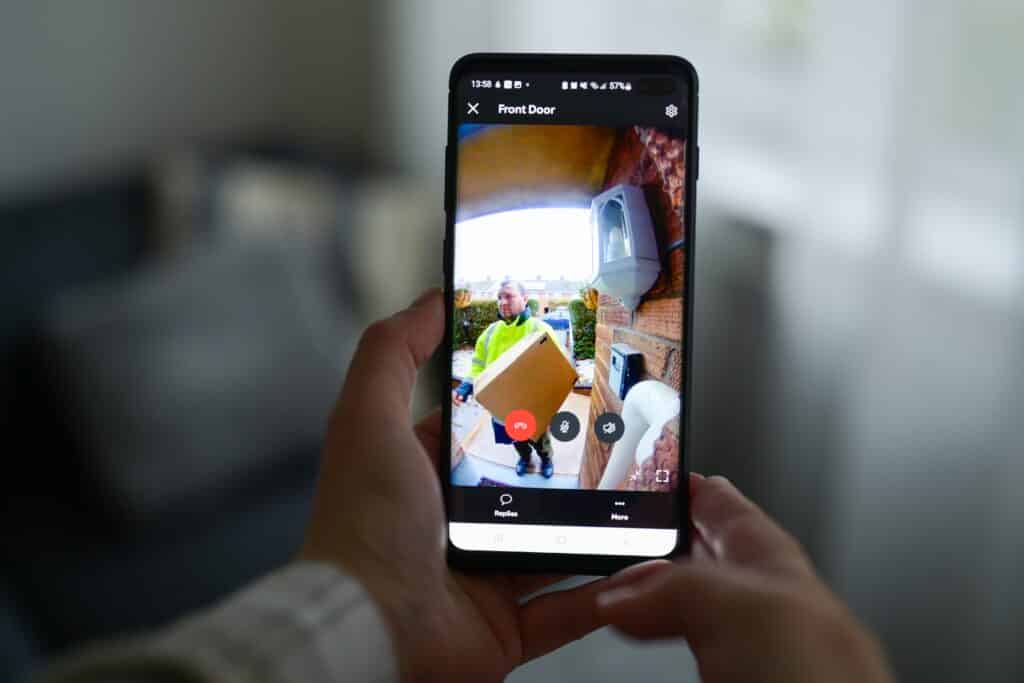
What new device is this describing? – “The [Pro] has radar-based motion tracking, which gives you a trace of a person’s movement overlaid on an aerial view. The 4K camera significantly improves fine detail and the zoom, but it is the lower mixed-light performance that is night and day better than previous models”.
Having a keen interest in surveillance technology, I came across this Guardian review of a new product offering “a range of AI-powered features” including integrated facial recognition capability and contemporaneous audio descriptions of events such as “a black car driving past or a woman holding a child?” and was intrigued to discover the answer: it’s a doorbell.
Except, of course, it isn’t — it’s a sophisticated surveillance system. Using cutting edge AI-driven technology and remote biometric capabilities, the latest RING device can detect and describe people and things in the street, and read vehicle number plates up to nine metres away, all in darkness. It will group events into one notification and can be programmed to identify and exclude individuals. In language reminiscent of a London Borough Council’s biometric tracking of “suspicious shopping” behavior, the RING doorbell will send alerts of ‘unusual events’ and has a monochrome infra-red illuminated mode to detect people’s movements in poorly lit streets. In the context of deterring Halloweeners in Scream masks or doorsteppers with glad tidings all this might make sense, but biometric doorbells go beyond trick-or-treat gimmickry.
The evolution of the doorbell is another example of Anthony Kimery’s wonderful phrase, the “normalization of ambient biometric surveillance.” If you’re so inclined, several brands can be integrated with your smart hub — some of which already boast future biometric capabilities – and presumably your next gen smart glasses.
How this level of surveillance ever became the norm in our homes is a good question, but it isn’t the norm for policing. While we can install Stasi-level technology at home, drop in at a British police station (if you’re still lucky enough to have one) and you’ll be unlikely to encounter the tech capabilities of your neighbor’s front door. Why? There are several reasons, one of which is money, but the main one is regulation.
Very broadly, the regulation of surveillance in the UK divides activity into overt and covert categories and treats public space differently from private spaces (including vehicles and dwellings). A 4K camera with zoom, mixed-light performance and video descriptions is, on any view, a surveillance system. And if it’s reporting on passing cars and people, it’s being used for surveilling public space.
Public space surveillance by overt systems in England and Wales is covered by a code of practice with a commissioner overseeing it. When in that role, I found the regulatory system to be incomplete, inconsistent and, at times, incoherent. It remains so. For example, the code only applies to systems operated by policing and local authorities; it doesn’t regulate domestic biometric surveillance systems, nor does it say anything about the police using images captured on them.
Smart doorbells are an addition to the aggregated surveillance capability of an area — installing one brings some important considerations to your doorstep.
First, while we’re rightly cautious about law enforcement using remote biometrics like facial recognition technology (FRT) we disgorge the contents of our personal and business devices to the police every day. Now that public appeals for citizen-generated surveillance are routine police practice globally, this is significant.
When the police ask us to be vigilant and look out for people acting suspiciously, or even for a specific person, should public spirited doorbellers programme their devices to scan the areas outside their homes? If they do, does this qualify as directed police surveillance which is covered by a very different, stricter framework under UK law?
Second, if the police come knocking and ask to see what’s on your 24-hour, always-on biometric feed of the street outside your home, what will you say? How much data are you prepared to share and for what purposes? Officers might agree to sign a data sharing agreement but realistically your ability to constrain their use of any data once you’ve handed it over is almost non-existent. In some countries, lawfully fitting such a device means agreeing to disclose all its data if the state requires it.
Third, if your system is to be of much practical use for investigating crime it will need search-and-storage features – that usually means buying a subscription service (ingeniously monetizing curtain twitching). Then there are the very real risks from hacks and systems interference.
Meanwhile the passer-by on the street can’t know how many biometric doorbells are tracking them, or which of their many latent functions they’re running — even the installer wouldn’t be able to tell by standing in front of it, nor could they tell you who’s accessing its data or where it is being sent, edited and stored. The definition of “covert” surveillance is partly shaped by our awareness of it — as we integrate devices into buildings, clothing and even our bodies, surveillance becomes less visible and more covert. Despite the fictional images of dystopian futures, the state doesn’t need surveillance cameras; it needs surveillance product. I have said before that public space surveillance is no longer about where the police put their cameras; it’s about what they do with everyone else’s cameras. For these reasons we’ll probably see fewer police cameras in future.
Normalization of ambient surveillance has created a new relationship between the citizen, the state and technology but there’s nothing normalized about its regulation. Legal frameworks haven’t kept up with our adoption of technology and fall further behind with each new product release.
The UK government has indicated greater clarity may be on its way for police biometric systems – however, it’s going to take a lot more than that if the rules are to reflect the technological normalities of domestic life.
About the author
Professor Fraser Sampson is the former UK Biometrics and Surveillance Camera Commissioner, Professor of Governance and National Security at CENTRIC, non-executive director at Facewatch, strategic advisor to the Alan Turing Institute’s Centre for Emerging Technology and Security (CETaS), and a longtime Biometric Update columnist. He is also the author of the Springer Nature book How AI-Driven Surveillance is Changing our World: Do Robots Have the Right to Remain Silent?, which explores the legal, ethical and societal implications of AI-driven surveillance.
Related Posts
-
 May 5, 2026
-
 February 13, 2026
-
 July 22, 2026
-
 May 18, 2026
-
 March 5, 2026
-
 March 1, 2026
Article Topics
biometrics | consumer electronics | facial recognition | Fraser Sampson | Ring doorbells | surveillance

Comments