
SEALSQ lands design win for palm vein biometric payment terminals

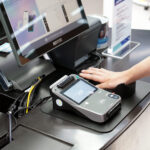
Indian biometric payments developer Palm Technologies plans to integrate SEALSQ’s QS7001 quantum-resistant security chip into its MetPalm V1 palm vein biometric authentication terminal for metro and toll payment applications.
The company says the secure hardware design could later be extended to its Palm-M merchant terminal and to products proposed for connected vehicles, drones, robotics, and satellites.
“We believe the partnership can create a foundation for recurring demand across high-growth markets, including payments, mobility, defense communications, drones, electric vehicles, robotics, and IoT,” says Carlos Moreira, chief executive officer of SEALSQ.
Palm Technologies remains in the early stages of commercialization. The development of its palm vein payment technology began in 2023.
The company is preparing for its first commercial deployments and has not identified any operating merchant, transit authority, or toll operator.
SEALSQ describes QS7001 as a RISC-V hardware security microcontroller featuring secure key storage, cryptographic acceleration, secure boot, tamper resistance and a hardware root of trust.
The chip remains in security evaluation and early commercialization. SEALSQ said it expects a Common Criteria laboratory letter for QS7001 V1 in September and a complete post-quantum cryptography test report for V2 in December. The Palm Technologies agreement does not specify which version would be integrated into MetPalm V1.
The partnership comes as India develops a roadmap to replace vulnerable cryptography. The Department of Science and Technology targets quantum resilience across critical information infrastructure by 2029 and wider enterprise adoption of post-quantum cryptography by 2033.
While Palm Technologies has yet to announce commercial deployments, the partnership reflects growing interest in combining biometric authentication with post-quantum security as India prepares its migration to quantum-resistant cryptography.
Related Posts
-
 November 3, 2025
-
April 10, 2026
-
 February 5, 2026
-
March 20, 2026
-
 September 10, 2025
-
 June 17, 2026
Article Topics
biometric payments | palm biometrics | Palm Technologies | palm vein authentication | post-quantum cryptography

Comments