
Sri Lanka advances biometric passport rollout with new immigration bill

Sri Lanka has taken another step toward introducing biometric passports after the Cabinet approved a new Immigration Bill that establishes the legal framework for fingerprint collection and electronic passport issuance.
The legislation, now published in the Government Gazette ahead of parliamentary consideration, will replace the country’s Immigration and Emigration Act of 1948 and provide the legal foundation of a biometric passport system based on a “one person, one passport” principle.
A previous attempt to introduce a similar Bill was halted with the dissolution of the Ninth Parliament and a subsequent Supreme Court stay order.
Cabinet approved drafting of the new bill in August 2025 and, in December, designated the Secretary to the Ministry responsible for Immigration and Emigration as the Country Signing Certification Authority to oversee implementation of the biometric passport system. It has now approved submitting the legislation to Parliament.
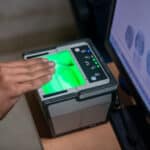
Applicants between the ages of 16 and 60 will be required to provide fingerprints as part of the passport application process.
The Controller General of the Department of Immigration and Emigration (DI&E), Chulananda Perera, emphasized that advancing biometrics into the passport application process marks a significant improvement in the integrity of the passport issuance system. He said that implementing biometrics aims to eliminate issues related to multiple identities and enforce a “one person, one passport” policy, addressing past challenges of identity assumption.
The legislation also comes as the Sri Lankan Biometrics Project (SLBP) moves into a new implementation phase aimed at introducing an Automated Fingerprint Identification System (AFIS) for passport issuance, according to the International Organization for Migration (IOM).
“For Sri Lanka, this is a major step in raising the integrity of the national passport and facilitating the mobility of Sri Lankans. To underpin this process, IOM hosted a high-profile symposium in Colombo to discuss and agree on key technical and functional requirements for the introduction of the AFIS to Sri Lanka’s passport issuance process. The system allows biometric fingerprint data captured from all passport applicants to be cross-checked against the official database,” The IOM said in a statement.
The three-day workshop, held last month, was chaired by Perera and attended by his senior personnel and IOM national, regional and international experts. As an outcome of this event, IOM will now embark on the development of the AFIS system design and integration methodology.
The workshop marked the launch of Phase II of the SLBP, which is funded by the Australian Department of Immigration and Border Protection (DIBP), with IOM as the executing agency, in collaboration with the Sri Lankan DI&E. The project started in 2013 and delivered, during its first phase, a solution that requires the acquisition of ICAO-compliant digital passport photographic records and the capture of biometric information.
The immigration reforms complement Sri Lanka’s wider digital identity modernization, which is expected to begin issuing digital identities in the coming months as the government builds a national digital identity platform. While the passport and digital ID programs serve different purposes, both are part of a wider effort to strengthen biometric identity infrastructure, improve identity assurance and eliminate duplicate identities.
Related Posts
-
 August 26, 2025
-
 March 20, 2026
-
 November 24, 2025
-
 March 19, 2026
-
 September 17, 2025
-
September 5, 2025
Article Topics
biometric passport | biometrics | legislation | Sri Lanka | Sri Lankan Biometrics Project (SLBP)

Comments