
Aadhaar biometrics rule for subsidies effectively makes India’s digital ID mandatory
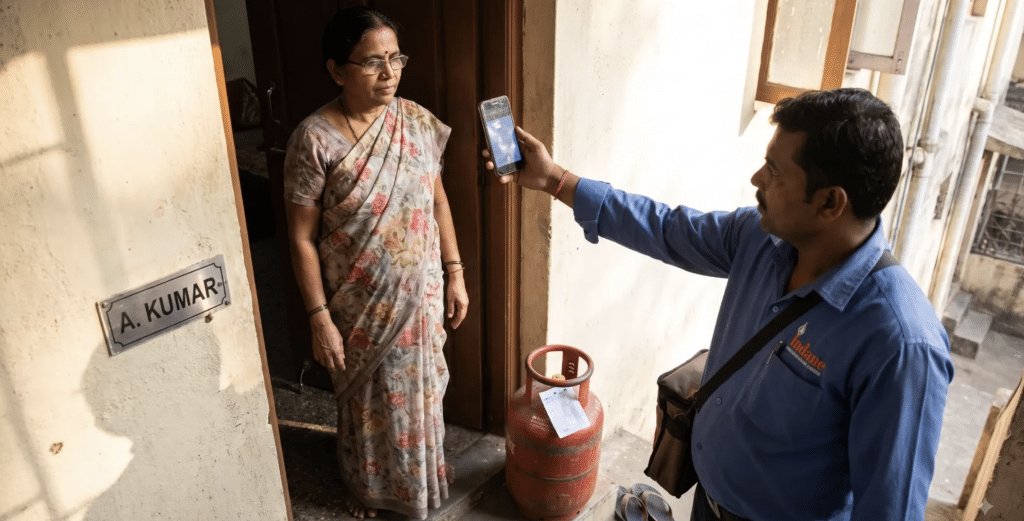
India’s Aadhaar became the world’s largest digital ID system without being made official mandatory. But is possessing the national ID really a choice for Indians? What if they are poor?
As of October 1, Biometric Aadhaar Authentication becomes mandatory for previously-registered beneficiaries to receive subsidized LPG (liquid petroleum gas) for household use. The Ministry of Petroleum & Natural Gas announced the change to help prevent the fraudulent diversion of subsidized LPG to businesses and ineligible households.
India’s government subsidizes the household cooking fuel through the PMUY program, which distributes fuel directly to beneficiaries, and the PAHAL program, which deposits subsidies directly into the bank accounts of recipients. Authentication for the programs can be completed at fuel distributor’s shops, through their mobile apps, or through home-visit services.
The government has already established and pushed back eight deadlines to complete biometric authentication, starting with June 30, 2026. The biometric authentication process can be completed with fingerprint, face or iris biometrics collected
Back in 2015, the Ministry stated that not only was Aadhaar not necessary to receive the subsidy, but emphasized that distributors were not permitted to refuse refills to customers on the basis of not having Aadhaar. “Complaints in this regard should be immediately taken up and resolved along with necessary action against the erring distributor as deemed fit,” the government said at the time.
The government began encouraging fuel companies to use Biometric Aadhaar Authentication to complete KYC checks for LPG subsidy beneficiaries under the PMUY and PAHAL programs in October, 2023. Biometric identity verification improved the government’s ability to reach intended beneficiaries, according to a mid-2024 announcement.
But the system was known to suffer from extensive fraud. The Ministry used Aadhaar numbers, bank account details and other data to deduplicate its database of eligible LPF subsidy recipients last year, resulting in the deactivation of 40 million accounts. As of mid-2025, two-thirds of PMUY beneficiaries had completed authentication with Aadhaar biometrics, and biometrics became required for new beneficiaries.
With the introduction of the same requirement for refills for registered beneficiaries, Aadhaar becomes mandatory for all LPG subsidies in India.
More than 274 million LPG recipients, or almost 90 percent, have already completed Aadhaar Biometric Authentication, and therefore are unaffected by the new requirement.
The Ministry says LPG will not be denied to those who do not authenticate themselves with Aadhaar biometrics, but the subsidies will.
Digital ID as optional as social safety net
But if the subsidy is deemed necessary for poor households, and the digital ID is required for the subsidy, then logic suggests the digital ID is required for poor households. Those too well off to receive subsidies are those to whom choice applies.
The phenomenon is unfortunately familiar.
Aadhaar is also mandatory for the PM-KISAN scheme, which provides financial assistance for farmers, and is already used in almost all transactions (98 percent) by the national social safety program for directly distributing grains to the poor.
“A unique identification number registration has a lifecycle,” Jaume Dubois, founder and CEO of ID30, tells Biometric Update in an email about the policy change. “At first, it is a factor of inclusion: people can prove who they are, often for the first time. Without precautions, the same number can end up becoming a factor of exclusion, once authentication turns into a condition of access and a failed match costs someone a benefit they are entitled to.
“Legal identity is a right of every person, and providing it is the responsibility of the state, from birth, including making sure every eligible person can use it,” Dubois continues.
“Full enrollment is close to unreachable, even with time and resources: some people will always remain outside, for many different reasons. That is why, in every project we lead, we design the fallback paths together with the main path, starting at enrollment: handling of edge cases, alternative authentication, assisted and offline channels. We encourage authorities to take every case into account, so that each person always has a way through.”
A similar phenomenon has also been seen in other countries, such as Malaysia. But with India’s major influence on the shape of digital identity around the world, digital rights advocates will be watching how the changes play out closely and warily.
Related Posts
-
 January 29, 2026
-
 April 20, 2026
-
 September 26, 2025
-
 March 10, 2026
-
 January 13, 2026
-
 December 18, 2025
Article Topics
Aadhaar | biometric authentication | biometrics | ID30 | India | national ID | social protection

Comments