
Amazon and Ring seek dismissal of Familiar Faces biometric privacy lawsuit
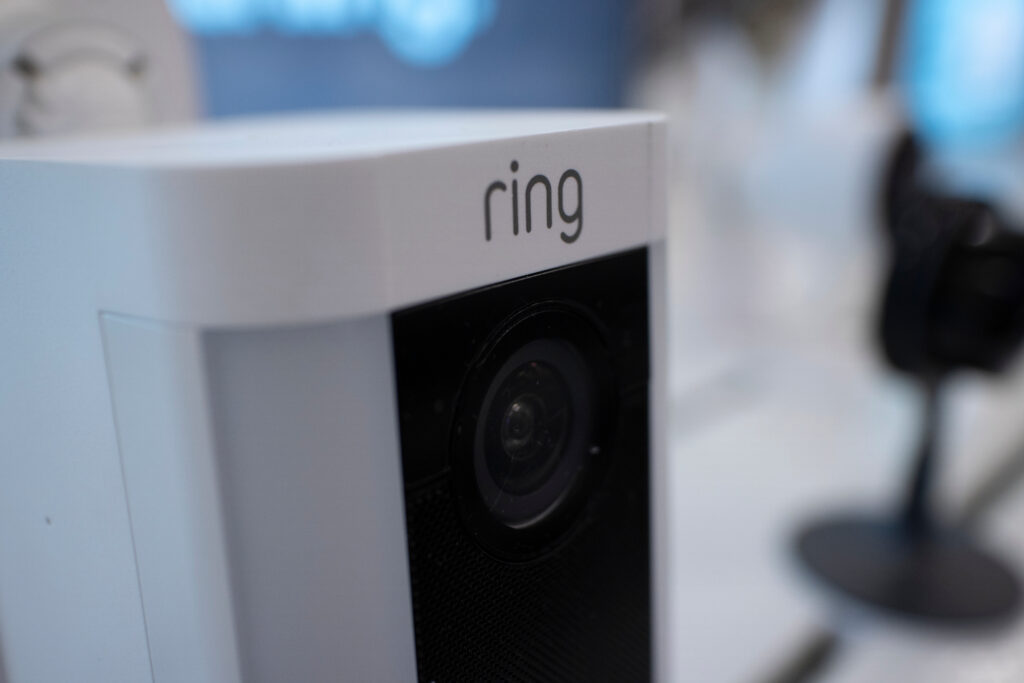
Amazon and Ring are asking a federal judge to dismiss a proposed class action over Ring’s controversial Familiar Faces facial recognition feature, arguing that the plaintiffs have not plausibly alleged that the company collected their biometric data.
The motion also attacks a broader premise of the lawsuit. Amazon and Ring contend that the plaintiffs are attempting to use consumer protection and other state laws to create private biometric privacy claims that lawmakers in Washington, Virginia, and California have not authorized.
U.S. District Judge Kymberly K. Evanson of the Western District of Washington has not ruled on the motion in Sigwalt v. Amazon.com Inc. et al.
The case challenges a feature that lets participating Ring cameras recognize recurring visitors and tell the device owner who has appeared, rather than simply reporting that a person is at the door.
The lawsuit alleges that people who do not own Ring devices can have facial recognition information generated from their appearances without knowing about or consenting to the processing.
Virginia resident Charles Sigwalt filed the original complaint on June 1. A first amended complaint followed on June 8, and the federal docket now lists Patricia Ortega and a minor identified as M.C. 1 as additional plaintiffs.
The amended complaint broadens what was already an unusual biometric privacy case because it is centered on the rights of people on the other side of the camera rather than the Ring customer who owns it.
Ring says Familiar Faces is an opt-in feature that is disabled by default. When enabled on an eligible camera, the customer can create a directory of up to 50 familiar people and assign names to their profiles.
The camera can then send notifications such as “Mom at Front Door” when it recognizes someone the user previously labeled.
Ring says it automatically removes unnamed profiles after 30 days without recognition.
Ring also tells users that the feature may be unavailable in some jurisdictions because of legislation and that customers should check whether local law requires consent before turning it on.
The distinction between the person who activates the technology and the people whose faces may enter its field of view is central to the litigation. Amazon challenges whether plaintiffs were scanned.
Amazon and Ring’s dismissal argument goes to whether the plaintiffs have adequately connected themselves to the technology they are challenging.
The two companies say the amended complaint does not plausibly allege that Ring collected biometric data belonging to the named plaintiffs, which presents a significant threshold issue in a lawsuit brought by bystanders.
A person walking past or visiting a property equipped with a Ring camera generally would not control the device or its settings. Ring says Familiar Faces must be affirmatively enabled by the camera owner.
The defense is challenging the gap between alleging that a plaintiff appeared in front of a Ring camera and alleging that a camera with Familiar Faces enabled generated or processed biometric information of them.
The plaintiffs have yet to respond to that argument. Under an August 24 order setting the briefing schedule, their opposition is due October 30. Amazon and Ring may file their reply by November 30.
The court has also stayed the initial case deadlines, including the ordinary early discovery schedule, until Evanson resolves the motion to dismiss. The parties agreed, however, to continue working on an electronically stored information protocol and protective order while the motion is pending.
Amazon and Ring’s second argument reaches beyond the individual plaintiffs.
The defendants contend that the lawsuit improperly uses state consumer protection and other laws to obtain a biometric privacy remedy that legislators in Washington, Virginia, and California have not expressly created.
Rather than bringing a claim under Illinois’ Biometric Information Privacy Act (BIPA), the plaintiffs rely on consumer protection and other state-law claims, along with common-law theories including intrusion upon seclusion, negligence, and unjust enrichment.
The complaint alleged that Ring intercepted and used sensitive biometric information without consent and sought to apply similar state consumer protection statutes to a nationwide class.
Ring says Familiar Faces is unavailable to customers in Illinois, Texas, and Portland, Oregon, due to specific legislation.
Illinois is especially important because BIPA expressly regulates the collection of face-geometry scans and gives individuals a private right of action.
The current lawsuit instead asks whether existing consumer protection, privacy, and other statutes can reach alleged biometric processing in jurisdictions without an equivalent BIPA remedy.
Amazon and Ring now argue they cannot.
A notable, though legally different, precedent comes from the same federal district.
In 2022, U.S. District Judge John C. Coughenour denied Ring’s motion to dismiss Wise v. Ring LLC, a proposed class action brought under BIPA by an Illinois resident who alleged that Ring had generated face templates from people appearing in Ring camera footage without their consent.
Ring argued that a scan of face geometry did not qualify as protected biometric information unless the company also possessed information such as a name, address, or telephone number linking the template to a particular person.
Coughenour rejected dismissal at the pleading stage. He concluded that Wise plausibly alleged that Ring processed face geometry for facial recognition and alleged facts supporting an inference that Ring could identify at least some people captured by its cameras.
He also noted that information needed to establish the proposed class could be exclusively within Ring’s control and said the plaintiff should be permitted discovery to develop those allegations.
The decision does not resolve the new Familiar Faces case. Wise arose under BIPA, which specifically covers biometric identifiers and expressly authorizes private litigation.
Whether the plaintiffs can obtain a biometric privacy remedy through those other state law causes of action in the absence of a BIPA-style private biometric statute is one of the issues Amazon and Ring are asking the judge to decide
Still, the earlier ruling could become relevant to the new defense argument that bystander plaintiffs have failed to plead enough facts showing that their own faces were processed.
In Wise, the court allowed the BIPA claims to proceed on the allegations before it. It separately rejected Ring’s request to strike the proposed class, noting that some information needed to develop the class allegations was solely within Ring’s control and that Wise should be allowed discovery.
Related Posts
-
 August 18, 2026
-
 October 14, 2025
-
 March 17, 2026
-
 February 19, 2026
-
 May 18, 2026
-
 March 10, 2026
Article Topics
Amazon Web Services (AWS) | biometric identifiers | consumer electronics | facial recognition | lawsuits | Ring doorbells | video surveillance

Comments