
DHS expands RIVR testing to deepfakes, AI-generated IDs
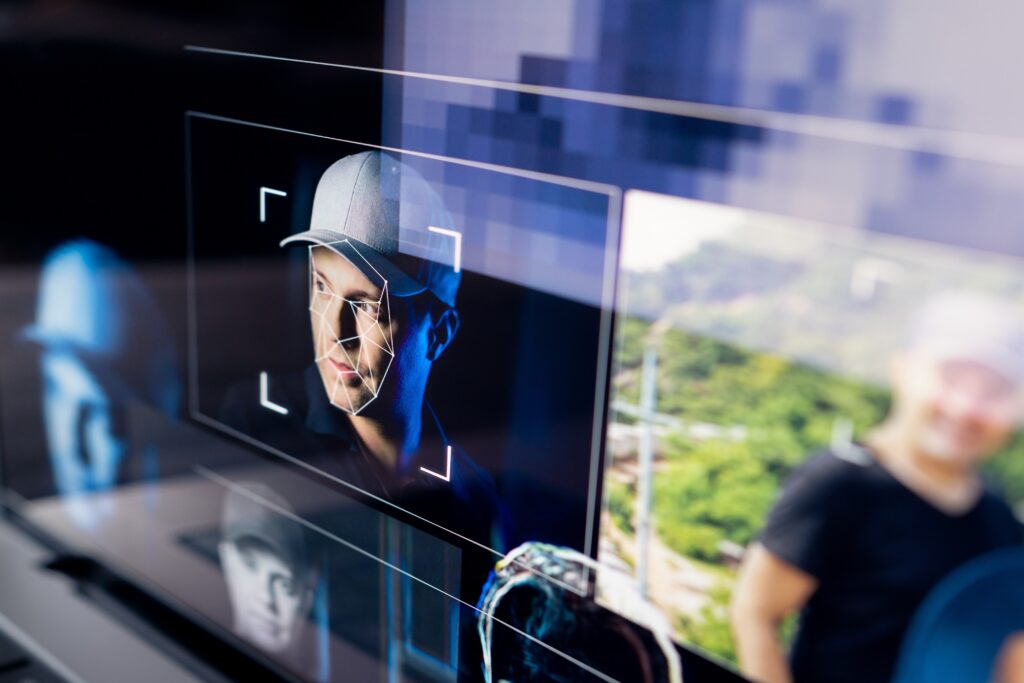
The Department of Homeland Security (DHS) is expanding its government-run testing of remote identity verification technology to explicitly target AI-generated identity documents and biometric deepfakes, including synthetic impersonations used in video chats and teleconferencing.
The department’s Science and Technology Directorate (S&T) announced Monday that the 2026 Remote Identity Validation Rally (RIVR) will add a dedicated deepfake detection challenge while substantially expanding the documents, devices, and fraud techniques used to test commercial identity verification systems.
RIVR is a series of government-led technology evaluations hosted by S&T to test commercial remote identity verification systems.
“As digital threats grow more sophisticated – from AI-generated documents to real-time video impersonations – our defensive capabilities must evolve even faster,” S&T Senior Advisor for Biometric and Identity Arun Vemury said in announcing the program.
Vemury said, “The expanded RIVR challenges demonstrate our commitment to collaborating with industry to rapidly assess and improve technologies that protect our citizens, streamline government operations, and dismantle the criminal networks that rely on identity fraud.”
The program will also take an unusual step beyond testing technology vendors. Beginning in November, DHS plans to solicit examples of identity deepfake attacks and information about the methods used to create them from organizations that can provide threat data.
DHS says the material could include face-swap videos and digitally generated or altered identity documents. The objective is to build a larger and more rigorous attack dataset against which identity verification technologies can be evaluated.
The expansion pushes generative AI manipulation more directly into federal testing of the technologies used to remotely establish that an identity document is genuine and that the person presenting it is its legitimate holder.
Applications are scheduled to open in October for document validation systems, including technologies intended to distinguish genuine documents from AI-generated fakes, and systems that compare a selfie with the facial image on an identity document.
In December, DHS will begin accepting systems for presentation attack detection (PAD) and the new biometric deepfake detection category.
The new deepfake category extends the evaluation to AI-generated impersonations, including those that can appear in video chats and teleconferencing.
DHS has not yet published the technical protocol for the 2026 deepfake evaluation, so it is not clear whether the challenge will separately test digital injection attacks in which manipulated or synthetic media is inserted into a data stream rather than presented to a physical camera.
The document testing is also expanding beyond the U.S. state-issued identity documents used in the 2025 RIVR. DHS says the 2026 challenges will incorporate a broader set of genuine and fraudulent passports and driver’s licenses, along with more sophisticated attacks and expanded use cases.
The changes are intended to measure performance across different technologies, smartphones, document characteristics, and real-world conditions, DHS says.
The expansion follows a 2025 RIVR that demonstrated why more demanding adversarial testing may be necessary.
The earlier rally divided remote identity verification into three principal functions. One evaluated whether a selfie belonged to the same person pictured on an identity document.
A second tested whether systems could distinguish genuine documents from fraudulent ones.
The third evaluated presentation attack detection, commonly called liveness detection. DHS publishes the anonymized results through the Maryland Test Facility.
The document-validation results were particularly uneven.
Seven systems processed front-and-back images of genuine and fraudulent identity documents photographed with three smartphones.
Testers collected genuine documents during testing in Maryland and California, while obtaining fraudulent documents in collaboration with the DHS Homeland Security Investigations laboratory.
DHS measured three principal error rates and established both a maximum high-performance threshold of 10 percent and a more demanding goal of 1 percent for each.
No system met the 1 percent goal across all three measures.
Only one system, identified in the published results as DVS 6, stayed within the 10 percent high-performance threshold across all three. It recorded no system errors, falsely rejected 3.15 percent of genuine documents, and accepted 0.88 percent of fraudulent documents.
The other systems accepted between 5.68 percent and 76.68 percent of fraudulent documents under their worst tested conditions. One system rejected 97.3 percent of genuine documents while still accepting 10.28 percent of fraudulent ones.
Microblink later identified its technology as DVS 6. The company said it was the only participant to meet all three DHS performance thresholds, although its 3.15 percent false rejection rate meant it did not meet the more stringent 1 percent goal on that measure.
For its part, DHS leaves vendor identities anonymized.
The selfie-to-document results were substantially better, but they also showed significant differences among products.
Sixteen systems were evaluated using selfies and identity document images captured on three different smartphones. Five met or exceeded DHS’s high-performance goal for every RIVR metric, while 10 remained below the maximum high-performance error threshold across all of the metrics.
The testing also showed that targeted impostors can be considerably harder to reject than randomly selected people.
DHS found that the median system’s false-match rate was about 11 times higher when the impostor was demographically similar to the legitimate identity.
Only seven of the 16 systems maintained an acceptable false-match rate against those similar impostors.
The 2025 presentation attack testing found similarly wide variations.
DHS evaluated six active systems, which require direct user interaction, and 12 passive systems, which analyze previously captured images or video without requiring the person to carry out a specific action.
Some performed strongly against the tested attacks. Others did not.
Under the worst tested combinations of device and attack type, several passive systems misclassified 80 percent or more of attacks as legitimate presentations, with individual results reaching 96.7 percent and, for one system, 100 percent.
Paravision later identified its submission as PAD-P9, the only passive system that remained within all of DHS’s performance thresholds.
The new deepfake work also closely tracks changes in federal digital identity standards.
The National Institute of Standards and Technology (NIST) finalized Special Publication 800-63A-4, its revised federal identity-proofing guidelines, on July 31, 2025.
The revision added explicit requirements dealing with digital injection attacks and forged media, including deepfakes.
NIST warns that generative AI can create or alter images and video of both applicants and identity documents in attempts to defeat document validation, biometric comparisons, and human reviewers.
Under a section devoted specifically to digital injection prevention and forged media detection, NIST requires credential service providers conducting applicable remote identity proofing to use technical controls that increase confidence that submitted media came from a genuine sensor and to analyze digital media for signs of modification, manipulation, tampering, or forgery.
Automated detection systems also must be tested against available genuine and manipulated media to establish false-positive and false-negative performance.
NIST additionally recommends device attestation and analysis for signatures associated with known generative AI and deepfake tools.
DHS says the expanded RIVR aims not simply to identify high-performing products. The agency intends the challenges to objectively measure performance and risk and to help inform testing methods and standards for identity technologies as the attacks against them evolve.
DHS plans an informational webinar for prospective technology providers and organizations interested in contributing deepfake attack data on September 30.
Related Posts
-
 January 30, 2026
-
 February 17, 2026
-
 June 26, 2026
-
 May 28, 2026
-
 October 13, 2025
-
 July 8, 2026
Article Topics
AI fraud | biometric testing | deepfake detection | deepfakes | DHS S&T | remote identity proofing | Remote Identity Validation Rally (RIVR)

Comments