
DHS launches $440M government-wide biometric capture procurement
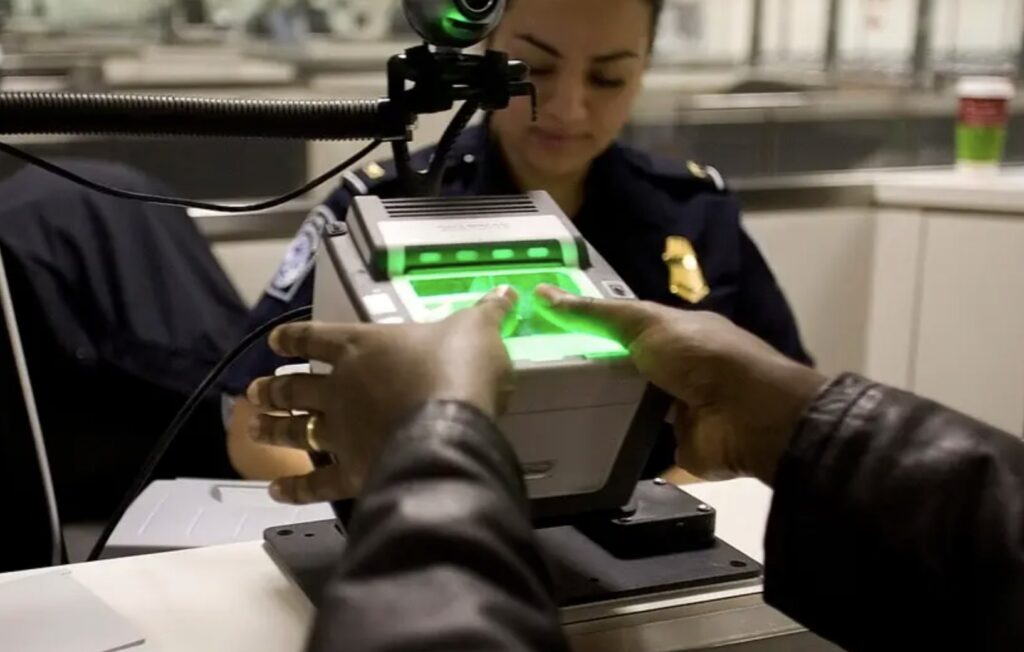
The U.S. Department of Homeland Security (DHS) has launched a government-wide procurement that could standardize how federal agencies capture fingerprints, faces, irises and palmprints for years to come.
The solicitation, establishes a multiple-award contract with a ceiling of $440.7 million, moving a strategic sourcing effort more than two years in the making into the acquisition stage.
The September 10 request for proposals seeks vendors for fingerprint, facial, iris, palmprint and multimodal biometric capture devices under a multiple-award, indefinite-delivery, indefinite-quantity contract.
DHS expects to make at least three awards in each of five technology tracks, with no maximum number of contractors. Proposals are due September 18.
The contract includes a one-year base period and four one-year options. Its $440.7 million ceiling applies across the entire vehicle and does not represent guaranteed spending. Federal agencies will place individual orders based on their operational requirements.
Within DHS, the department says it intends to make use of the contract mandatory, replacing a fragmented system in which components have purchased biometric hardware through individual contracts, government-wide acquisition contracts and other procurement vehicles.
DHS says centralizing the purchases should establish common specifications, improve interoperability with existing biometric systems and databases, and allow the government to use its combined purchasing power.
The procurement also shows where DHS expects much of the demand to fall. The department estimates $258.3 million in orders for multimodal devices, compared with $32.6 million for facial devices and $17.6 million for iris equipment.
Fingerprint and palmprint devices share an estimated $132.3 million. Those figures are planning estimates rather than separate ceilings, and actual spending by track could differ substantially.
A multimodal device must meet the minimum requirements for at least two biometric modes, allowing combinations of fingerprint, face, iris and palmprint capture.
The contract builds on a March 2024 DHS request for information that sought industry feedback on commercially available biometric collection devices.
That effort initially concentrated on face, fingerprint and iris systems, while leaving open the addition of other modalities.
At a July 2024 industry day, the Office of Biometric Identity Management and the Office of Procurement Operations described plans for a strategic sourcing vehicle centered on commercially available biometric collection hardware that other federal agencies could also use.
Palmprint and multimodal equipment now have their own tracks in the final solicitation.
The new contract is for biometric capture hardware rather than another centralized matching system. It covers devices, peripherals such as battery packs and cables, technology refreshes, and new devices. Related services must be acquired separately.
But the catalog DHS is seeking could encompass equipment for a broad range of operations. The solicitation describes mobile, stationary, standoff, physical-contact, ruggedized, and multimodal equipment for identity capture and verification.
Some of the most notable specifications concern facial recognition at land ports of entry.
Optional “specific requirements” include devices that can integrate with U.S. Customs and Border Protection’s (CBP) Simplified Arrival-Vehicle system and automatically capture live images of vehicle occupants as they enter the pre-primary inspection zone.
DHS says desired performance includes capturing all front-seat passengers and 90 percent of passengers in back and third-row seats.
Another requirement describes capturing faces through windshields while vehicles travel between five and 20 mph and sending images suitable for comparison by CBP’s Traveler Verification Service.
Other potential facial-device capabilities extend far beyond ports of entry. The specifications include equipment capable of capturing faces from ranges of two to 200 meters and two to 400 meters, along with standoff devices that can be remotely controlled using pan, tilt, and zoom.
DHS does not require those capabilities of every facial recognition device it buys. The solicitation separates minimum essential requirements, which every device in a track must satisfy, from a much larger set of specific requirements intended for particular operational uses.
The baseline facial requirements include image quality and metadata capabilities, interoperability-related standards, automatic focus, security controls, and compliance with DHS Facial Recognition Directive 026-11.
Every proposed device must meet all minimum requirements for its track to remain eligible. Failing even one results in a failing rating. DHS then evaluates the vendor’s technical approach, while price is not scored but must be judged fair and reasonable.
The requirements also address biometric data security. Devices may not permit unauthorized connections, copying, or transmission of data, including unauthorized metrics collection, and by default, information is not to be shared outside the U.S. government.
DHS designed the contract to evolve as biometric technology changes. The department can add updated versions of equipment already used by the federal government through contract modifications without another competition.
Entirely new devices must go through an on-ramp process, while contractors must report technology updates and obsolete equipment every six months.
The department will also maintain separate lists of “government attested” devices that have already been tested, used, or approved by federal agencies and devices that are new to government. Both can compete for orders, although attested equipment may not require additional testing before purchase.
The procurement effectively creates a common federal marketplace for the hardware at the front end of biometric identification systems.
If DHS succeeds in making the contract its department-wide standard, specifications established through this procurement could shape how fingerprints, facial images, irises, and palmprints are captured and fed into federal identity systems for up to five years.
Related Posts
-
 February 17, 2026
-
 March 2, 2026
-
 August 12, 2026
-
January 21, 2026
-
 July 30, 2026
-
 August 20, 2026
Article Topics
biometrics | DHS | government purchasing | multimodal biometrics | procurement | U.S. Government

Comments