
FBI clears 1.8 million sample DNA backlog as it pushes toward Rapid DNA
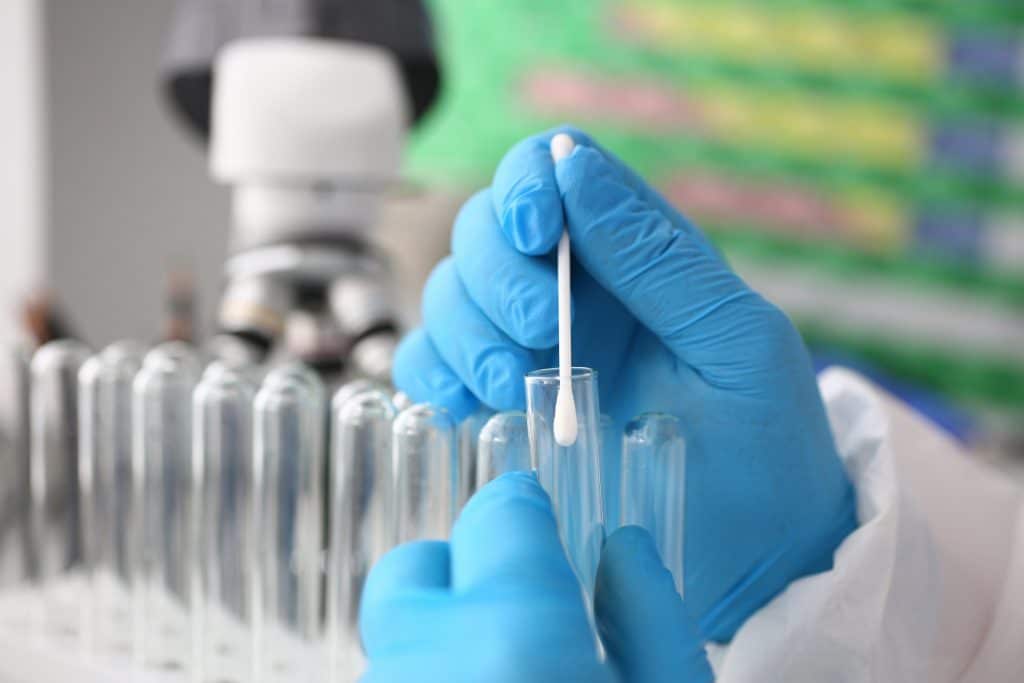
The Federal Bureau of Investigation (FBI) says it has eliminated a DNA-processing backlog that, at its peak, left about 1.81 million federally collected samples waiting to be converted into searchable biometric profiles, clearing a bottleneck that had delayed their entry into the nation’s principal law enforcement DNA database.
The bureau said its Federal DNA Database Unit reached what it considers zero backlog in August, after increasing staffing and operating hours, upgrading information technology, and automating part of the intake process for samples submitted by the Department of Homeland Security (DHS).
The milestone does not mean the laboratory had no unprocessed DNA samples remaining. The unit defines a backlog as the number of pending samples exceeding what it can ordinarily process within a month.
The FBI said it used roughly 50,000 samples as the threshold and declared the backlog eliminated when pending inventory fell below that threshold.
The result removes a major impediment to entering DNA profiles of federal arrestees, convicted offenders, and certain non-U.S. detainees into the FBI’s Combined DNA Index System (CODIS). where they can be compared with DNA recovered from crime scenes.
As of June, the National DNA Index System, CODIS’s national component, contained more than 20.3 million offender profiles, 6.4 million arrestee profiles, and nearly 1.49 million forensic profiles.
The FBI says the system had generated more than 808,000 matches and aided more than 784,000 investigations.
The backlog largely traces to a major expansion of federal DNA collection involving DHS.
The DNA Fingerprint Act of 2005 authorized collection from people arrested, charged with, or convicted of federal crimes and from non-U.S. persons detained under federal authority.
For years, however, DHS had broad authority to exempt categories of immigration detainees when collection was impractical because of operational or resource constraints.
A Department of Justice (DOJ) rule that took effect in April 2020 removed that exemption authority from the DHS secretary, leaving exceptions largely to the attorney general.
At the time, DOJ stressed that the rule did not create a new statutory DNA collection mandate but effectively required much broader DHS compliance with an existing one.
Customs and Border Protection subsequently began expanding collections from people in its custody.
The effect on the FBI Laboratory was dramatic. Before the expansion, the Federal DNA Database Unit generally handled about 100,000 samples a year.
The FBI’s fiscal 2027 budget request says submissions eventually climbed above 50,000 a month and averaged 146,000 monthly after the end of the COVID-19 pandemic and Title 42 border restrictions. More than 180,000 samples arrived in February 2024 alone.
By the end of fiscal 2024, the backlog had reached roughly 1.8 million and was growing by about 75,000 samples a month, according to the budget document.
The laboratory responded by expanding the Federal DNA Database Unit to as many as 90 personnel, adding contractors and equipment, and running two shifts to keep processing underway.
It also cross-trained employees and contractors for the labor-intensive job of receiving and preparing samples.
A significant change involved the data accompanying DHS specimens. Instead of manually transcribing information from paper forms, the FBI began importing information electronically, reducing one of the slowest parts of the process.
The FBI’s budget submission says a “significant downward shift” in U.S. border apprehensions during fiscal 2025 reduced incoming DNA volume to about 40,000 samples per month.
The lower submission rate gave the Laboratory Division room to work down the accumulated inventory. DOJ says current annual submissions are expected to run roughly 360,000 to 480,000 samples.
FBI told Congress that its current base resources can process only about 100,000 samples annually and requested 45 additional positions and $23.4 million for fiscal 2027 to maintain what it calls a sustainable “steady-state” DNA operation.
With the accumulated samples under control, the FBI says it intends to lean more heavily on Rapid DNA, technology that automates the development of a qualifying DNA profile from a cheek swab in roughly one to two hours rather than routing every sample through a conventional laboratory workflow.
The technology analyzes a defined set of short tandem repeat markers used for identity matching rather than sequencing a person’s entire genome.
The FBI says its standard CODIS profile generally examines 20 DNA locations and converts the result into the numerical profile used for comparison.
The agency has been working for years to bring Rapid DNA into booking facilities under the Rapid DNA Act of 2017.
Its current system can enroll qualifying arrestee profiles into CODIS and search them against a special index of unsolved homicides, sexual assaults, kidnappings, terrorism cases, and other serious crimes, with some results returned while an individual remains in custody.
A broader CODIS search follows within 24 hours.
The FBI demonstrated a deployable version in June during Operation Turf War, a West Virginia and Maryland enforcement operation in which the agency said it used Rapid DNA in its third large-scale operational deployment.
The fiscal 2027 budget request accelerated that shift.
The FBI is seeking 17 positions and about $11.6 million for Rapid DNA, including an $8 million non-personnel investment and resources intended to begin installing the technology at high-volume FBI booking locations.
The bureau says it wants to bring at least eight booking stations online annually among 36 field offices identified as having the greatest booking volumes.
Related Posts
-
 August 5, 2026
-
 November 13, 2025
-
 January 21, 2026
-
 July 29, 2026
-
 January 12, 2026
-
December 26, 2025
Article Topics
biometrics | dna | FBI | law enforcement | Rapid DNA | U.S. Government | United States

Comments