
Flock’s nationwide surveillance network faces mounting scrutiny
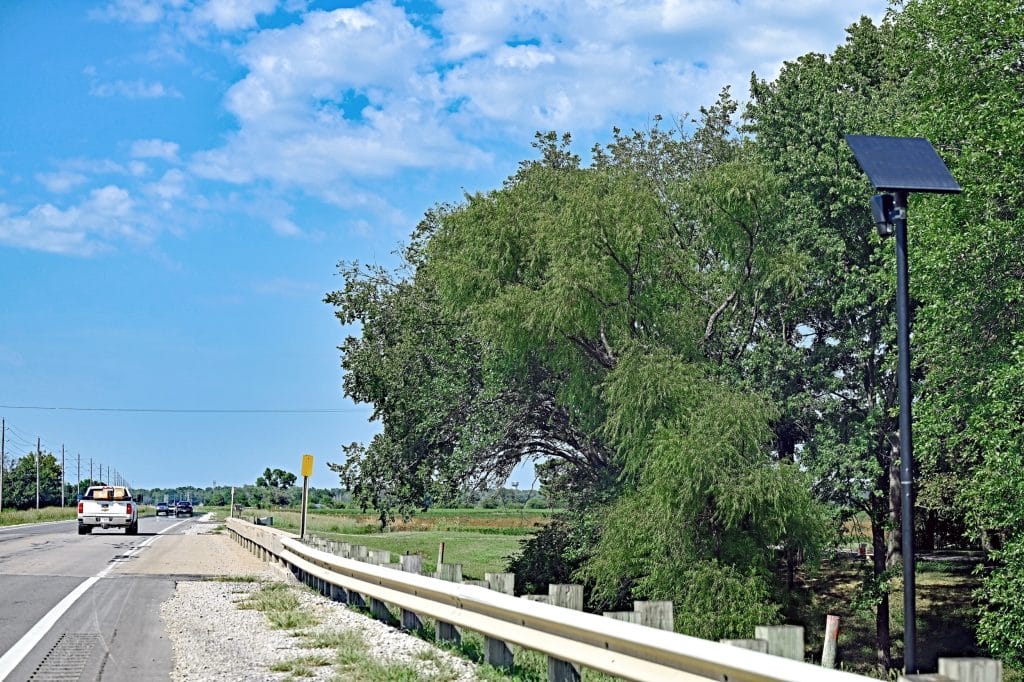
A month of disclosures about police misuse, data-sharing failures, and security weaknesses surrounding Flock Safety’s automated license plate reader (ALPR) network culminated this week in a U.S. Senate hearing, at which the company acknowledged that it provides little oversight of how law enforcement customers search its system, and that some of its cameras can be used to search images for people.
The hearing was convened as lawmakers consider proposals ranging from warrant requirements and restrictions on federal funding to broader limits on law enforcement use of ALPR networks
Flock CEO Garrett Langley declined an invitation to appear at the Senate Judiciary Subcommittee on Crime and Counterterrorism hearing on Flock this week.
The CEOs of Axon Enterprise, Motorola Solutions, and Verkada also declined to testify.
Langley instead responded in writing to questions from subcommittee chairman Sen. Josh Hawley, who had opened an investigation of Flock in August over the collection, retention, and dissemination of information generated by its camera network.
Hawley said at the hearing that Flock had privately acknowledged in its response that it “conducts very little oversight of client searches” and instead relies largely on the law enforcement agencies using its technology to police themselves.
Hawley said Flock also acknowledged that “it is possible to search for humans in images.”
Flock later clarified that statement, saying searches for people apply to images from its non-license plate reader cameras and rely on visible characteristics such as clothing or glasses rather than biometric templates. The company said it blocks searches based on race, skin tone, or ethnicity.
Flock says its cameras do not use facial recognition, and no evidence shows its ALPR cameras perform facial identification. But the disclosure comes amid growing scrutiny of how far the company’s technology has moved beyond simply reading license plates.
That question became considerably more concrete this month when hackers physically obtained a Flock camera, and researchers examined what was running inside it.
The hackers recovered an encryption key stored on the device that they said let them decrypt thousands of vehicle detection videos. Researchers found that software running on the camera explicitly detected not only vehicles and license plates, but also people and bicycles.
Logs covering roughly 21 days showed the single camera had observed about 50,200 vehicles and generated approximately 1.6 million images. On an average day, it logged about 3,300 vehicles.
The system could generate dozens of images from a single passing vehicle. Researchers also found instances in which the computer vision system isolated graphics and other details, including an American flag patch on a motorcycle saddlebag.
September has seen a cascade of cases in which Flock’s audit records were used to uncover alleged or substantiated misuse by law enforcement personnel.
On September 23, Marion County, Indiana, prosecutors charged five current or former Indianapolis Metropolitan Police Department officers in connection with alleged improper Flock searches.
Court records say one officer made more than 4,400 searches involving his wife, a man he suspected she was seeing, and one of her friends between December 2024 and August 2026.
Two other officers collectively made more than 2,000 unauthorized searches, and a third faces stalking charges in addition to fraud and official misconduct allegations.
A day later, Indiana State Police arrested a Hancock County Sheriff’s deputy after an investigation uncovered what police described as unauthorized ALPR searches involving people personally known to him.
Court records show nearly 6,200 searches between December 2024 and March 2026.
Those cases joined a rapidly growing collection of investigations across the country involving officers accused of using Flock to monitor spouses, former partners, romantic interests, acquaintances, and others without a legitimate law enforcement purpose.
Some cases have resulted in firings, resignations, arrests, or criminal charges. Others remain under administrative or criminal investigation.
The pattern is particularly relevant to Langley’s Senate response because Flock’s position places much of the responsibility for detecting improper searches on the agencies operating the system.
Flock announced new safeguards in August, including required case codes, mandatory automated audit assistance intended to identify abnormal activity, and a recommended reduction in default ALPR data retention from 30 days to seven.
But many of the misuse cases involved searches that persisted for months before being detected.
Sens. Ron Wyden and Adam Schiff raised that problem directly in a September 17 letter to Langley questioning whether Flock’s safeguards are adequate. Wyden and Rep. Raja Krishnamoorthi earlier urged the Federal Trade Commission to investigate Flock.
Wyden and Schiff asked why the company replaced free-text explanations for searches with generic offense categories, how that change would prevent an officer from selecting a false or pretextual category, and when Flock’s proactive lockout system would become mandatory for law enforcement customers.
They also asked whether Flock would periodically assess whether agencies were complying with its safeguards.
Boston’s 2025 Surveillance Technology Report disclosed that Flock mistakenly made Boston Police Department (BPD) ALPR information available outside the city despite a contract expressly requiring external sharing to be disabled.
Boston began a free 156-day Flock pilot on April 1, 2025, using about 45 cameras. The city intended the system to operate as an island, separate from Flock’s broader law enforcement network.
According to the report, BPD confirmed with Flock that sharing settings were turned off.
Three days into the pilot, however, police discovered that outside agencies could access Boston’s information because of what the report called a vendor error.
The city has not established that an outside agency searched Boston’s records during that period. But the incident demonstrated that a contractual restriction intended to prevent dissemination did not initially produce the technical restriction Boston believed it had purchased.
Mayor Michelle Wu has since said Boston has abandoned Flock.
The disclosure is particularly relevant to immigration enforcement because Boston limits its cooperation with federal immigration authorities.
Reporting has documented local police conducting Flock searches on behalf of Immigration and Customs Enforcement, including in jurisdictions where cooperation with immigration authorities or transferring ALPR information out of state was restricted.
At Wednesday’s Senate hearing, American Civil Liberties Union senior policy counsel Chad Marlow told senators that restrictions on direct federal access may be insufficient if an officer at an agency with access conducts a search on a federal agency’s behalf.
The Senate hearing reflected bipartisan concern over a technology that has also demonstrated substantial law enforcement utility.
Hawley said ALPR technology can help police catch criminals but argued that the scale and searchability of modern camera networks create privacy issues substantially different from traditional plate readers.
Sen. Dick Durbin, the subcommittee’s ranking member, similarly said Congress needs to balance security and privacy.
The hearing included testimony from Lindsey Isaacs, a Florida woman who spent 13 days in jail after Florida Highway Patrol investigators used a Flock image during an investigation into an October 2025 crash that killed three people.
Flock data had captured Isaacs’ Dodge Durango several miles from the crash scene. Investigators arrested her on multiple felony allegations. After she spent 13 days in jail, prosecutors declined to charge her, and they later charged another driver.
The case illustrates another limitation of automated surveillance data. The Flock record itself did not falsely identify Isaacs as the person responsible for the crash. Rather, investigators gave the location record evidentiary significance that Isaacs and her attorneys contend it could not support.
Flock has maintained that its system accurately reported where her vehicle was observed and has argued that the record should have been treated as potentially exculpatory rather than evidence establishing guilt.
Pinal County, Arizona, Sheriff Ross Teeple told senators his department ended its relationship with Flock after he became concerned about the technology’s capabilities and governance.
Teeple testified that he initially was told Flock’s cameras did not have sufficient resolution to recognize a person. When he later questioned the company about apparently contradictory descriptions of its AI capabilities, he said he was told, “That wasn’t the AI you were asking about.”
Flock says its different camera products have different capabilities and has emphasized that searching images for visible human characteristics is not facial recognition.
The controversy now confronting Flock has grown beyond whether individual officers have abused a police database.
The company has built a network it says includes more than 120,000 cameras across 49 states and processes billions of vehicle observations.
Depending on agency settings and sharing arrangements, information collected by one jurisdiction can be available to investigators far beyond the community where a camera is installed.
Flock says customers control their data and sharing settings, that it does not sell customer data, and that no secret federal backdoor exists in its network. Recent disclosures, though, have exposed several points where those controls can fail or prove insufficient.
Flock told Congress that it performs relatively little oversight of individual customer searches, and has responded to concerns with new safeguards, including stronger auditing and requirements intended to tie searches more closely to actual investigations.
It also maintains that its technology has helped law enforcement locate missing persons, recover stolen vehicles, and solve serious crimes.
Related Posts
-
 November 9, 2025
-
 November 4, 2025
-
 November 13, 2025
-
 February 26, 2026
-
July 29, 2026
-
 September 17, 2026
Article Topics
ANPR | biometrics | facial recognition | Flock Safety | law enforcement | license plate readers | U.S. Government | United States

Comments