
Ghana Card digital wallet to facilitate bank transfers, mobile money payments
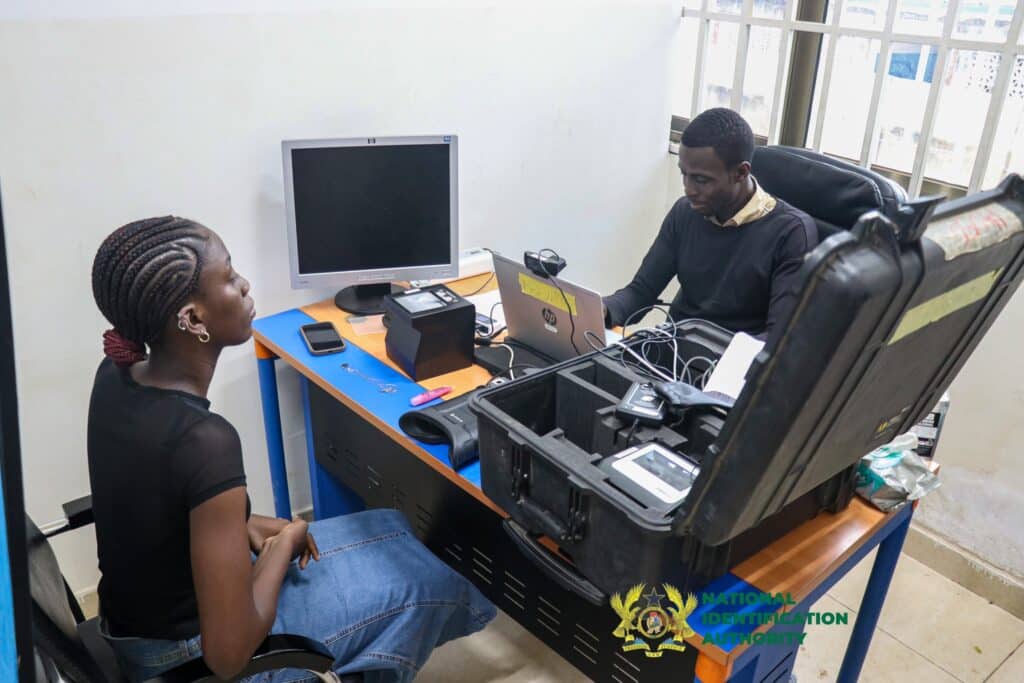
The upcoming activation of the e-wallet feature on Ghana’s national ID card (Ghana Card) will allow users to link their bank accounts and load mobile money balances, transforming the national ID into a comprehensive and trusted financial tool.
National Identification Authority (NIA) Executive Secretary, Wisdom Kwaku Deku, disclosed this development during a recent interview with local channel Atinka TV.
Deku confirmed that the digital wallet activation will be rolled out in phases, noting that consultations with key stakeholders including the Bank of Ghana have reached an advanced stage. The e-wallet is the third functional profile on the ID card in addition to the digital ID, and e-passport function for international travel which went operational in 2022.
Efforts to integrate financial services into the national ID have been in the works for several months. Deku had explained in September 2025 that the feature would allow holders to make and receive payments using the card as an authentication tool, serving as both a robust security measure and a revenue-generating initiative for the NIA. In the wake of rumours of a launch in April, the NIA issued a statement to clarify that stakeholder consultations were still ongoing.
Once fully activated, the digital wallet will be secured using the user’s biometrics and a Personal Identification Number (PIN) to prevent fraud, according to the NIA official.
The planned wallet rollout underscores a growing global trend where countries are transitioning national IDs from static administrative documents into dynamic and multi-purpose digital identities which can streamline access to a wide range of government and private sector services, drive financial inclusion and support the switch to cashless economies.
Having a digital payment directly linked to a trusted national ID, officials say, can reduce fraud, lower the barrier to entry for the unbanked Ghanaians as the identity credential itself becomes the payment tool, and also create a sovereign payment infrastructure that is not dependent on a single bank or card network.
With over 20 million Ghanaians now registered for the Ghana Card, the NIA believes integrating a digital wallet will directly impact the daily financial lives of the majority of the population, which is in line with the financial inclusion goal of the country’s central bank.
A similar initiative is seen in Malaysia which recently began issuing a new generation of its MyKad national ID featuring a biometric QR code and an optional wallet function to streamline digital Know Your Customer (KYC) processes for commercial entities eventually.
Meanwhile, Deku also said in the interview that the enforcement of compulsory biometric verification and the ban of ID card photocopying for ID verification will begin in November. The measure had gone into effect in principle in March.
He also disclosed plans by the ID authority to launch what is described as a circumstance app that would enable cardholders to update changes in their circumstances, including employment, marital status, and residential address. Deku also reiterated plans to expand enrollment of newborns at hospitals for the Ghana Card.
Related Posts
-
 September 24, 2025
-
 April 3, 2026
-
 February 27, 2026
-
 October 31, 2025
-
 February 11, 2026
-
 November 6, 2025
Article Topics
biometrics | digital payments | digital wallets | Ghana | Ghana Card | identity document | national ID

Comments