
Hollywood gives indiscriminate live facial recognition the superhero treatment
The cliché popularized by Spider-Man movies that “with great power comes great responsibility” clashes with the popular quote by English historian and politician Lord Acton that “power tends to corrupt, and absolute power corrupts absolutely.” One is aspirational, one is observational.
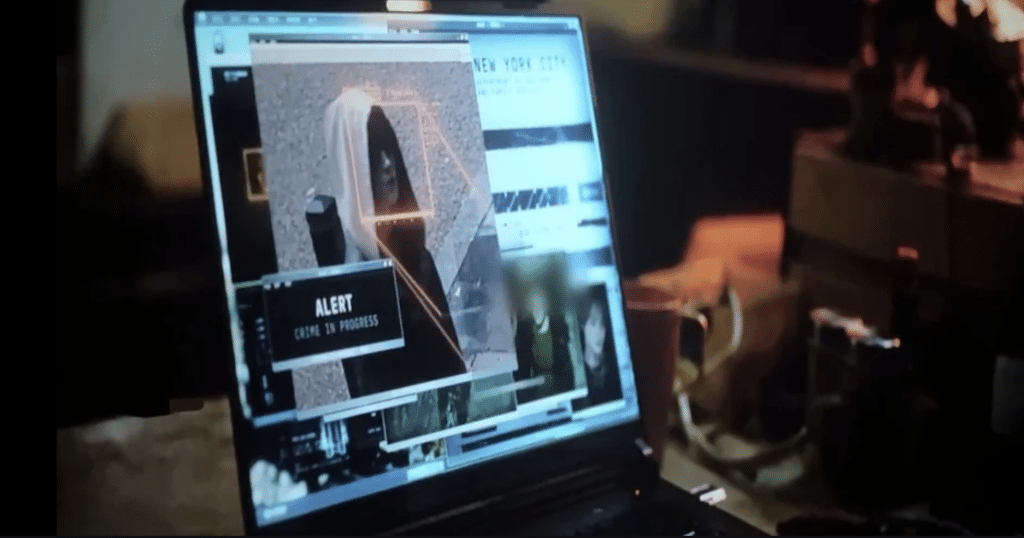
The indiscriminate use of live facial recognition in box office smash hit Spider-Man: Brand New Day raises the question of whether America’s entertainment industry is trying to use its great power to redefine responsible biometrics use for the public.
Real-time facial recognition in public spaces is illegal in most places, including New York, where the movie is set, and even in private spaces LFR use is tightly regulated. The illegality of the system is noted as soon as it is introduced as a plot point.
The ridiculous conceit of a high-angle, low-light image capture of a teenager returning a single, accurate and completely certain match may be beside the point. The growing list of Americans wrongfully arrested based on procedural violations involving facial recognition – a more accurate and controlled version of the technology, at that – will disagree.
Particularly given the response of Spider-Man’s police contact to his facial recognition use: “I’m going to pretend I didn’t hear that.”
So is Spider-Man, mass-surveillance practitioner, advocating for an authoritarian approach to law enforcement?
ThePrint notes in a good review of Hollywood’s embrace of the concept that mass surveillance is only a problem when controlled by “bad guys” that facial recognition was recently deployed by police against protesters at Jantar Mantar in Delhi.
At least Delhi police used mug shots to identify people at a rally organized by the Cockroach Janta Party. In Brand New Day, Spider-Man compares surveillance camera footage to the private medical records of a child.
But then, Delhi police appear to have identified 25 people who were in jail at the time as present at the protests, according to Outlook, which brings us back to the misconception that facial recognition identifications are deterministic, rather than probabilistic.
And the response of the law enforcement authorities using facial recognition on the Delhi protestors? In the words of the BBC: “overwhelming violence.”
In the U.S., court records allege ICE officers used live facial recognition to identify people observing immigration enforcement interactions, and in at least one case revoke travel credentials.
Batman as good guy, Peter Parker as hoodwinked tool of corrupt power
ThePrint points out that Spider-Man deals with the consequences of out-of-control surveillance in a previous film in the series, and still can’t recognize the danger of his illegal technology use.
Batman is warned against the use of powerful mass surveillance technology in The Dark Knight, and while he uses it once, the psychologically-scarred crime-fighter destroys it later in the movie.
Spider-Man, on the other hand, realizes that he has been tricked about who the “bad guy” is in the scenario in which he has illegally deployed live facial recognition in public.
Maybe the character will grow from the experience, and Peter Parker will be able to recognize the responsibility that comes with power. Lord Acton would be sceptical.
Related Posts
-
 October 2, 2025
-
 November 4, 2025
-
 August 24, 2026
-
 January 12, 2026
-
 July 17, 2026
-
 October 30, 2025
Article Topics
biometrics | facial recognition | law enforcement | live facial recognition | responsible biometrics

Comments