
IB powers touchless fingerprint biometrics capture on standard police smartphones
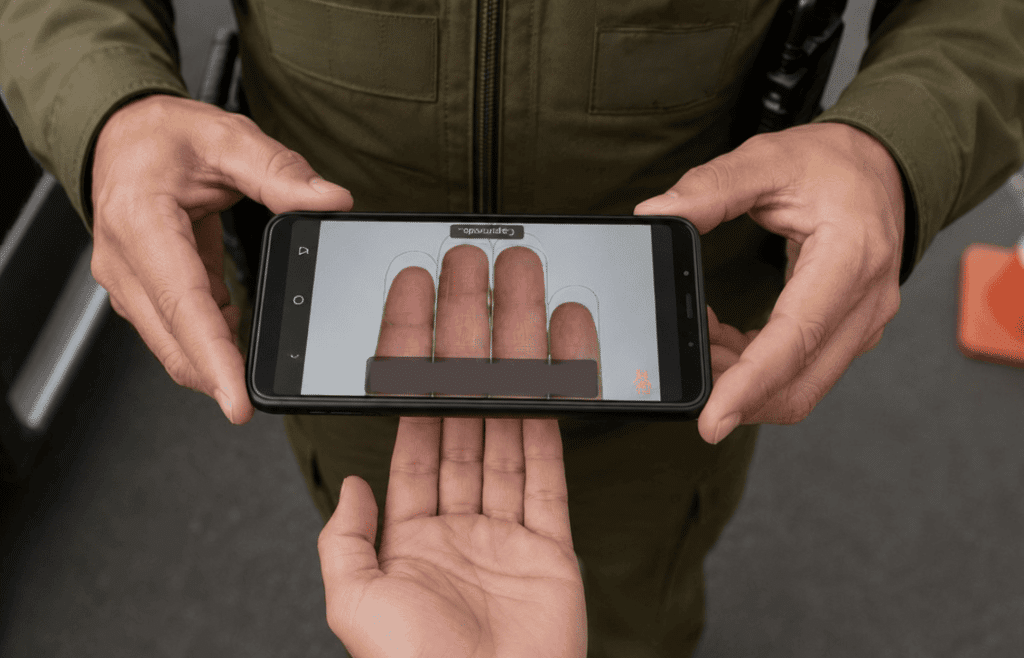
Touchless fingerprint biometrics are giving law enforcement officers the ability to identify people quickly in the field without dedicated hardware. Placer County Sheriff’s Office (PCSO) adopted the emerging technology to turn the standard county-issued iPhones that officers use into biometrics capture devices with software supplied by Integrated Biometrics.
The county just outside Sacramento, California integrated the CamraIB software to collect touchless fingerprint biometrics on the iPhone’s normal camera through a collaboration with Sacramento-based Computer Deductions Inc. (CDI).
Demand for the technology from PCSO deputies was overwhelming, according to a case study from the partners.
CDI’s backend integration includes the records management system (RMS) used by PCSO. Face biometrics are part of a multi-factor authentication (MFA) system supplied by Okta to secure access and log user activity for compliance with Criminal Justice Information Services (CJIS) standards.
Devices running CamraIB can produce 500ppi fingerprint images from four-finger identification slaps. PCSO instantly sends back data on prior arrests, warrants and personal alerts on the same screen.
Heather Pence, who is responsible for PCSO’s IT and technology, called the app “cutting-edge, readily available, and easy to use,” and noted that it was easily installed during morning meetings.
From development hurdles to planned enhancements
Apple developer requirements posed a significant hurdle to the project, the partners say. The legal and technical challenges were navigated in part through the efforts of former PCSO IT Manager Jerry Silva, IB says, bridging the gap between emerging tech requirements and practical law enforcement needs with country counsel involvement.
PCSO was able to supply the technology to more than 200 deputies with funds from Cal-ID RAN Board.
The solution is tuned to avoid false positives, and no false positive matches have been reported so far.
In addition to suspects, PCSO deputies can capture fingerprints on their iPhones to identify uncooperative or recently-deceased people.
One of the next challenges for IB and CDI is to improve biometric performance in uncontrolled scenarios and when confronted with positioning issues, such as for handcuffed suspects. Backend adjustments by CDI have minimized no-hits on expected matches, the companies say. A browser-based implementation of CamraIB could reduce latency in high-volume scenarios with more computing power.
PCSO is interested in adding access to databases beyond local records to the solution. Other potential applications include checking prison inmates in and out during transfers.
IB began offering touchless fingerprinting for smartphones in 2021 through a partnership with Sciometrics. The company has since worked on the development of mobile palm biometric scanners and FAP60 full-palm scanning for police.
Related Posts
-
 November 13, 2025
-
 July 10, 2026
-
 October 29, 2025
-
 December 5, 2025
-
March 11, 2026
-
 July 29, 2026
Article Topics
biometric identification | contactless biometrics | criminal ID | fingerprint biometrics | Integrated Biometrics | iPhone | law enforcement

Comments