
ICAO commits to progress in digitizing traveler identification systems
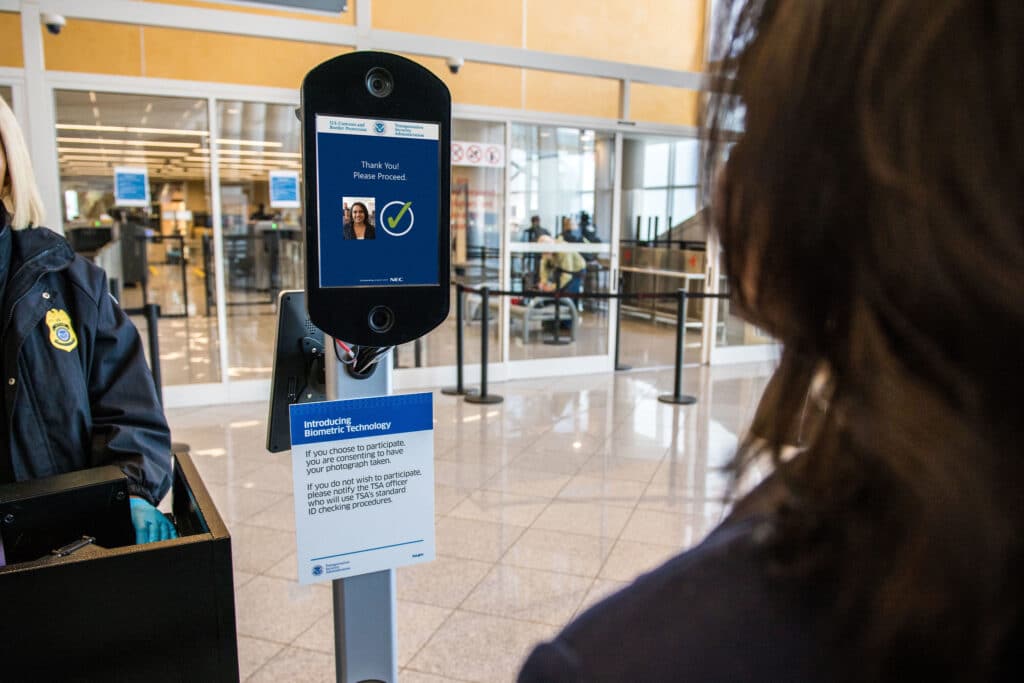
Digital identity tends to gain traction in use cases that solve real-world problems. Travel is a process filled with pain points – and so it is not surprising that it is a sector that has moved to integrate digital ID and biometrics quickly into airports, seeking improvements to the post-9/11 model that prioritized security at the expense of comfort and efficiency. New digital identity and biometrics pilots and services are ever increasing in the U.S. But they do not always move quickly.
There is a sense of urgency in an announcement from the International Civil Aviation Organization (ICAO) that governments and industry have renewed commitments to accelerate the shift to digital identity and contact-free border processing.
A release noting the recent ICAO TRIP Symposium observes that “countries are moving forward with national programs using multimodal biometrics, automated gates, and even contactless and digitally enabled travel for their residents.” Automation has taken over tedious manual checks, freeing up officers to focus on oversight and critical risk.
The symposium saw growing consensus that “automation and data-driven risk management enable most travelers to be processed with less friction while frontline officers can focus on higher-risk cases. Redesigned operational models can allow one officer to oversee several automated lanes, reducing staffing burdens and overtime.”
On one hand, it is worth pointing out that this could easily translate, from a worker’s perspective, to “more automation means paying fewer humans.” On the other hand, there is good reason to fix a system that has, for the past 25 years, imposed tight restrictions on the majority, even though most travelers pose no security risk whatsoever.
ICAO Council President Toshiyuki Onuma sums up the goal. “We must ensure that travel becomes smarter, more inclusive, and seamless, without compromising security or convenience,” he says. “By doing so, we will sustain the international trust that underpins the development of air transport worldwide.”
Standards align nations at different stages of digital transformation
The international shift to seamless travel is not happening in unison: different legal frameworks and states at different levels of readiness pose challenges for a global transition. Some countries have already begun establishing ecosystems leveraging biometrics and digital credentials. Others face technical obstacles.
But a commitment to aligning with ICAO specifications and standards will put everyone on a common path toward the ultimate goal of interoperability across borders.
“While technologies and operational models may differ across States, alignment with ICAO Standards and Recommended Practices (SARPs), technical specifications and guidance material is essential to ensuring global trust, recognition and cross-border compatibility,” the organization says.
The ICAO is developing the ICAO Digital Travel Credential and maintains the ICAO Public Key Directory, to support compatibility and security across national systems.
Cooperation, coordination key to establishing trust
As projects take shape and government and industry align, digital travel is moving beyond proof-of-concept into a maturation phase. Bottlenecks remain: interoperability is the main project, but relying-party acceptance and identity governance must also be solved. And business cases must be made to transition pilots into everyday infrastructure.
“Automation and human capacity must develop in parallel,” says ICAO, “but legal and administrative frameworks must be established before real-time or interactive systems can be scaled effectively.” Pilots should continue – but it is only through regional and global cooperation, and “incremental, feedback-driven rollouts” that the linked goals of safety and interoperability can be achieved.
Securing every link in the traveler identity chain, from civil registration and document issuance to border control and digital access, is also a critical measure to establish the foundation of any functional identity system: trust. This, says the ICAO, is what must exist for a successful, seamless global travel environment.
‘Airports should be designed to embrace this technology’
A session on ‘Advancing Digital Identity & Seamless Travel Efforts,’ held at the recent FTE Global 2026 in Dallas, Texas, features leaders from Tampa International Airport, U.S. Travel Association, the American Association of Motor Vehicle Administrators (AAMVA) and Ernst & Young (EY) discussing how digital identity is becoming a critical enabler of the next generation of seamless travel.
Future Travel Experience, which hosts FTE Global, quotes Tampa International Airport Director of Digital Technologies & Innovation Douglas Wycoff, who says digital identification will be “the game-changer over the next three to five years.”
“The key element of the digital solution is a consistent, uniform experience that compliments the journey from curb to gate,” he says. “To use a piecemeal solution would be potentially confusing to our guests.”
Wycoff speaks to the need to help push biometrics pilots into full deployment with coordination across the entire airport. “The constant crossroads of developing technology, communication/collaboration breakdowns, and building the synergy between all airlines and the airport facility is the major challenge affecting these solutions going into full production,” he says.
Nonetheless, he believes digital identity technologies “could be the single most impactful transformation in ticket level designs and passenger flow portals, while being a huge saving in terms of staffing for the airlines.”
“Airports should be designed to embrace this technology and require airlines to participate,” he says. “The concept of the airline managing the passenger from the moment they arrive at the door is no longer relevant. Unless a passenger has a specific or unique issue, this technology should keep a traveller from having to interact with airline personnel until they get to the gate.”
Trust still not at cruising altitude
The takeaways from both events are similar. The time for trials is over. In order to leverage digital identity’s full range of benefits, collaboration and cross-departmental coordination is necessary. Investment will follow successful business cases. And the market wants digital ID.
FTE cites numbers showing that more than 80 percent of American travellers embrace biometric technology. The infrastructure is developing to support full production deployments of contactless airport systems. The adoption of TSA-compatible mobile driver’s licenses (mDL) continues. And so does innovation: U.S. Customs and Border Protection (CBP) is currently seeking a biometric capture system that can photograph Global Entry travelers while they walk through airport arrival lanes, moving the trusted traveler program toward continuous-flow facial comparison.
Airports are ready for digital ID. Digital ID is ready for airports. Now, the remaining question is one that has dogged travelers since the dawn of commercial flight: why is this taking so long?
One answer is that trust is not yet fully established. Take a recent audit by the Department of Homeland Security (DHS) inspector general (IG), which found that a vendor supporting the TSA’s biometric checkpoint system could access and extract passengers’ driver’s license and passport images during troubleshooting and system upgrades without the agency knowing. A leaky ship is one thing, but when it comes to travel, for trust to flourish, the experience must be seamless – and airtight.
Related Posts
-
 June 22, 2026
-
 January 15, 2026
-
 May 27, 2026
-
 March 27, 2026
-
November 21, 2025
-
 July 1, 2026
Article Topics
airport biometrics | biometrics | border security | digital ID | digital travel | digital travel credentials | digital trust | ICAO

Comments