
Indonesia’s IKD digital ID passes 20.5M users
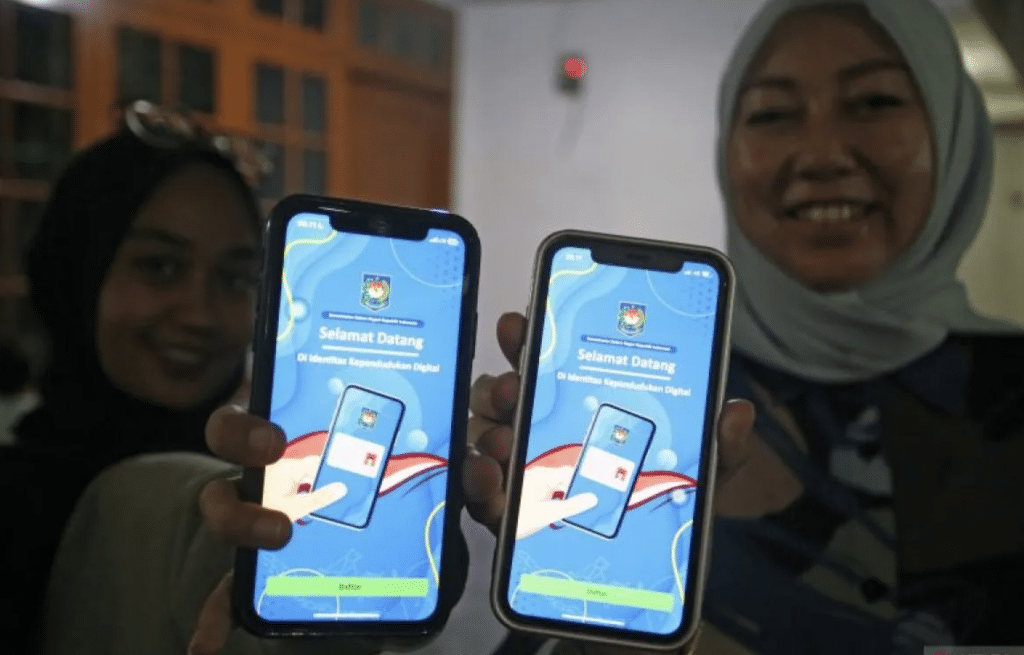
Indonesia’s digital population identity program has passed 20.5 million users, according to the Directorate General of Population and Civil Registration (Dukcapil).
Activations of the Identitas Kependudukan Digital (IKD) rose steadily over the past two years, increasing from 13 million in late 2024 to nearly 15 million in early 2025. By the end of 2025 it had risen to 17.4 million.
The Ministry of Home Affairs recorded that 208 million Indonesian citizens had undergone electronic ID card (KTP-el) registration by the first half of 2026, representing 97 percent of the total population required to hold such identification.
By the first half of 2026, 20,598,478 residents had registered, representing 9.9 percent of the 208.5 million citizens required to hold an ID card. The figures were presented by Dukcapil Director General Teguh Setyabudi at the National Coordination Meeting on Population and Civil Registration in Jakarta. The growth reflects rising public trust in digital identity services, according to the director general.
“The IKD is not merely a digital version of the electronic ID card [KTP-el]; it serves as a gateway to a transformation in public services, making them faster, more secure, and more efficient,” said Teguh. “Moving forward, the public will find it increasingly easy to access various government services using a single, verified digital identity.”
The IKD allows users to access more than ten administration services through a single application, eliminating the need to carry physical documents. The system serves as the foundation for interoperability across government agencies as the country builds out its broader digital public infrastructure.
A pilot program has already linked digital identity to social assistance distribution in 43 regencies and cities covering 38 million residents and supported by 140,000 facilitators. Officials said this rollout contributed to the rise in IKD activations.
Population data is increasingly used across sectors. As of June 30, Dukcapil had signed 7,693 cooperation agreements with ministries, agencies and local governments. The system now processes between 7 and 9 million verification requests daily, with total data access surpassing 20 billion instances.
Facial recognition services are also expanding, with more than 667 million uses in the first half of 2026 mainly in banking, government, health insurance and digital payment services.
Teguh said the aim is to provide a secure and trusted digital identity that simplifies access to services. “All digital services require a single, valid identity. This is where population data plays a highly strategic role as the foundation for various digital government services. The more accurate our data, the higher the quality of services we can provide to the public,” he said (translated from Bahasa Indonesian into English with Google Translate).
Officials emphasized that the IKD is part of a citizen‑centric transformation, designed to make government more effective, inclusive and service‑oriented. Separately, the Indonesian government is considering linking social media accounts to national ID cards, integrating the KTP system.
Study highlights gains and barriers in Indonesia’s digital ID rollout
A study provides rare insight into the failings and successes of Indonesia’s e-ID card (KTP-el) and its digital ID (IKD). The researchers, adopting a multi-theoretical approach, develop an evaluation framework that could be useful in contexts where governance is decentralized, such as in many developing countries.
In Digitalizing Population Administration Through Integrated One Data Indonesia Framework: A Case Study of Indonesia’s Electronic Identity Card (KTP-el) and Digital ID (IKD), the Indonesian researchers find improved efficiency has been one of the main outcomes of the e‑KTP digital transformation.
The use of the National Identity Number (NIK) as a single identifier has simplified verification, eliminated duplicate processes, and reduced administrative errors by enabling data integration across different agencies.
Officials report that verification times for services such as BPJS registration, tax filing and bank account opening have been cut significantly. In Jakarta, regional officers said linking the SIAK system with real‑time identity verification APIs now allows requests to be processed online, removing the need to present physical documents. Frontline staff described the change as “transformative.”
BPJS Kesehatan noted fewer fraudulent enrollments in subsidized health insurance programs, attributing the decline to more accurate identity checks and improved targeting of social protection policies.
Citizens with activated digital IDs (IKD) cited convenience in processes requiring quick verification, including SIM card registration, bank account opening and claiming government subsidies. However, activation rates remain below targets, with uptake concentrated among younger, urban and more tech‑savvy groups.
Internet connectivity, digital literacy major barriers
Internet connectivity was identified as the most significant barrier to adoption, particularly in rural and outer island areas where many residents lack reliable access, registered mobile numbers or smartphones.
Regional officers observed that connectivity problems during activation often caused frustration and negative perceptions of the system’s reliability.
Digital literacy was also cited as the main behavioral challenge. Older citizens, low‑income communities and rural populations showed the lowest activation rates and the highest resistance to mobile‑based identity management.
Officers reported recurring difficulties such as fear of making mistakes, distrust of digital security measures and unfamiliarity with mobile interfaces.
The researchers concluded that citizen‑centered approaches, supported by strong institutions and integrated data governance, are key to building inclusive, resilient and sustainable digital public service ecosystems. The study’s framework captures effectiveness across multiple dimensions rather than relying on fragmented assessments.
Related Posts
-
 March 3, 2026
-
 January 12, 2026
-
 February 27, 2026
-
 February 23, 2026
-
 September 7, 2026
-
 December 18, 2025
Article Topics
civil registration | digital ID | Dukcapil | Identitas Kependudukan Digital (IKD) | identity management | Indonesia | KTP

Comments