
Meta’s smart glasses privacy defense falters when AI can use camera without recording light
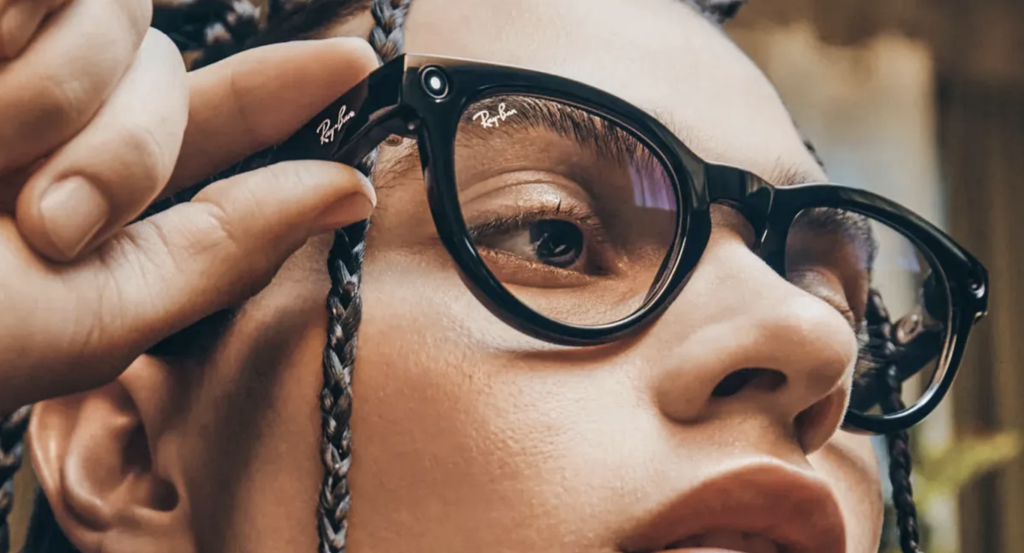
Meta has spent months defending its rapidly expanding line of AI glasses by pointing to a small white light. The company says the capture LED on its glasses warns nearby people when someone takes a photograph or records a video.
But because some users have been trying to block the light to avoid being seen recording, Meta has gone so far as to disable the cameras on thousands of devices after detecting that users had covered, damaged, or removed the light.
Now, Meta’s own documentation exposes a much larger problem with that privacy defense.
On newer models, the LED does not illuminate when a wearer uses camera-based AI features, such as asking the glasses to identify a landmark or plant, according to Ray-Ban’s official FAQs.
Meta says this is because those images are being used by the AI rather than captured as content intended for the user’s gallery. And that’s increasingly difficult to square with a privacy debate that is no longer simply about whether someone knows they are being photographed.
Smart glasses can now use cameras, microphones, cloud-based AI and on-device processing to interpret what is happening around the wearer. The person standing in front of the glasses may see no recording light at all while the device’s camera answers an AI query.
Meta says it does not currently use facial recognition in those consumer AI features and says images used for AI functions are not stored in the user’s Meta AI conversation history.
The company says it removes identifying information such as license plates and phone numbers and that it can use the data in protected form to improve its products.
But the distinction between recording and machine perception is now becoming the central privacy problem confronting the smart-glasses industry.
Meta itself says using its glasses camera for AI can include commands such as asking the system what landmark or plant the wearer is looking at. Its technical documentation says such prompts trigger the glasses to capture an image and pass it to an AI model for interpretation.
The result is a device that can, under some circumstances, use a camera to analyze the world around its wearer without giving nearby people the same visible signal that Meta has made the centerpiece of its defense against covert recording.
That distinction is attracting increasing attention as governments, courts, law enforcement agencies, and even software developers struggle with the consequences of embedding AI-connected cameras in eyewear designed to resemble ordinary glasses.
Meta fights one form of covert capture
The company has taken unusually aggressive action against people who defeat its recording indicator.
Meta recently disabled photo and video functions on thousands of glasses after detecting tampering with the capture LED. Alex Himel, Meta’s vice president of wearables, told Semafor that fewer than one-tenth of one percent of glasses sold had been tampered with.
Meta did not disclose a precise number, but it sold seven million pairs in 2025 alone, putting the affected total in the thousands.
The company has designed newer glasses to refuse to start recording when the light is obstructed, but users have found workarounds, including starting a recording before covering the LED or physically damaging the indicator.
Meta responded with software that can detect those methods and shut down the camera. Devices with a permanently damaged LED can lose camera functionality altogether.
Himel acknowledged that the effort remains a “cat and mouse game” because users keep looking for ways around the safeguards.
Meta says the measures are already deterring businesses that offer LED-tampering services and has said it removes advertisements and listings promoting them.
The company also recommends that users obtain permission from people around them before taking photos or videos.
But those safeguards address deliberate recording. They do not resolve what increasingly separates AI glasses from an ordinary wearable camera, because the device can use its sensors to interpret people, objects, speech, and surroundings even when it is not making a conventional recording for the wearer to save.
The people on the other side of the glasses
That problem is now moving into federal court.
A consolidated class action pending in the U.S. District Court for the Northern District of California was expanded at the end of August to include people who allege Meta glasses captured them even though they neither bought nor wore the devices.
The litigation originally challenged Meta’s privacy representations about the glasses after reporting that contractors reviewing recordings associated with AI use had reviewed them.
The amended complaint extends the theory to bystanders who allegedly had no meaningful opportunity to consent to what happened to information collected about them.
Meta disputes the allegations and has said that when Meta AI is used, data may be reviewed to improve its products while the company takes measures intended to remove identifying information and protect privacy.
The case raises a question that a blinking light cannot answer.
Even if someone sees that a conventional recording is taking place, that does not necessarily tell them whether the resulting imagery or audio will be analyzed by AI, transmitted to servers, reviewed by humans, retained, labeled, or used to improve a model.
And when the LED does not activate during some camera-based AI functions, the bystander may not even have the first piece of information.
That issue has become even more consequential as Meta explores facial recognition for smart glasses.
Meta has not publicly released a consumer facial recognition feature for its glasses and says it does not use facial recognition in the current AI functions described in its Ray-Ban documentation.
But a separate proposed class action filed in Illinois alleges the company used Facebook and Instagram photographs to develop and test an unreleased facial recognition system known as NameTag for its glasses and to create biometric templates without required consent.
Those claims have not been proven in court, and Meta disputes allegations that it unlawfully created or used biometric data.
The distinction is important. The current privacy problem does not require Meta’s glasses to identify everyone they see. The devices can already collect visual information for AI interpretation without the recording signal many people have been told to watch for.
Europe starts asking a different question
European officials increasingly appear less interested in whether the recording light can be defeated than in what the devices should be allowed to do at all.
Norway’s government announced in August that it wants stronger regulation of smart glasses and similar devices. Digitalization and Public Governance Minister Karianne Tung said possible measures could include prohibiting functions that use facial recognition to identify other people in public places.
Tung said the government would create an expert group to examine how to regulate smart glasses and other powerful emerging technologies.
France’s National Commission for Information Technology and Civil Liberties has separately called smart glasses a new privacy challenge and launched an action plan focused on the technology.
Calls for restrictions have intensified across Europe following cases in which girls and women were secretly recorded using smart glasses, and the footage was posted online.
Oslo has banned the devices in schools, while campaigners in Britain are seeking broader restrictions.
The policy argument is consequently moving beyond the relatively narrow question of whether wearers should be forced to leave a light on.
It is moving toward whether certain forms of machine observation and biometric identification should be permissible through consumer eyewear in the first place.
Police discover the problem when the cameras point at them
American law enforcement agencies are confronting the same technology from another direction.
Documents reviewed by the Guardian show police and intelligence organizations from Maine to California warning that smart glasses could be used to secretly record officers, detention facilities and security procedures.
The New York Police Department’s Intelligence and Counterterrorism Bureau warned other police departments in January that smart glasses posed a potential “security and counterintelligence” threat.
Maine’s fusion center warned that some smart glasses could combine AI and facial recognition in ways that might help expose information about officers.
U.S. Immigration and Customs Enforcement (ICE) barred employees from wearing Meta smart glasses in federal workspaces, treating them as body-worn cameras because they could unintentionally capture, record, or transmit sensitive information.
ICE characterized this as enforcing an existing prohibition on personally owned recording devices, not creating an entirely new body-camera policy.
Biometric Update previously reported that Border Patrol and ICE agents in six states had been seen wearing personal Meta AI smart glasses during immigration operations, sometimes apparently recording or photographing people.
Law enforcement, meanwhile, is also beginning to use the same devices.
Public records previously reviewed by Biometric Update showed that the Broward County Sheriff’s Office in Florida bought Meta smart glasses for an undercover Internet Crimes Against Children unit but declined to explain how it would use them operationally.
The Okeechobee County Sheriff’s Office bought six pairs for remote technical support. There was no evidence that either agency was using facial recognition through them.
The contrast is increasingly difficult to ignore.
Police agencies recognize that ordinary looking AI glasses can create serious surveillance and security risks when members of the public point them at government facilities and officers.
At the same time, the U.S. still has no comprehensive federal framework governing what the same category of devices can collect or infer about everyone else.
An app to detect the glasses
The market is beginning to fill that gap.
Polish developer Pawel Szydlowski has created an iPhone app called ZuckOff that searches for Bluetooth signals associated with Meta glasses and estimates how close the devices are.
Business Insider reported that the app has attracted about 5,000 users and has also drawn attention from European regulators.
The app cannot determine whether a nearby pair of glasses is recording or using its camera. It detects the hardware.
That limitation may be the project’s most revealing part.
People are downloading software simply to learn whether an AI-enabled camera disguised as conventional eyewear may be near them because the person being observed otherwise has very little control over the encounter.
Meta argues that its glasses are designed with privacy safeguards and says it continues to strengthen them. Its ability to detect physical tampering and remotely disable cameras demonstrates that those safeguards can be technologically sophisticated.
Related Posts
-
 June 15, 2026
-
April 14, 2026
-
 February 13, 2026
-
 September 7, 2026
-
April 1, 2026
-
February 20, 2026
Article Topics
consumer electronics | facial recognition | Meta | Meta glasses | smart glasses | video surveillance | wearables

Comments