
Moldova upgrades biometric capabilities for border control, law enforcement
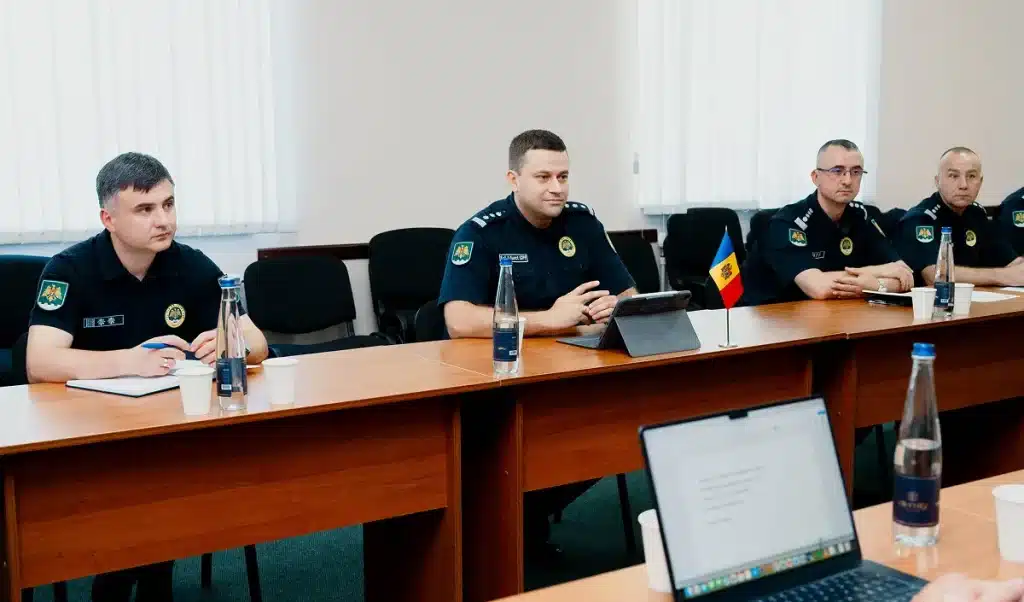
Interpol is working with Moldova to increase its biometric border capacities, in part through two initiatives targeting border crossings by organized criminals and terrorists in the war-torn area around Ukraine. Moldova is currently deploying mobile fingerprint scanners from Integrated Biometrics through the initiatives.
Violent conditions in the region heighten the risk of organized crime and terrorism, Interpol says.
The General Inspectorate of Police of the Republic of Moldova now have 14 lightweight, rugged biometric devices from IB which they will use to collect and verify biometric data through Interpol’s BIOHUB platform.
Project Hotspot is intended to improve the identification of people crossing borders via irregular migration routes. It consists of a legal and strategic framework, capacity building, “the operational roll-out of state-of-the-art, hand-held biometric data collection devices for front line officers,” secure technical infrastructure for checking the data collected and analytical follow-up.
Results are returned within 20 seconds for biometric checks against Interpol’s Automatic Fingerprint Identification System (AFIS), known as I-24/7. At a recent workshop held for Moldovan law enforcement personnel, forensic specialists, border police officers and IT professionals, topics included information sharing and integrating biometric technologies into law enforcement operations, according to the announcement.
A second training session on biometric technology for Moldova’s border police was held weeks later by the U.S. government and the International Organization for Migration (IOM), according to Logos Press.
The IB devices were distributed under “I-FORCE for Operation HOTSPOT.” Interpol launched Project I-FORCE in 2024 to increase regional cooperation among law enforcement agencies in the vicinity of armed conflicts in Eastern and Southeastern Europe. Project I-FORCE is budgeted for 7.8 million euros (approximately US$9 million) and supported by Germany’s Ministry of Foreign Affairs.
A photo accompanying the announcement shows the mobile biometrics scanners supplied are IB’s well-known Five-O model. The scanners will be used in both national and international law enforcement operations, Moldovan officials say.
Integrated Biometrics SVP Orlando Martinez expressed the company’s pride in contributing to the initiative to “enhance security, strengthen international cooperation, and help law enforcement agencies identify individuals accurately and efficiently.”
IB just released a case study of how a Sheriff’s Office in California is using the company’s software for contactless fingerprint biometrics capture by officers in the field.
Moldova advances toward biometric data sharing with EU
A draft law to enable the automated exchange of border control data with EU member states passed its first reading in Moldovan parliament in August. The draft specifies fingerprints, facial images and DNA data as well as vehicle information and police records as data to be shared with European authorities through the Prüm II system, Logos Press reports separately. The General Inspectorate of Police will be the single point of contact for data sharing.
The bill also provides data access tracking as an oversight mechanism, and assigns responsibility for regulating the system’s cyber and data privacy protections.
The proposal now advances to a second reading.
Related Posts
-
 March 20, 2026
-
 November 13, 2025
-
 July 29, 2026
-
 July 14, 2026
-
 January 21, 2026
-
 August 20, 2026
Article Topics
biometric identification | biometrics | border security | data sharing | Integrated Biometrics | Interpol | law enforcement | Moldova

Comments