
Myanmar’s digital ID strategy comes amid a fraught landscape
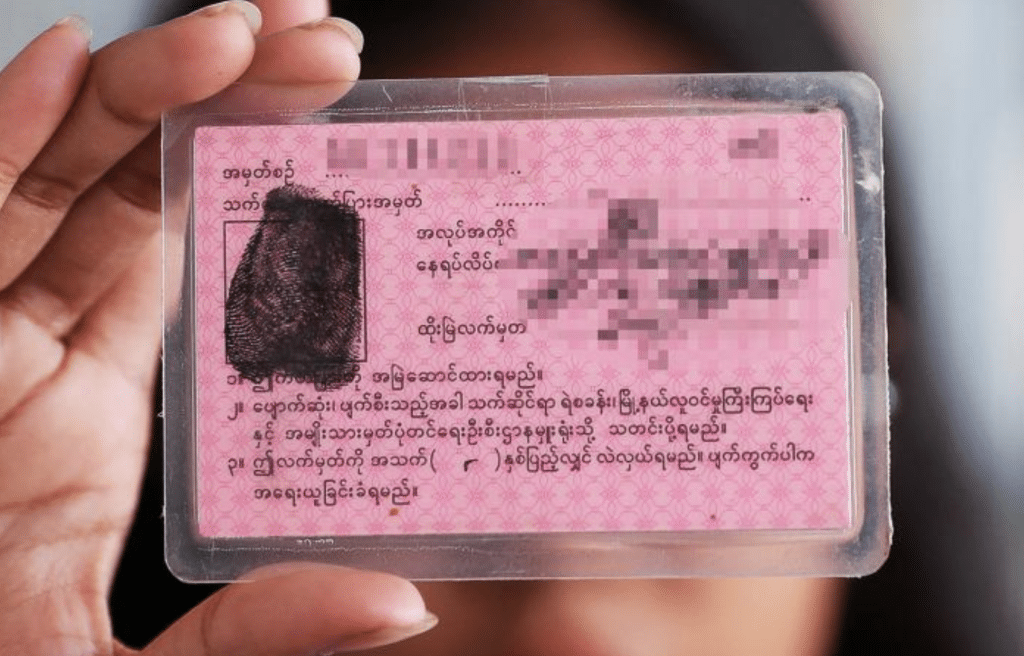
Myanmar’s military government is accelerating construction of national digital identity infrastructure despite ongoing civil war, using a phased deployment strategy that combines offline credentials, centralized biometrics and mobile identity to support its Digital Economy Roadmap 2030.
Hybrid credentials and the requirement for offline verification capability reflect the practical realities of deploying national identity infrastructure across a country fragmented by conflict.
The difficult operating environment has forced a pragmatic deployment model, while the pace of investment suggests digital identity remains a strategic government priority despite the conflict.
Myanmar’s government has launched a Pre‑Qualification tender for the National e‑ID Smart Card Pilot Project for FY 2026–2027. The target is 110,000 cards, split between chip‑based smart cards and VDS paper cards. Local firms are invited to lead bids in partnership with international technology providers.
The pre-qualification tender outlines a centralized issuance system with laser engraving, chip encoding, card management integrated with existing databases, township-level VDS issuance and a mobile ID wallet. An internal procurement blueprint obtained by Biometric Update shows the Ministry of Immigration and Population preparing a hybrid identity infrastructure built around ICAO-compliant polycarbonate smart cards and Visible Digital Seal (VDS) paper credentials. The VDS format uses digitally signed barcodes to enable offline verification while linking both credential types to the national UID database.
Biometric Update sought comment from Myanmar’s Ministry of Immigration and Population on the procurement plans and hybrid card strategy but had not received a response by publication.
This dual approach is designed to overcome logistical limits and infrastructure failures while linking directly to the national Unique ID database.
The integration also ties into the Person Scrutinization and Monitoring System (PSMS), turning credentials into active tools for tracking military conscripts and enforcing regional travel restrictions.
The country’s e-ID system is a core pillar of the Myanmar e-Governance Master Plan 2030, released in late 2024 as an update to the original 2016–2020 plan, and the Myanmar Digital Economy Roadmap 2030.
The La Min project and core database foundation
Myanmar’s e-ID rollout has followed a strict “100-day plan” launched in May. Previously reported, this relies on India’s structural support and the adoption of the open-source MOSIP platform to build the country’s digital identity infrastructure.
The La Min Project is a nationwide mobile service initiative launched by MoIP to accelerate the issuance of National Registration Cards (NRCs), Citizenship Scrutiny Cards (CSCs) and Unique Identification (UID) numbers.
Mobile enrollment teams travel to schools, remote villages and township offices to help eligible individuals who either lack official identification or need to replace lost and damaged cards.
The project targets students aged 10 and older, and citizens aged 18 and above, to ensure that everyone has legal documentation for daily transactions, travel and civic participation. It also means the government is systematically logging the fingerprint and face biometrics of youth.
Myanmar’s biometric Unique Identification (UID) system is a centralized digital identity platform to modernize the country’s paper-based records. Biometric information is being consolidated into a national database to assign each individual a permanent, unique 10-digit identification number.
Built using MOSIP and inspired by India’s Aadhaar program, the infrastructure is intended to lay the groundwork for future electronic smart cards. The military regime has quickly made this 10-digit UID mandatory for essential daily activities, which results in restricting the movement and livelihood of unregistered residents.
Possession of a UID is now strictly required to apply for or renew passports, cross international land borders, register mobile SIM cards, open bank accounts and access government pensions.
MoIP is concurrently combating a parallel ecosystem of online identity fraud. The MoIP has issued emergency public warnings and is actively blacklisting specific phone lines and social media accounts, particularly on TikTok, where organized rings have been fabricating household registries and selling fake appointment tokens.
Digital economy, ASEAN, Myanmar’s political situation
The final stage of Myanmar’s strategy, penciled for 2027 to 2030, envisions the digital ID as the single authentication gateway. This will join up e‑commerce, banking, taxation and legal documentation.
Once infrastructure is secured and linked via 5G, the system will form the foundation for Myanmar’s digital economy. Myanmar’s e-ID rollout intersects with the forthcoming Cybersecurity Law, which mandates data localization, criminalizes non‑government VPN use and requires telecoms to store user‑to‑UID transactional data for up to three years.
Myanmar remains a member state of ASEAN, which is pursuing implementation of the Digital Economy Framework Agreement (DEFA), and sets the stage for regional digital identity interoperability, Although Myanmar has faced a highly contested treatment from its fellow members since the civil war, its digital identity plans nevertheless align with the longer-term DEFA vision.
Legal and privacy protections lacking
Myanmar’s digital ID legal framework remains weak. There is no comprehensive law defining or regulating digital ID. The 2030 e‑Governance Master Plan outlines a transition to digital government but lacks detail on identity systems, as outlined by the Statelessness Encyclopedia Asia Pacific (SEAP).
Privacy protections are fragmented. Article 357 of the 2008 Constitution and the 2017 Privacy Law cover searches and surveillance but do not establish a general data protection regime. The Electronic Transactions Law (2004, amended 2021) and the 2025 Cybersecurity Law add provisions, but none provide enforceable safeguards for UID databases.
There is no independent supervisory authority, no clear rules on encryption and no limits on government access. Myanmar’s UID smart cards and biometric SIM registration are used to track movements and communications without accountability mechanisms.
Human Rights Watch reported in 2021 that UNHCR shared Rohingya refugees’ biometric data with Bangladesh, which was later accessible to Myanmar authorities without consent. Rights groups warn this data could be exploited for forced repatriation, surveillance or discrimination.
Myanmar’s military government has routinely ignored its own legal commitments. There are extensive reports on citizens exposed to surveillance, arbitrary detention and discrimination. The absence of independent oversight means biometric and digital ID systems can be weaponized against vulnerable groups, regardless of the law. However, even flawed laws can provide a foundation for later reforms if political conditions change.
Related Posts
-
 February 11, 2026
-
 October 7, 2025
-
 January 7, 2026
-
 January 5, 2026
-
October 29, 2025
-
 January 29, 2026
Article Topics
ASEAN | biometrics | digital ID | digital ID infrastructure | identity document | Myanmar | procurement

Comments