
SIA defends regulated ALPR use as Flock backlash drives calls for bans
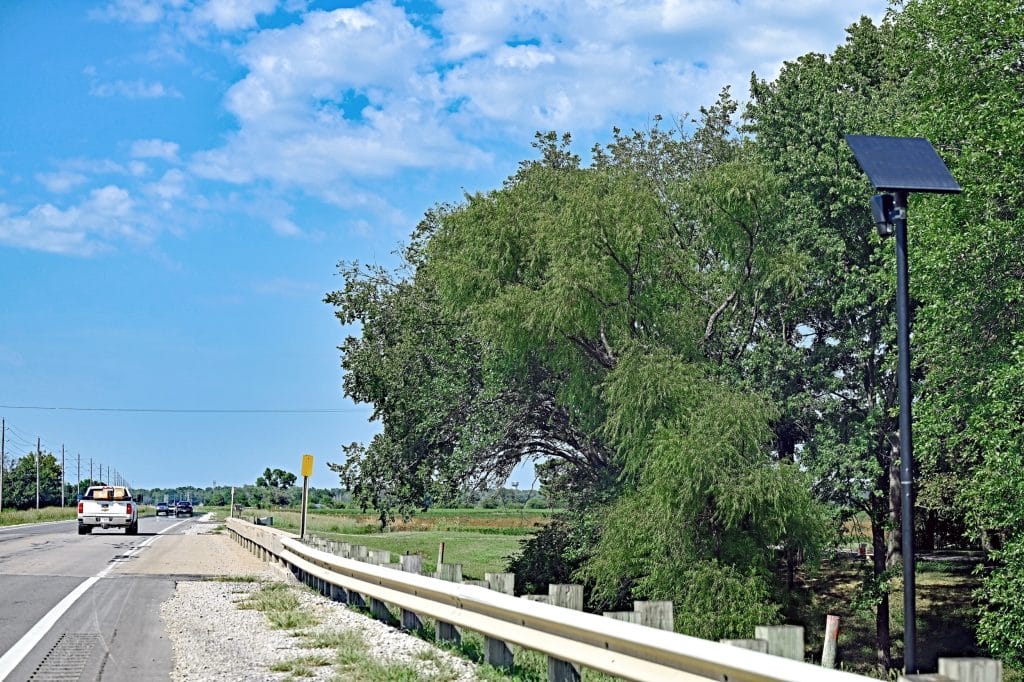
The Security Industry Association (SIA) is defending the continued use of automated license plate readers while calling for tighter privacy safeguards, as mounting backlash against Flock Safety drives bipartisan calls for restrictions and outright bans.
On Wednesday, SIA said automated license plate reader (ALPR) technology should face stronger privacy safeguards, restrictions on data sharing, regular audits, and meaningful penalties for law enforcement misuse.
But the association also drew a firm line against proposals that would require police to obtain warrants before searching ALPR databases, and it rejected the increasingly common characterization of networked plate readers as systems for tracking the movements of people who are not suspected of crimes.
“ALPR is not – and must never become – a tool for mass surveillance or tracking law-abiding citizens,” SIA CEO Don Erickson said.
The debate is increasingly centered on whether networked ALPR systems simply record vehicles passing individual cameras or create searchable location histories capable of reconstructing people’s movements.
SIA argues that an ALPR camera records a vehicle at a specific place and time on a public road, with the vehicle’s license plate visible to anyone.
A vehicle is not being “tracked or queried” merely because a camera records it, the association says, and police generally see the historical observation only when it matches a subsequent search.
SIA says that requiring a warrant before investigators can query that data would render ALPR technology effectively “untenable” for routine investigations and emergencies.
Instead, it supports requiring that investigative searches be based on reasonable suspicion and tied to a specific, documented law enforcement or public safety purpose.
The counterargument, raised by IPVM and increasingly by lawmakers and civil liberties groups, is that focusing on each individual camera capture misses what happens after millions of those observations are pooled into a searchable network.
A camera may make only a point-in-time observation. A network of cameras that retain those observations can reconstruct where a vehicle traveled over time, which, when combined with other datasets, can create a person’s “pattern of life.”
“Flock is not an isolated intersection camera; it is an interconnected national grid of over 120,000 cameras capturing tens of billions of scans per month,” IPVM said. “Storing and searching billions of reads across that nationwide network creates a historical record of where a vehicle and, most commonly, as Flock and police officer stalkers show, where the driver has traveled.”
Newer analytical tools can draw information from the accumulated records, which bear little resemblance to the traditional model of checking a plate against a stolen car hotlist.
That distinction has become increasingly important as Flock, by far the company drawing the most attention in the current controversy, has expanded its reach and capabilities.
The tracking question gets harder
SIA points to recent court rulings in arguing that existing ALPR deployments generally do not constitute Fourth Amendment searches.
In United States v. Porter, the Fifth Circuit ruled in March that police did not conduct a search when they used license plate reader records to locate a suspect’s vehicle.
But the ruling involved a relatively limited network, and the court distinguished those intermittent observations from the much more comprehensive location history at issue in Supreme Court cases involving cellphone data.
A federal judge similarly ruled in January that Norfolk, Virginia’s deployment of 172 Flock cameras did not provide the comprehensive picture of a person’s movements that would trigger Fourth Amendment protection.
That case, Schmidt v. City of Norfolk, is now before the Fourth Circuit.
SIA also cites the Supreme Court’s Chatrie decision involving Google location data to distinguish comprehensive digital location histories from observations of movement on public roads.
But Flock’s technology is increasingly capable of doing more with those public road observations.
Reporting shows that Flock has developed analytical capabilities that can identify vehicles based on movement patterns and surface possible “associates” by flagging vehicles that repeatedly appear near one another.
Flock software also allows police to use some of its camera systems to establish geographic areas and continuously search for people matching written descriptions.
The company says safeguards limit how such tools can be used and that its license plate cameras cannot search person attributes.
However, reporting indicates that some searches involving political, social, or cultural expression result in warnings rather than absolute prohibitions, allowing an officer to acknowledge the warning and continue while creating an audit record.
Another disclosure further complicated the industry’s efforts to separate ALPR from general surveillance.
Flock used a law enforcement webinar to show how its cameras and other police databases could be used by real-time crime centers to monitor planned public events, including parades, fireworks displays, bike races, and protests.
One example involved the nationwide “No Kings” demonstrations.
That kind of use sits uncomfortably alongside one of SIA’s proposed principles, which states that ALPR systems should “never be used to target individuals or groups” solely for exercising First Amendment rights.
Misuse is no longer hypothetical
SIA acknowledges “very serious and verified” cases of law enforcement personnel abusing ALPR systems for personal or improper purposes.
Its proposed answer is stricter access controls, required training, documented reasons for searches, supervisory review, regular audits, and administrative or legal penalties for violations.
The difficulty is that many of the recent Flock abuses were discovered even though agencies already had rules governing appropriate use.
A USA TODAY investigation found that at least 19 police and sheriff’s office employees in five states had been arrested, fired, suspended, or placed under investigation over the preceding two months for potentially improper or illegal Flock searches.
In Dallas, Georgia, investigators accused a 911 director of conducting more than 2,500 searches for vehicles belonging to her estranged husband and his new girlfriend.
A Sarasota, Florida, police officer was accused of searching for an ex-girlfriend’s vehicle at least 335 times.
Lufkin, Texas, suspended its entire Flock program after police arrested an officer following repeated searches of seven vehicles.
An Albany County, New York, sheriff’s investigator was arrested this week after authorities said she conducted more than 4,000 unauthorized Flock searches, approximately 3,000 of them involving the vehicle of a former girlfriend.
The investigation began after the sheriff’s office received outside information, not through routine internal auditing. The agency subsequently restricted access and instituted monthly audits.
Those cases matter to the SIA debate because the association’s proposed solution depends heavily on agencies reliably policing people with access to the systems.
Flock itself has responded to the mounting criticism with substantial changes.
CEO Garrett Langley announced in August that Flock would recommend seven-day ALPR retention rather than 30-day retention and make seven days the default for new law enforcement customers.
The company is also making case codes and its Audit Assistance misuse detection system mandatory for law enforcement customers by the end of the year, adding automatic lockouts for abnormal activity and allowing agencies to restrict external searches based on the type of offense under investigation.
Existing law enforcement customers can retain previously established retention periods; however, the seven-day default does not apply to private-sector customers.
The changes bring Flock considerably closer to the accountability framework SIA is now advocating. They also underscore how much of the existing ALPR framework depends on vendor policies and individual police departments rather than binding law.
Legislatures are choosing between regulation and prohibition
That is beginning to change.
SIA points approvingly to Oregon’s recently enacted Senate Bill 1516 as a model.
The law restricts the purposes for which law enforcement may use ALPR data, generally limits retention to 30 days, requires agency policies and vendor contracts governing the technology, restricts sharing with out-of-state law enforcement agencies, and permits civil penalties and lawsuits for violations.
But other policymakers are moving considerably further than SIA would like.
Reps. Thomas Massie, a Republican from Kentucky, and Eric Burlison, a Republican from Missouri, introduced the bipartisan Flock-Off Act on September 2.
The bill would prohibit using federal funds to purchase, install, operate, maintain, or upgrade networked ALPRs and biometric surveillance cameras, including associated databases and data-sharing systems.
In Pennsylvania, Republican state Sen. Dan Laughlin is preparing legislation to prohibit Flock and substantially similar networked plate-reader systems.
The problem, Laughlin says, is not a camera recording a public roadway but a searchable network that can “track and reconstruct” a person’s travels over time.
Republican state Sen. Doug Mastriano is proposing a different approach that would prohibit mass, suspicionless collection and retention while preserving targeted ALPR use for stolen vehicles, abducted children, fugitives, and criminal investigations.
Virginia state Sens. Lashrecse Aird, a Democrat, and Glen Sturtevant, a Republican, are also preparing legislation that could prohibit ALPR systems statewide.
Governors and state agencies have begun acting without waiting for legislation.
Florida transportation officials have revoked permits for ALPR cameras on state highway rights-of-way after Gov. Ron DeSantis said their use had “gotten out of control.”
Even Texas Gov. Greg Abbott has ordered state agencies to stop funding additional Flock cameras.
The backlash is occurring despite ongoing support for the technology among police departments and evidence that ALPR systems can quickly locate stolen vehicles, suspects, and missing people.
Flock says its technology is now used in thousands of U.S. communities and has contributed to more than one million investigations and the recovery of thousands of missing people.
Those figures are company-reported, but there is little dispute that plate readers can be highly effective investigative tools.
The dispute is increasingly over what else the same infrastructure makes possible.
SIA’s position is that those benefits can be preserved by restricting who may search ALPR records, the purposes for which they may search them, how long the records remain available, and how misuse is detected and punished.
The opposing view is that once thousands of cameras continuously collect the movements of millions of vehicles and make those observations searchable across jurisdictions, reconstructing a person’s movements is no longer an aberrant use of a plate reader. It is an inherent capability of the network.
Related Posts
-
 November 9, 2025
-
 October 20, 2025
-
 July 14, 2026
-
November 6, 2025
-
 July 1, 2026
-
 November 4, 2025
Article Topics
ANPR | Flock Safety | IPVM | law enforcement | license plate readers | Security Industry Association (SIA) | surveillance

Comments