
Sierra Leone links digital sovereignty to local control of DPI
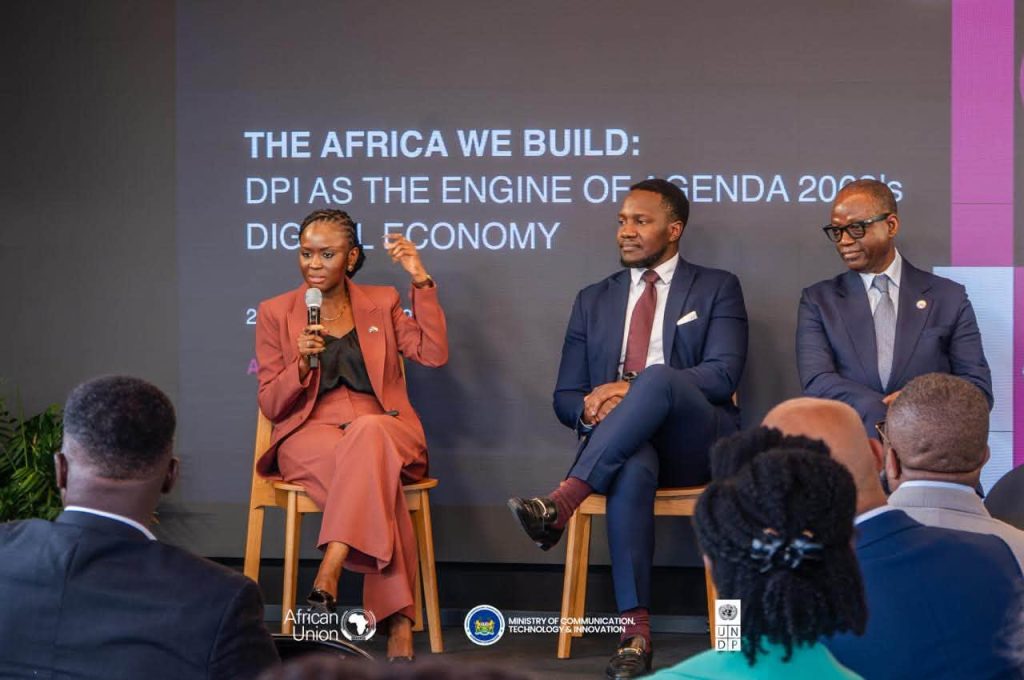
Sierra Leone is positioning local ownership and technical capacity as central to its digital sovereignty strategy as it expands national digital ID, payments and data exchange infrastructure.
Minister of Communication, Technology and Innovation Salima Monorma Bah highlighted the country’s efforts to build the domestic expertise needed to design, adapt and ultimately own its digital public infrastructure (DPI) ecosystem during a ministerial panel on the sidelines of the 81st United Nations General Assembly in New York.
Bah said Sierra Leone has spent the past several years building local capacity to reduce its dependence on external providers for DPI projects.
To support what she described as the country’s success story, she cited the implementation of a foundational digital ID system which now covers more than 93 percent of the country’s population. The minister also spoke of a national payment switch which is being scaled, as well as a data exchange platform which is currently undergoing a pilot in the financial sector.
With these and many other initiatives, Bah underlined that Sierra Leone is moving its DPI agenda from policy intent to delivery, enabling access to public and private sector services for the West African country’s citizens.
She noted that Sierra Leone’s example speaks of the importance of coordination and partnership in building digital public infrastructure. The country is also currently consulting the private sector and other stakeholders as it develops the governance framework for a trusted digital identity ecosystem built on open-source technology and verifiable credentials.
According to Bah, apart from ownership, there is the undeniable need for African countries to strengthen regional cooperation and increase their investment in digital public infrastructure implementation.
Bah echoed this point at the 2026 Annual General Meeting of ID4Africa in Abidjan, Côte d’Ivoire, where she described cooperation and interoperable regional digital ID systems as the next frontier of Africa’s DPI journey. On that occasion, she said Africa was at a critical point in which working solo was not the best approach to building the kind of digital infrastructure that can leapfrog countries and help them meet their ambitious digital economy targets.
Across Africa and in other parts of the world, digital sovereignty, regional collaboration, and frameworks are among the key issues in the digital public infrastructure discourse currently. Nations are building sustainable digital infrastructure, rethinking investment approaches, as well as partnership models to be able to implement solid DPI systems that can effectively support their short, medium, and long-term national development priorities.
Related Posts
-
 December 17, 2025
-
 September 7, 2026
-
 September 16, 2026
-
 June 4, 2026
-
 July 28, 2026
-
 August 6, 2026
Article Topics
Africa | digital public infrastructure | digital sovereignty | identity infrastructure | Sierra Leone

Comments