
Thailand puts verifiable credentials at center of 2027 digital ID strategy
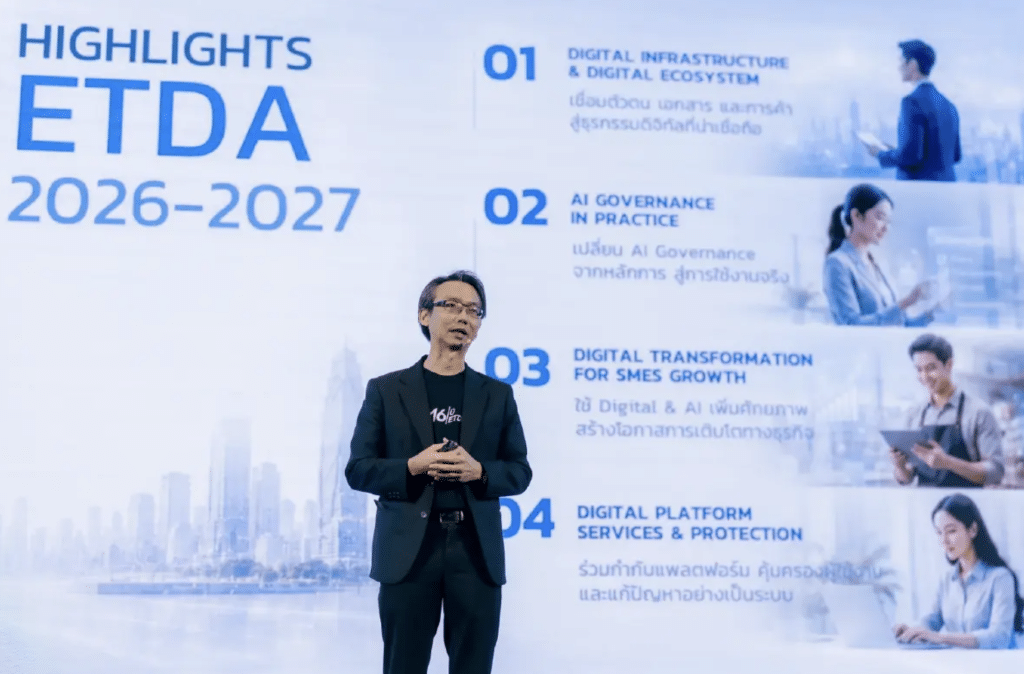
Thailand’s digital development agency is planning big moves for 2027 as it focuses on digital ID and digital transformation.
The Electronic Transaction Development Agency (ETDA) unveiled its “Big Move 2027” that upgrades digital trust and digital identity infrastructure. Four major missions for the next year will be growing small-to-medium-sized businesses (SMEs), regulating digital platform services under the DPS Act, AI governance and digital ID.
Chaichana Mitraphan, director of ETDA, explained that the shift for digital ID is moving from an identity verification system to using verifiable digital rights and digital document wallets. ETDA has issued 28 licenses for digital ID services to date. As of June 2026 a total of 1,797 government e-services have connected to digital ID.
“In 2027, ETDA will accelerate the promotion of verifiable rights and documents through the VC infrastructure and VC ecosystem regulatory mechanism, from the evaluation of service providers to the registration system through the VC Trusted List,” Mitraphan said during a livestreamed broadcast in Thai.
Verifiable credentials and the development of guidelines for businesses to verify and sign contracts online through trusted service providers is the next stage ETDA has in its sights. VCs will be piloted with transcript documents.
Linking references from reliable agencies for verifying the identities of foreigners will also be piloted. ETDA will create a caregiver service on the Dr. Rom app to confirm the relationship between vulnerable groups and caregivers. Reducing fraud is the objective. ETDA’s aims are part of the Digital ID Framework Phase 2 for 2025 to 2027, which looks to target underserved groups and push private sector use cases.
The roadmap includes the ETDA Bootcamp 2026, which will foster digital trust, and Digital Trust Thailand 2026 will connect policy, regulators, service providers and business. The 15th Global Digital ID and VC Summit and Interoperability Testing Event, held in collaboration with the World Bank, will test how Thailand’s system fares against international standards in readiness for cross-border digital transactions.
Representatives of ASEAN member states were hosted in Bangkok recently, convened by the World Bank, to discuss a roadmap for cross-border digital identity and VCs. Marie Eichholtzer, senior digital development specialist for DPI and services at The World Bank, said it was a “great opportunity to exchange on what it really takes to move from national digital ID systems to trusted cross-border use.”
ASEAN is being urged to move quickly but cautiously in advancing cross‑border digital identity. Mahesh Uttamchandani, a regional director at The World Bank, recommended the first step of enabling mobile driving licenses, professional qualifications and business credentials to work across borders. This builds on the region’s Unique Business Identification Number initiative. More sensitive credentials, such as national IDs, could follow once confidence grows.
Under a roadmap endorsed by ASEAN Digital Ministers, the World Bank Group is working with member states to expand digital identity and verifiable credentials, while its private‑sector arm, IFC, is investing in companies like Malaysia’s Zetrix AI to support verification and digital trade.
The Group sees Thailand as well positioned to lead, citing strong connectivity, widespread smartphone use and established platforms such as ThaID and PromptPay. It’s part of a broader partnership between Thailand and the World Bank Group, which are developing a Digital Compact to scale investment in digital transformation and AI.
As Thailand prepares to host the IMF–World Bank Annual Meetings in October, it is expected to showcase how trusted digital infrastructure can strengthen both domestic services and regional cooperation.
Related Posts
-
 December 5, 2025
-
 June 24, 2026
-
 June 25, 2026
-
 June 23, 2026
-
 December 23, 2025
-
 May 25, 2026
Article Topics
ASEAN | cross border identity verification | digital ID infrastructure | digital wallets | Electronic Transactions Development Agency (ETDA) | Thailand | verifiable credentials

Comments