
The new standard of human-centered safety: bridging the identity gap in the age of AI
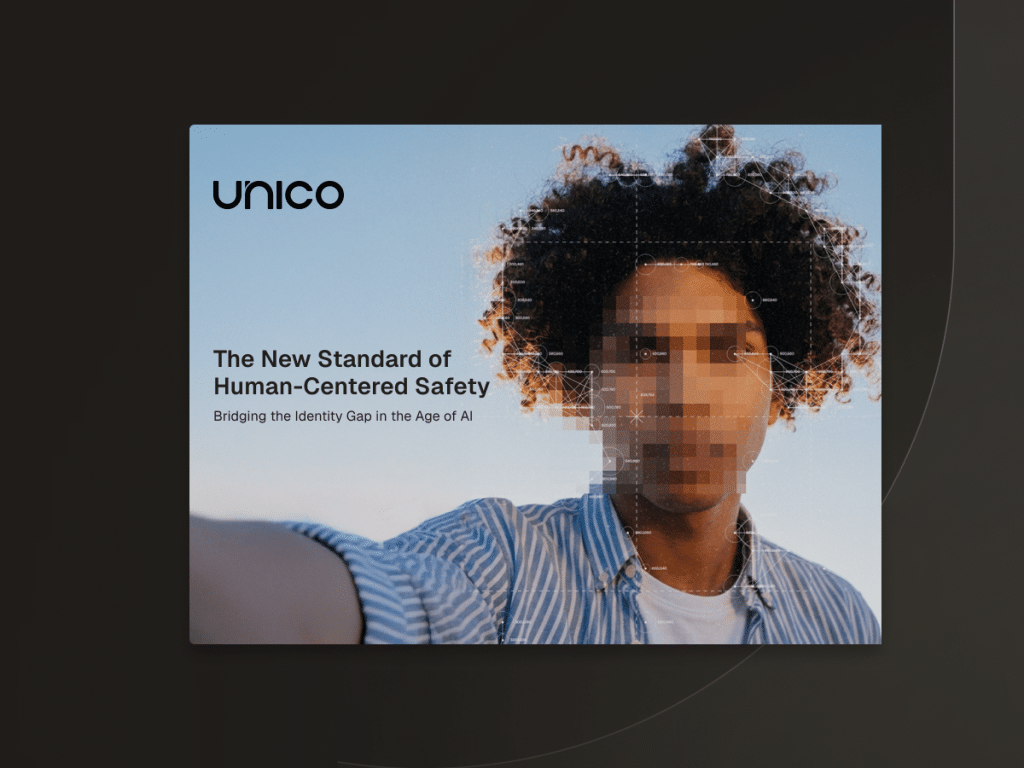
Identity verification has always relied on substitutes. A seal, a signature, a passport, a password, a code sent to a phone. Generative AI has made every one of them cheap to manufacture.
As synthetic identities scale, as documents stop proving uniqueness, and as injection and deepfake attacks climb the sophistication ladder, the layers organizations keep adding around identity produce more attack surface rather than more certainty. That leaves one question for anyone running verification at scale. Is the person on the other side real, present, and the same one who registered?
Unico’s white paper traces five thousand years of identity validation, from Mesopotamian cylinder seals to device-bound face unlock, and shows how every era widened the distance between the person and the proof of that person. It then sets out what closes that distance, drawing on network-scale evidence from Unico’s own evaluation base, including a single fraud actor tied to 949 distinct identity documents and a more than 100x collapse in the cost of executing a sophisticated attack.
Produced in collaboration with Biometric Update, the paper introduces Face Tokenization as an architectural model and examines what moving from point-in-time onboarding gates to lifecycle verification changes for fraud loss, breach liability and customer abandonment.
Click here to download the white paper.
Related Posts
-
 August 6, 2026
-
 January 22, 2026
-
 March 24, 2026
-
 July 8, 2026
-
 June 3, 2026
-
June 30, 2026
Article Topics
biometrics | generative AI | identity verification | Unico

Comments