
The next bottleneck for African digital identity is infrastructure, not software
Africa’s next wave of digital identity investment may have surprisingly little to do with biometrics, wallets or credentials.
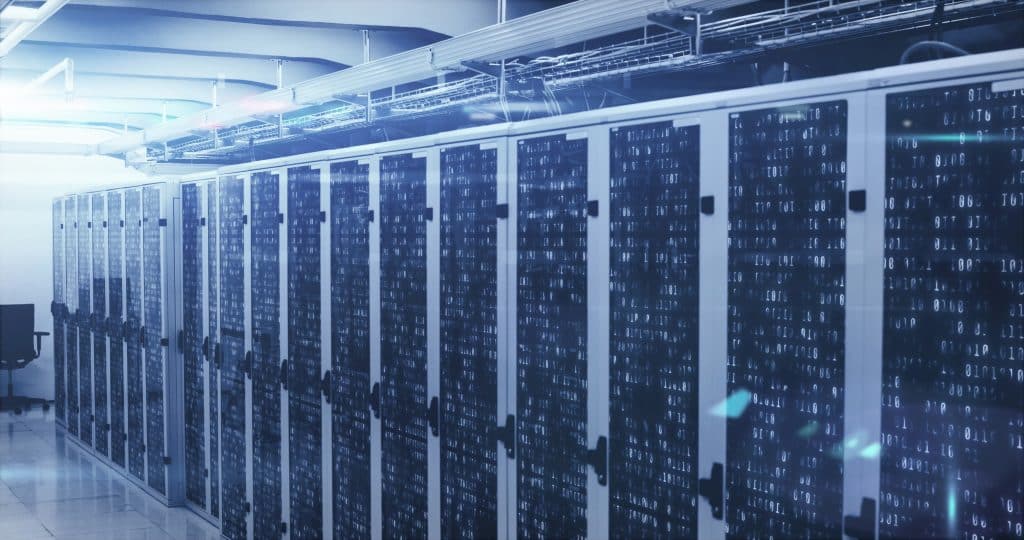
In early September, WIOCC Group secured $300 million from Africa Finance Corporation and Vision Invest to expand data centers, terrestrial fiber and subsea infrastructure across Africa. Days later, U.S. technology company Cybastion committed $75 million to digital infrastructure in Cameroon, including an AI-ready data center in Douala alongside a dedicated power plant. WIOCC has also been building data-center and connectivity infrastructure in markets including Nigeria.
The projects are different, but together they point toward a broader shift. Private capital is moving deeper into the physical infrastructure on which governments, enterprises and eventually sovereign digital identity systems depend.
Why are investors putting hundreds of millions of dollars into this infrastructure? Why are data centers, fiber and power increasingly appearing in the same investment strategy? And what does any of this have to do with digital identity?
The answer lies underneath the software.
Digital identity has a physical stack
Much of the digital identity industry’s attention has historically concentrated on biometric enrollment, national ID databases, identity verification, wallets, credentials and authentication.
But those systems cannot operate independently of the infrastructure beneath them.
At the bottom sits electricity. Above it are subsea cables and terrestrial fiber providing connectivity, followed by data centers and cloud infrastructure providing storage and compute. Only then can countries reliably operate national identity platforms and other digital public infrastructure.
Countries do not necessarily build these layers sequentially. But as digital systems grow, weaknesses lower in the stack become harder to avoid.
A national identity platform serving millions of people may need to process biometric deduplication, authentication requests, credential issuance, API traffic, security monitoring, backups and increasingly AI-based fraud detection.
Compute, connectivity and electricity consequently become identity infrastructure.
Cameroon shows why data centers need power
Cybastion’s proposed investment in Cameroon offers a particularly clear example.
The company plans a $75 million data center in Douala designed partly for AI applications and supported by dedicated power generation. The decision to combine the two matters.
In markets where grid reliability can constrain data-center operations, investors cannot necessarily treat electricity as somebody else’s problem. Compute capacity is useful only when it is consistently available.
For governments increasingly dependent on digital services, that relationship becomes even more important. If authentication becomes necessary to access government benefits, financial services or other essential services, the infrastructure supporting those transactions starts to resemble critical national infrastructure.
Power reliability becomes service availability. Connectivity becomes identity availability.
Cameroon’s economic trajectory helps explain the investment interest. The U.S. Department of Commerce says the country’s digital economy contributes just over 5 percent of GDP and is expected to grow at 6.4 percent annually through 2029, with much of the activity concentrated around Douala, Yaoundé and Buea. Cameroon is also pursuing digital transformation through its Vision 2035 and National Development Strategy 2020-2030.
For an infrastructure investor, however, the opportunity extends beyond government.
The same facility can potentially support public-sector workloads, banks, telecom companies, enterprises, cloud services and AI applications. Investors are not betting on one national identity system. They are betting on the broader digitization of the economy.
WIOCC is building another part of the stack
WIOCC’s latest financing demonstrates the trend from another direction.
The company secured $300 million from Africa Finance Corporation and Vision Invest. The capital is intended to accelerate data-center deployment, extend open-access terrestrial fiber into additional markets and add strategically selected subsea assets.
The scale of Africa’s connectivity gap helps explain the opportunity.
According to the International Telecommunication Union, only 35.7 percent of the population in its Africa region used the internet in 2025, compared with 73.6 percent globally. The gap points both to an infrastructure shortfall and a long runway for growth as government services, commerce, finance and other parts of the economy become increasingly digital.
That makes the infrastructure WIOCC is financing increasingly strategic.
Subsea cables bring international capacity onto the continent. Terrestrial fiber moves data between countries, cities and facilities. Data centers provide the environments where applications and information are stored and processed.
Cameroon and WIOCC therefore illustrate two dimensions of the infrastructure shift.
Cybastion is combining compute and power.
WIOCC is expanding across subsea connectivity, terrestrial fiber and data centers.
Nigeria shows what this investment can look like at greater scale. WIOCC subsidiary Open Access Data Centres has previously said it invested more than $500 million in Nigerian digital infrastructure over eight years, including data-center and cloud facilities.
Digital infrastructure is increasingly being treated less like a conventional technology investment and more like roads, ports and electricity: foundational assets on which economic activity — and increasingly digital government — depends.
Sovereignty moves down the technology stack
The investment wave also complicates another major digital identity issue: sovereignty.
Governments increasingly want sensitive citizen information stored or processed domestically. Local data centers can improve latency, support data-residency requirements and reduce reliance on distant infrastructure.
But locating a server inside a country’s borders does not by itself create digital sovereignty.
Governments must still consider who operates the facility, who owns the infrastructure, which cloud provider manages the workload, where encryption keys are held and what happens during outages, geopolitical disputes or connectivity failures.
A country can therefore localize citizen data while remaining dependent on foreign capital, technology or infrastructure operators.
For digital identity, the sovereignty question increasingly moves from “Where is our identity database?” to “Who controls the infrastructure required to keep our identity system running?”
Who finances the infrastructure?
There is another reason private investment matters: governments cannot necessarily finance this build-out themselves.
Data centers, fiber networks, subsea cables and reliable power require large upfront investments, while private investors may be reluctant to take on the political and financial risks associated with some emerging markets.
This is where development finance comes in. It uses public or development-institution capital to finance projects or reduce risks where conventional commercial financing may be difficult to secure.
Within the World Bank Group, for example, the International Finance Corporation (IFC) can provide debt or equity financing to private infrastructure projects. The Multilateral Investment Guarantee Agency (MIGA) can provide guarantees protecting investors against specified non-commercial risks, such as expropriation, currency-transfer restrictions, war or civil disturbance. By reducing those risks, MIGA can make projects easier for private investors and lenders to finance.
That investment model is increasingly reflected in development policy. The World Bank’s recent World Development Report 2026: The Promise of Artificial Intelligence argues that countries cannot fully benefit from AI without reliable electricity, broadband connectivity and computing infrastructure. A companion MIGA paper, De-Risking the Digital Foundations of AI: Capital, Risk, and the Diffusion of AI, similarly identifies power, connectivity, compute capacity and lower financing risk as prerequisites for digital transformation. The same foundations increasingly underpin digital public infrastructure and national identity systems.
The emerging model can therefore combine government demand, development finance, risk protection and private capital — creating another route for countries to build the physical infrastructure required for digital public services.
The next identity contract may not say ‘identity’
That may be the larger lesson from the investments now appearing across Africa.
The next major investment enabling digital identity might not be an identity project at all.
It could be a data center in Douala, a fiber corridor across West Africa, additional subsea capacity or a power facility built beside a computing campus.
Biometrics, wallets, credentials and registries remain critical. But as these systems scale, their constraints move downward — from applications to compute, from compute to connectivity and ultimately from connectivity to electricity.
The companies shaping digital identity are therefore expanding beyond identity vendors. Data-center operators, fiber companies, energy providers, infrastructure investors, development banks and political-risk insurers are becoming part of the ecosystem.
For Africa and other emerging markets, the next bottleneck for sovereign digital identity may have little to do with choosing the best biometric algorithm or designing the next wallet.
It may be whether there is enough power, connectivity, compute — and capital — to keep them running.
Related Posts
-
 September 7, 2026
-
 September 15, 2025
-
 September 16, 2025
-
 October 28, 2025
-
 October 2, 2025
-
 April 8, 2026
Article Topics
Africa | Cybastion | data center | digital ID infrastructure | digital public infrastructure | digital sovereignty | investment | WIOCC | World Bank

Comments