
US jails expand continuous biometric monitoring as data rules lag
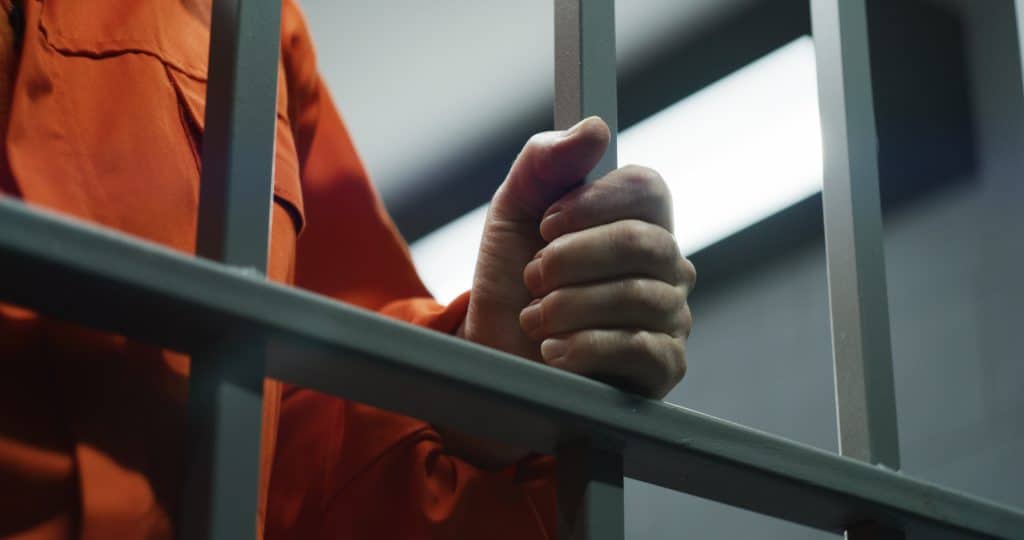
A growing number of U.S. jails are moving beyond periodic checks of people in custody toward continuous physiological and video-based monitoring, creating a new layer of correctional technology before common rules have emerged for how the resulting data should be stored, accessed, retained, or reused.
The issue came into sharper focus this month when correctional monitoring company 4Sight Labs called for U.S. correctional agencies to incorporate stricter data-residency, access, ownership, and deletion requirements into technology procurement.
The company said that systems operating inside jails increasingly collect physiological measurements, movement and activity data, occupancy data, video-derived information, and safety alerts.
Last week, the Tempe, Arizona-based company called for U.S.-based standards to protect sensitive data in correctional facilities and restrict unauthorized secondary use of government data, including for AI and machine-learning training.
“If a technology company is collecting sensitive information from Americans in government custody, agencies should know exactly where that data goes and who can access it,” said David Sanders, CEO of 4Sight Labs. “Government data should not pass through an unknown chain of foreign organizations, contractors, or third parties.”
The proposal comes as 4Sight itself is helping broaden the scope of monitoring inside correctional facilities.
Its OverWatch wearable continuously measures signals including heart rate, blood oxygen saturation, skin temperature, and motion.
The company’s newer OptiGuard platform applies AI-assisted analysis to existing jail camera feeds to detect a person’s presence and visible signs of life, including movement associated with breathing.
4Sight introduced OptiGuard in March as an AI-assisted system that analyzes live feeds from cameras already installed inside jail cells. If a person is present but the system detects no observable signs of life, it can notify staff to perform a welfare check.
In August, the company expanded the system from single-occupancy cells to shared cells containing as many as four people.
4Sight says more than 80 agencies in 19 states now use its technology and that it has monitored more than 70,000 people in custody. The company’s website also says OverWatch has accumulated more than five million hours of monitoring data.
Those figures are company-reported, but public procurement records show continuing deployments and expansions across several states during 2026.
Genesee County, Michigan, for example, approved the purchase of 50 OverWatch devices in June at a first-year cost of up to $158,308, followed by $107,625 annually.
The county said the system would continuously monitor heart rate, blood oxygen, skin temperature, and motion and automatically alert corrections and medical personnel when readings indicate potential distress.
The county is funding the purchase with opioid settlement money.
Placer County, California, approved a $111,221 purchase in May for an OverWatch system that includes 32 watches, largely funded by an Edward Byrne Memorial Justice Assistance Grant, a leading source of federal justice funding for state, local, and tribal jurisdictions.
The sheriff’s office told county supervisors the system would provide continuous tracking of vital signs and activity, alert staff to abnormal conditions, and support suicide-prevention efforts.
Allegheny County Jail in Pennsylvania began using 100 OverWatch devices this summer for people considered medically vulnerable, including those going through drug or alcohol withdrawal, on suicide watch, or housed in other high-acuity settings.
The county signed a three-year contract with 4Sight worth about $740,440. The total includes about $105,190 for the devices and $211,750 annually to operate the system.
Deputy Warden of Healthcare Services Holly Martin said the devices supplement, rather than replace, assessments by health personnel and can help staff identify a person’s deterioration sooner.
The medical rationale is substantial. Within days of deployment of a roughly $40,000, three-year contract in Ashland County, Ohio, a bracelet generated an alert for a person suffering from alcohol withdrawal, prompting an earlier medical evaluation and subsequent admission to an intensive care unit.
Jail officials said they believed staff would eventually recognize the condition, but the system accelerated the intervention.
The same Ohio deployment also illustrates why the technology raises questions extending beyond medical effectiveness. Use of the devices there is not always voluntary.
The Ohio Newsroom reported that a nurse can determine whether a person presents a health risk and requires them to wear the monitor or restrict them to certain portions of the jail.
The Electronic Privacy Information Center has also questioned whether persistent monitoring of incarcerated people could lead to inappropriate secondary uses of intimate health information.
4Sight representatives told Ohio Newsroom it does not mine the data and complies with applicable Health Insurance Portability and Accountability Act (HIPAA) requirements.
Other jurisdictions have taken markedly different approaches.
Alameda County, California, approved a three-year, $747,000 agreement in 2025 for 100 OverWatch devices at Santa Rita Jail. County documents explicitly said participation would be voluntary.
The system integrates with Guardian RFID’s Spartan devices, which jail personnel already use to record observation checks, programs, recreation, and other activities involving incarcerated people.
Ventura County has gone further in describing its data policy. In a written response last year to the county’s Public Safety Racial Equity Advisory Group, the sheriff’s office said participation in its monitoring program is strictly voluntary and requires a signed release.
The sheriff’s office said the person in custody owns the data and may request a copy, while 4Sight stores the information encrypted in transit and at rest.
The sheriff’s office said it keeps the data indefinitely until the person requests removal from the program or the county’s contract with 4Sight ends. It said the data is then permanently removed from the company’s secured servers.
No comparable uniform federal correctional rule specifies how long such systems must keep data, whether participation should be voluntary, or when the information may be repurposed.
The National Commission on Correctional Health Care’s (NCCHC) 2026 standards include a Confidentiality and Privacy of Care standard governing health information.
NCCHC is an accreditation organization, and its standards do not themselves create a nationwide statutory or regulatory regime governing retention and secondary use of continuously generated monitoring data.
HIPAA also does not resolve all those issues. Its Privacy Rule applies to covered entities and their business associates, not automatically to every correctional or law enforcement agency simply because it possesses health-related information.
The rule also expressly permits covered entities in specified circumstances to disclose protected health information to correctional institutions or law enforcement officials with lawful custody for health care, health and safety, law enforcement on the premises, and maintaining institutional security and good order.
Federal policy has nevertheless moved toward treating foreign access to Americans’ sensitive health and biometric information as a national security concern.
The Justice Department’s (DOJ) Data Security Program, which took effect in April 2025, restricts certain transactions that could give countries of concern or covered persons access to defined categories of U.S. government-related data or bulk sensitive personal data, including biometric identifiers and personal health data.
DOJ’s definition of personal health data expressly includes vital signs and other basic physical measurements.
The privacy question is becoming more complicated as monitoring moves away from equipment attached to a person’s body.
Rockwall County, Texas, approved a no-cost OptiGuard evaluation this year using cameras already installed in its detention facility, with the trial scheduled to run through September 30.
The arrangement calls for an on-premise processing appliance connected to the county’s existing IP cameras. 4Sight says OptiGuard can process camera feeds locally on a dedicated appliance within an agency’s secure network.
That shift matters because consent operates differently when monitoring no longer depends on persuading or requiring someone to wear a sensor. A jail can add continuous machine analysis to cameras already operating inside cells, producing structured observations and alerts from existing video infrastructure.
The systems are arriving as jails continue to face staffing and medical pressures. New Bureau of Justice Statistics data show local jails employed about 214,100 people in 2024, nearly 10 percent fewer than at the 2019 peak.
There were four incarcerated people for every correctional officer, essentially unchanged from the previous two years.
That gives correctional agencies an obvious incentive to use technology to fill the gaps between physical observation rounds. It also means that what began as a wearable warning system for people at heightened risk of withdrawal, suicide, or medical crisis is developing into something broader.
Related Posts
-
 March 27, 2026
-
 June 22, 2026
-
 September 30, 2025
-
 October 14, 2025
-
 November 7, 2025
-
 January 13, 2026
Article Topics
4Sight Labs | biometric data | biometric monitoring | data protection | prisons | United States | wearables

Comments