
Vendor pitches facial recognition layer for Flock camera data
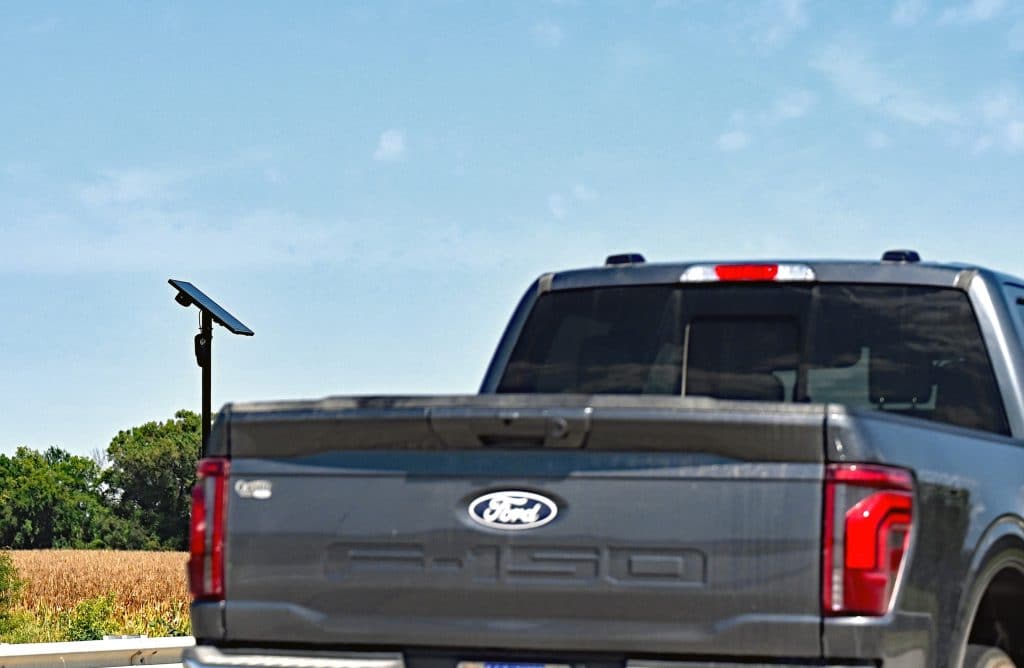
A surveillance technology company is pitching law enforcement on a way to combine Flock Safety data with facial recognition, potentially adding biometric identification downstream from a camera network whose manufacturer says it does not and will not use the technology.
Vidizmo told a Tennessee police department that its Intelligence Hub could bring Flock data, Axon body-worn camera footage, and other evidence into a single platform that investigators could search by face, vehicle, or object, according to 404 Media.
But the proposed capability comes with an important caveat. Vidizmo CEO Nadeem Khan told 404 Media that the company has neither used facial recognition on footage from Flock cameras nor built the specific tool needed to export data from Flock into Vidizmo’s platform.
Vidizmo nevertheless advertises a FlockOS integration on its website. The page states that the connection is “available on request” and lists REST API access, content ingestion, and other potential connection methods.
It also tells prospective customers that Vidizmo can build and maintain a connector if one is not already available, consistent with Khan’s explanation that the integration being pitched has not yet been built.
Khan told 404 Media that an agency could import plate reads or clips that it had exported under its own authorized access and said Flock had “not been involved in or informed of this.”
Flock did not respond to 404 Media’s request for comment.
Flock has repeatedly said its automatic license plate reader (ALPR) systems do not perform facial recognition.
Its Trust Center says Flock cameras do not use facial recognition and that searches are based on vehicle characteristics rather than identity.
A separate Flock data privacy page lists biometric and facial recognition data among information its ALPR systems do not collect.
CEO Garrett Langley went further this month, saying the company “will not add facial recognition to our devices.”
Vidizmo is proposing something technically different. Facial recognition would occur in its system after it obtained data from Flock, rather than inside Flock’s cameras or through Flock’s own ALPR recognition process.
Vidizmo already sells the underlying facial recognition capability independently of Flock.
Its technical documentation describes an Object Library in which operators can enroll a person’s face using reference photographs and assign the subject a watchlist priority.
Cameras running Vidizmo’s AI Live Insight software can then compare detected faces against those enrolled subjects.
The company’s face recognition setup documentation says the system can display a recognized person’s name on live video, log the recognition as an event, and save a clip when configured to do so.
Operators can also set a numerical match threshold that controls how strong the similarity score must be before the system treats a detected face as a recognition.
The company separately offers facial-attribute analysis. Its documentation says its software can attempt to classify detected faces by age, gender, and race and use those predicted attributes as search filters.
The National Institute of Standards and Technology (NIST) has cautioned that biometric performance can vary by algorithm, image quality, and demographic group. NIST’s testing does not evaluate Vidizmo’s facial-attribute model.
A joint WIRED and 404 Media investigation, based on data and software extracted from a physically removed Flock camera, found that the device’s software explicitly detects people, vehicles, bicycles, and license plates.
The camera’s logs covered about 21 days and recorded roughly 50,200 vehicles while generating about 1.6 million images. When the software detected a person, it recorded the person’s location within the image and a confidence score.
No evidence was found that face recognition was enabled or actively used in the camera software beyond capabilities included by default in the Android operating system.
The proposed Vidizmo connection fits into Flock’s broader evolution from a license plate reader vendor into a platform that connects multiple surveillance and public safety data sources.
Flock describes FlockOS as a real-time crime center platform that brings license plate readers, video, drones, gunshot detection, computer-aided dispatch, and records management systems into a common interface.
The company says FlockOS connects more than 4,800 agencies and explicitly advertises the ability to “connect any vendor.”
Vidizmo’s integration page similarly describes FlockOS as a source from which detections and camera video could be brought into an evidence record and analyzed through its Digital Evidence Management System or AI Intelligence Hub.
The proposal comes as automatic license plate readers and facial recognition draw new scrutiny on Capitol Hill.
Florida Republican Rep. Greg Steube introduced the Facilitating Liberty and Accountability for Flock Observations Act on September 24. The bill would generally prohibit federal agencies from purchasing, operating, accessing, or sharing data with networked ALPR systems without a judicial warrant, subject to specified exceptions.
It would also condition some Justice Department grants for state, local, and tribal law enforcement on adopting substantially similar protections.
The next day, a group of Democratic senators reintroduced the Facial Recognition and Biometric Technology Moratorium Act.
The bill would prohibit federal entities from using facial recognition and certain other biometric technologies unless Congress later authorizes their use and would condition some federal funding to state and local governments on adopting comparable restrictions.
VIDIZMO’s pitch sits at the intersection of those two debates.
ALPR systems and facial recognition have generally been treated as separate surveillance technologies, but increasingly interconnected platforms make the distinction less about what the original camera can do and more about what happens to its data afterward.
Related Posts
-
 February 6, 2026
-
 October 6, 2025
-
 February 26, 2026
-
 July 21, 2026
-
 February 19, 2026
-
 August 18, 2026
Article Topics
biometric identification | biometrics | facial recognition | Flock Safety | license plate readers | video surveillance | Vidizmo

Comments