
World releases open-source toolkit for privacy-preserving identity proofs
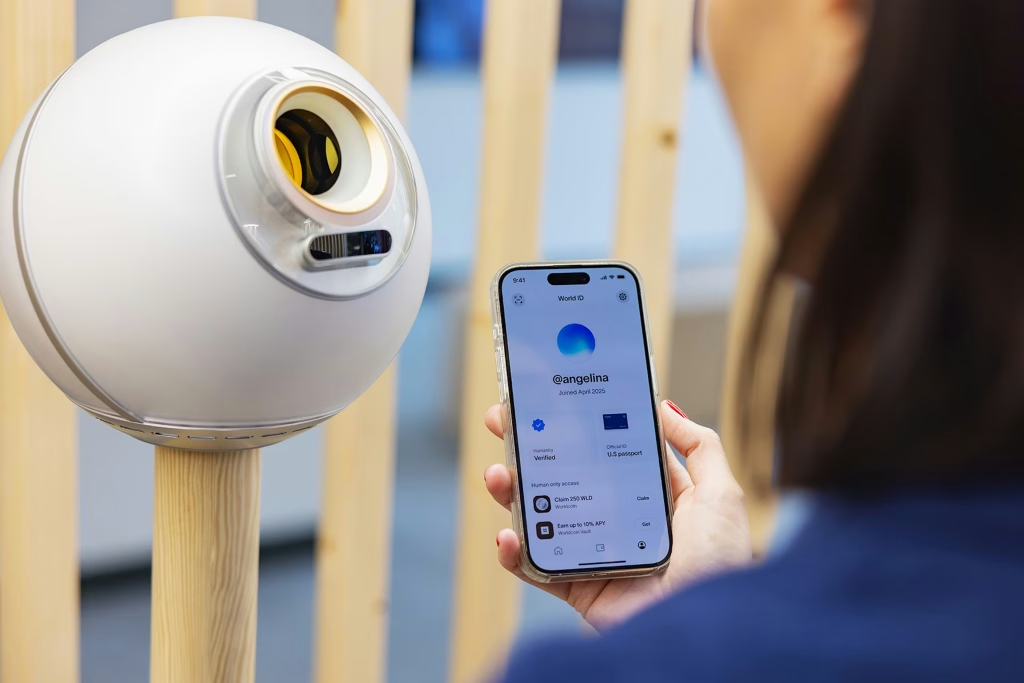
World has released ProveKit, which new documentation from the biometric proof of personhood (PoP) firm calls “a production-ready zero-knowledge proving toolkit that lets users generate proofs on their own devices” – and “a big milestone in real-world privacy.”
ProveKit sees World addressing a version of the same questions around implementation and adoption facing every digital identity project. The firm puts it like this: “As World enters its third year, the question is no longer just ‘can we prove humanness?’ but ‘can we make that proof useful?’”
What, in other words, are the best and most user-centric use cases and approaches for verification? “A bar checking your age, a social platform filtering bots, a government service confirming residency, all of these need to verify something about you without seeing all of the underlying data on your ID card.”
The company says ProveKit helps solve this problem, by enabling World ID users who store identity documents in the app to do it “by themselves on their own devices.”
“Proofs are generated entirely on the user’s device. Private data never leaves the user’s device,” the company says. “The verifier only learns the claim that has been proven (e.g. the user has a valid identity document meeting the minimum age requirement).”
The kit also offers 128 bits post-quantum security and minimal trust assumptions. World says the implementation is open source and developer friendly and user friendly. “It runs in a matter of seconds, has a small download size, requires little memory, works offline and on very constrained devices.”
“To our knowledge, no existing solution meets all these requirements. ProveKit is the first to offer post-quantum security, a developer-friendly language, and mobile-first client-side proving in a single stack.
Technically, ProveKit uses the Noir language, “a Rust-inspired language developed by Aztec with a large ecosystem of reusable components.” The tool “takes a provable claim written in Noir and transforms it step by step into simpler claims. Each claim implies the one before it and, ultimately, the original claim.”
Development of ProveKit is ongoing, and Version 2 promises to “further reduce proving costs while expanding the range of applications ProveKit can support.”
Related Posts
-
 September 17, 2025
-
 January 22, 2026
-
 March 24, 2026
-
 August 12, 2026
-
 September 16, 2025
-
 July 8, 2026
Article Topics
data privacy | digital ID | identity document | mobile app | open source | World | World ID | zero knowledge

Comments