
Biometrics bridge human authorization and AI agent activity
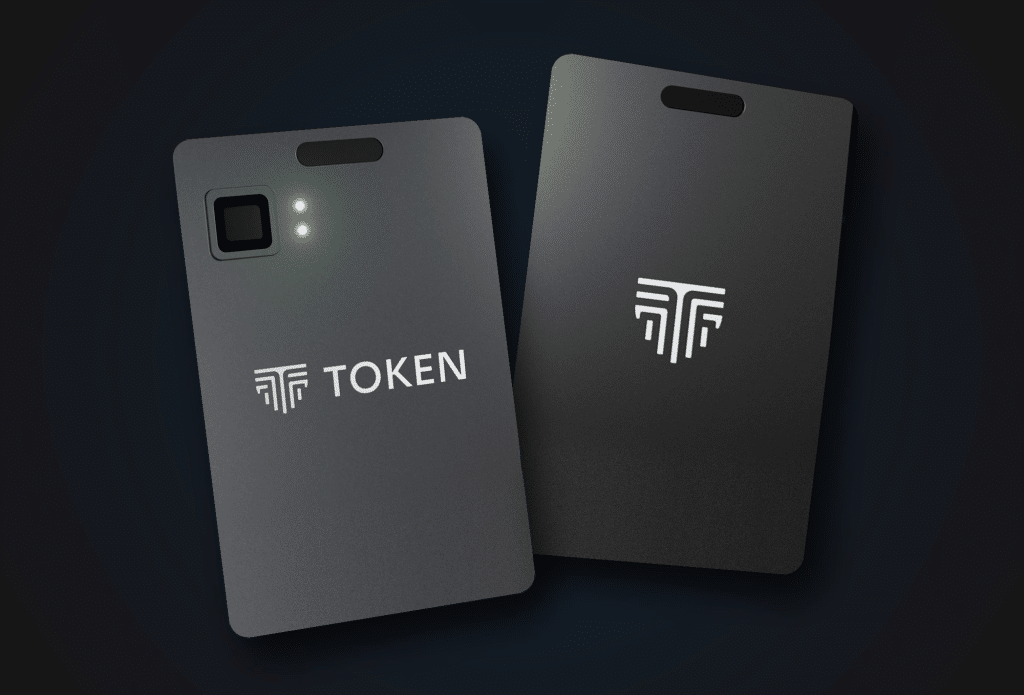
AI agents are in the spotlight at Authenticate U.S. and Money20/20 2026, with a new fingerprint biometric card from Token among the technologies pitched to help enable an anticipated wave of agentic productivity and commerce. Proof is demonstrating its new agentic authorization technology at Money20/20, where Tools for Humanity launched its biometric World ID for banking and finance to enable agentic transactions.
With agentic AI authorization and security companies expecting business to scale, Transmit Security has appointed Matt Thompson as CEO. Thompson helped Socure scale significantly in his last role, and Transmit is pursuing share in an increasingly competitive agentic identity and authorization market.
Token bridges ID cards and agents with on-device biometrics
Token introduced a new biometric smart card to provide phishing-resistant multi-factor authentication to every enterprise user, whether human or AI agent, this week at Authenticate U.S. 2026.
The new biometric TokenCore Card is designed to provide FIDO2 passwordless authentication through on-device fingerprint verification. It works alongside enterprises’ existing IAM, SSO and PAM infrastructure, presenting signed authentications to prevent attackers from tricking their way into corporate systems by stealing credentials or intercepting codes.
User setup takes less than five minutes, and MFA logins take less than two seconds, Token says.
The TokenCore Card builds on the biometric AI agent approval software the company released in June.
The new insider threat
Agents within the enterprise, like those from outside it, should be treated with Zero Trust, so Microsoft has announced an extension of its Project Perception to secure AI agents operating within the enterprise in a lengthy blog post.
Project Perception is an agentic security system of bundled activity and context signals, models and specialized agents introduced by Microsoft in July.
The bundle now includes discovery of 35 additional local agent types, new playbooks, Dynamic Agent Risk and Dynamic Conditional Access for agents to put rules around them and Guardian Agents to apply the decisions of security professionals at scale.
Proof claims production first
Proof says the launch of its X401 open HTTP protocol makes it the first company with production identity verification and signed transaction authorization for AI agents.
The company has also launched its digital identity wallet for AI agents and a production Model Context Protocol (MCP) server that works with AI assistants including Meta’s Muse, ChatGPT Dots, Grok and Claude.
Proof introduced the x401 protocol for agentic authorization in June. The new capabilities launched by the company also support agentic payment protocol X402. The protocol allows users to authenticate with native device biometrics to authorize requests to and transactions with websites.
Proof emphasizes in its announcement that Amazon’s decision to block Muse agents exposes what it calls the “Agent Evidentiary Gap.” This is the difference between what an AI agent is capable of doing and what it can prove to the business it is interacting with that it was authorized to do.
The move also follows FinCEN’s recent decision that in certain circumstances, banks can use verifiable credentials and signed digital certificates to verify customer identity.
Superfluid Wallet, announced last month, in collaboration with Proof, uses the x401 protocol to give AI agents reusable identity credentials for carrying out transactions.
Proof is demonstrating the technology end-to-end at Money20/20 in Las Vegas this week.
Related Posts
-
 April 2, 2026
-
 November 24, 2025
-
 July 26, 2026
-
 July 10, 2026
-
 July 9, 2026
-
 April 17, 2026
Article Topics
AI agents | Authenticate 2026 | authorization | biometric verification | biometrics | Microsoft | Money 20/20 | Proof | Token

Comments