
Cameroon looks to Côte d’Ivoire to advance digital civil registration
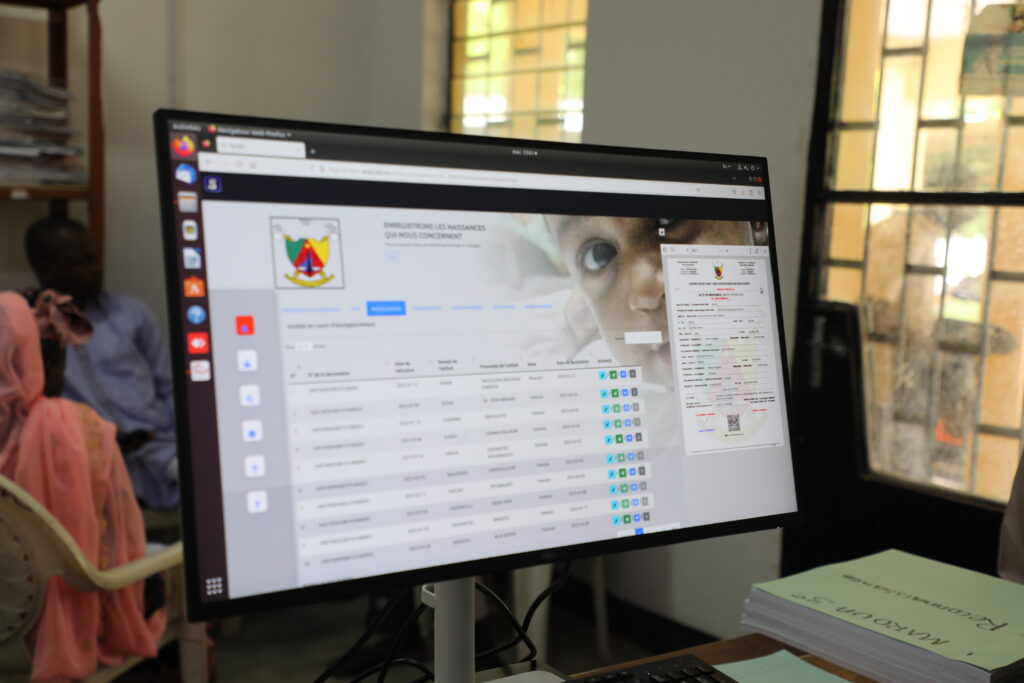
A delegation from Cameroon’s National Civil Status Registration Office (BUNEC) is visiting Côte d’Ivoire’s National Civil Status and Identification Office (ONECI) to study its approach to digital civil registration, population register management and systems interoperability.
The visit is taking place from October 26 to 30, BUNEC announced, adding that the goal of the trip, led by its Director General, Alexandre Marie Yomo, is to identify practical levers that can be adapted to Cameroon, especially to accelerate the rollout of the national civil status database.
According to BUNEC, the mission is part of ongoing reforms in the country, in line with a December 2024 law organizing the civil status registration system. It is also part of the implementation of the Strategic Plan for the modernization of the Civil Registration and Vital Statistics (CRVS/ESEC) system 2025-2029 for Cameroon.
While in Abidjan, officials of both delegations have been discussing four principal areas. These include how to effectively manage the digital transformation of a civil registration system, the linkage between the civil registration database and the national ID system, issues around governance and change management, as well as the right economic and business model to sustain a civil status registration office.
Database linkage is one of the important areas. Cameroon currently runs a hybrid model. There is a paper-based registration which is dominant, as well as a parallel digital system operating only in selected councils. BUNEC has computerized 60 of the country’s 432 principal civil registration centers, while paper records remain dominant. The planned national civil registration database is intended to serve as a unified repository and support connections with other government identity systems.
Under its 2025–2029 strategic plan, Cameroon aims to computerize all 432 principal civil registration centers and connect them with healthcare facilities, courts and identification services, according to We Are Tech Africa. The plan also calls for interoperability between these institutions and the national civil registration management system by 2029, creating a framework for exchanging civil status information across government services.
Côte d’Ivoire, meanwhile, has established the National Register of Natural Persons (RNPP) as a foundational component of its identity infrastructure, alongside the national ID and biometric identification systems managed by ONECI. Cameroon is studying how elements of this approach could support its own reforms.
Recently, Yomo spoke at length about the country’s ongoing civil registration system reforms, highlighting that one of the major challenges standing in the way of the process is a huge funding gap. He said an estimated $85 million was needed to effectively execute the reform agenda, but remained optimistic that Cameroon is in line for the full digitalization of its CRVS system, either in 2029 or 2030.
Côte d’Ivoire is also conducting a feasibility study for a national authentication platform and digital identity wallet that would build on existing infrastructure, including the RNPP and ONECI’s systems.
The meeting between Cameroon and Côte d’Ivoire delegations is another example of South-South peer learning, which is now common in digital public infrastructure project implementation. In this light, many African countries have been visiting one another to share notes on different aspects of civil status registration or DPI.
The overall idea is not only to advance the push towards universal legal identity as outlined in Target 16.9 of the United Nations Sustainable Development Goals (SDG), but also to make sure DPI facilitates access to public and private sector services.
The move also comes as DPI knowledge export is increasingly becoming a trend, and when birth registration is being treated as a foundational layer of DPI rollout, with countries linking civil registration databases to national ID systems to create trusted population registers that support service delivery.
Related Posts
-
 March 3, 2026
-
 January 12, 2026
-
 October 12, 2026
-
 March 2, 2026
-
 January 7, 2026
-
 September 21, 2026
Article Topics
Cameroon | civil registration | Côte d’Ivoire | digital identity | digital public infrastructure | National Civil Status Registration Office (BUNEC) | national ID | ONECI

Comments