
Cameroon summit calls for interoperable DPI and sovereign infrastructure in Africa
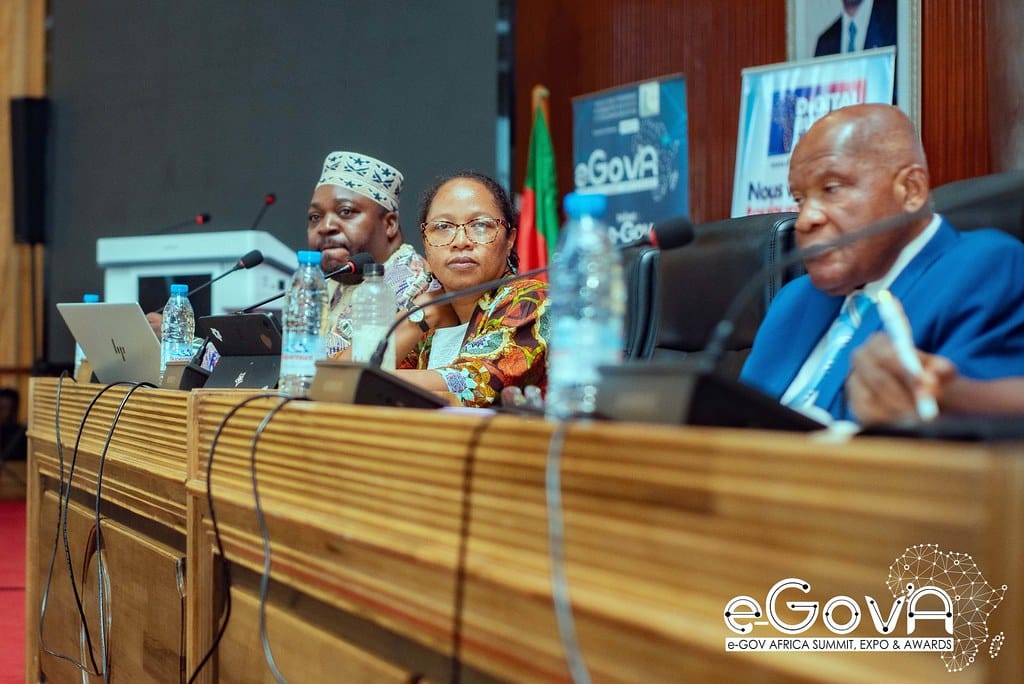
African governments are being urged to invest in interoperable digital identity, payments and data exchange systems while expanding sovereign cloud infrastructure, under a declaration adopted at a digital government summit in Cameroon.
The Yaoundé Declaration, adopted at the eGov’A 2026 summit held October 14 to 17, calls for critical or sovereign public data to be hosted domestically by 2030, alongside greater investment in connectivity, computing capacity and cross-border digital services.
The summit brought together government representatives, development institutions, civil society and technology companies from across Africa and beyond. Discussions covered digital public infrastructure (DPI), AI in public services and digital sovereignty, alongside a hackathon showcasing young innovators’ solutions.
The 11-page declaration framed DPI as a foundational pillar for transforming public administrations across Africa, describing it as a strategic asset for national sovereignty, citizen inclusion, and continental integration.
The document states that African governments must amplify their efforts to build DPI comprising digital identity, digital payments, and secure data-exchange platforms. These should be complemented by electronic signatures and authentication systems, notification systems, cloud and computing infrastructure, and integrated public-service portals, the document stated.
Interoperability and sovereign infrastructure
Another point of interest in the declaration is the emphasis on interoperability. It underlined that governments must make their public infrastructure systems interoperable, allowing public entities to communicate through open standards, secure interfaces, and shared reference systems to facilitate service delivery. It also supports the “Once Only” principle, under which information already legally held by an administration should not be repeatedly requested from the same citizen.
This has been emphasized in the past by digital ID experts who believe that interoperability from day one for digital ID systems is a necessity.
Regarding physical infrastructure and digital sovereignty, the summit called for accelerated public and private investment in connectivity and sovereign infrastructure, including data centers, government cloud solutions, high-performance computing, Internet exchange points, high-speed networks, and disaster-recovery systems.
The summit advocated a “Local First, African First” approach, prioritizing domestic hosting of government data. Where national capacity is insufficient, hosting elsewhere in Africa should be preferred over locations outside the continent, provided appropriate safeguards are in place.
As indicated in the declaration, participants also emphasized the importance of aligning DPI strategies with the African Union’s digital transformation strategy, the African Continental Free Trade Area (AfCFTA) Protocol on Digital Trade, the UN Global Digital Compact, and the Smart Africa framework.
They also called for accelerated efforts to enable cross-border recognition and interoperability of digital identity, electronic signatures, digital certificates, e-invoices, and payment mechanisms across African borders.
A recent Smart Africa pilot involving Benin, Ghana, and Rwanda illustrates how these ambitions are moving toward implementation, with work progressing toward cross-border digital ID verification.
Building the trust layer
The declaration also emphasized the importance of building trust in DPI. During one panel, this point was underscored by Tahiry Rakotoheriniaina, the International Telecommunication Union’s (ITU) Regional Representative for Central Africa and Madagascar, who emphasized that simply transforming government services online is not enough.
She said people will be able to abandon traditional offices only if they have trust in digital platforms, algorithms, and data-handling processes.
As she put it, building trust and confidence in DPI systems requires collaborative governance, in which government regulatory bodies, private businesses, civil society, and other stakeholders can work together through controlled experiments such as regulatory sandboxes.
The declaration also established the African Observatory on E-Government and AI as a permanent mechanism with the responsibility to monitor digital transformation, measure progress, document good practices, and support learning between African administrations.
The eGov-A summit, which concluded in Yaounde, reflects a broader trend in Africa toward investing in shared DPI instead of developing isolated digital services. The event emphasized that prioritizing interoperability can help public institutions exchange information securely and reduce repetitive administrative processes, while investment in local infrastructure and data centers can boost digital sovereignty and control over critical public data.
Cameroon has been discussing these priorities, including through a push for interoperable digital government during the Cameroon Internet Governance Forum, which took place in August.
Related Posts
-
 September 7, 2026
-
 September 16, 2026
-
 June 4, 2026
-
 July 28, 2026
-
 July 20, 2026
-
 November 21, 2025
Article Topics
Africa | cross border identity verification | digital government | digital public infrastructure | digital sovereignty | digital trust | E-Gov'A | interoperability | The Yaoundé Declaration

Comments