
Data breaches make the case for minimizing identity data in KYC
By Vladimir Arlazarov, D.Sc, founder & Chief Executive Officer of OCR Studio
Data breaches affect financial institutions, technology companies, healthcare providers, government agencies, and identity verification services. Strong security controls can reduce the likelihood and impact of an incident, but no organization can credibly claim that unauthorized access is impossible.
Consider the recent case involving IDScan.net, an international identity verification solutions provider. In September 2026, media reports linked the company to a collection advertised on a cybercrime forum as containing more than 170 million identity documents, including driver’s licenses, identification cards, and travel documents. IDScan.net subsequently confirmed that an unauthorized third party may have accessed or copied certain customer information stored within customer accounts in its cloud environment.
This case should not be interpreted as evidence that IDScan.net was less security-conscious than other providers. The company’s public Trust Center lists recognized credentials including ISO/IEC 27001:2022, SOC 2, and SOC 2 Type 2. The broader lesson is that certifications, audits, and mature security practices can manage risk, but they cannot eliminate it entirely.
The same principle applies to every organization involved in KYC. If a system stores or can access large volumes of identity data, the risk of attackers eventually reaching it never disappears. Rapid advances in AI-assisted hacking are increasing that risk by helping attackers identify weaknesses, automate intrusion attempts, and operate at far greater scale. Organizations should not assume that if AI-assisted attacks have not breached their systems yet, they never will. Adding stronger defenses to the same architecture will not remove the structural risk as long as valuable identity data remains accessible within it. The question for the industry is therefore not which provider will never experience an incident. It is whether KYC architecture can be redesigned so that, even if an attacker succeeds, there is as little sensitive data as possible for them to find.
This is not about IDScan
The identity industry should resist the temptation to treat every breach as an isolated failure that could not affect organizations following established security practices. In recent years, we have seen that even regulated financial businesses and government agencies may be affected.
In May 2025, the UK government disclosed that attackers had downloaded a significant amount of information from the Legal Aid Agency. The affected records stretched from 2007 to 2025 and could include addresses, dates of birth, national identification numbers, criminal histories, and financial data. The government’s own notice advised applicants to prepare for potential misuse.
The risk is not limited to an attacker finding a technical vulnerability. Coinbase, a major cryptocurrency exchange, disclosed in a filing with the US Securities and Exchange Commission that a threat actor appeared to have paid contractors or employees in overseas support roles to collect customer information from systems they were authorized to use. The stolen data included images of driver’s licenses and passports.
Taken together, these incidents point to a broader pattern. Their circumstances, regulatory environments, and attack paths differ, showing that breach risk cannot be reduced to any single sector or type of organization. Additional certifications can improve security assurance, but they do not remove the underlying exposure created when sensitive identity data is stored or accessible. The real problem lies elsewhere: in each of these cases, sensitive identity data had been stored in or made accessible through systems that attackers could compromise.
AI and data breaches are creating a vicious cycle
Artificial intelligence and large-scale data breaches are becoming mutually reinforcing threats. Stolen identity data is the fuel for an increasingly automated fraud machine: the more genuine identity documents attackers obtain, the more material they have to train and refine models for document forgery, face swaps, and deepfake attacks. As those models improve, they make cyberattacks faster, cheaper, and easier to scale, increasing the likelihood of further breaches and more data being stolen. In other words, every breach can strengthen the tools used to enable the next one.
KYC repositories are especially valuable for this cycle because they contain high-resolution images of genuine identity documents linked to names, dates of birth, addresses, and facial images. From a single leaked document, attackers can create dozens of fraudulent derivatives, including altered IDs, synthetic profiles, face swaps, and deepfake videos, and use them in repeated onboarding attempts. The volume of leaked data may already be enormous. But what is even greater is the volume of deepfakes and other fraud assets generated from it.
Zero-Trust KYC aims to reduce what can be stolen
Today’s digital risks strengthen the case for a Zero-Trust approach to KYC.
Zero-Trust begins with a simple premise: no server, vendor, contractor, device, cloud, or storage system is assumed to be secure simply because it forms part of an approved workflow. Instead of trusting every link in the chain to remain protected, the architecture removes unnecessary trust points and ensures that sensitive identity data is not handed over, transferred, copied, or exposed for operational convenience.
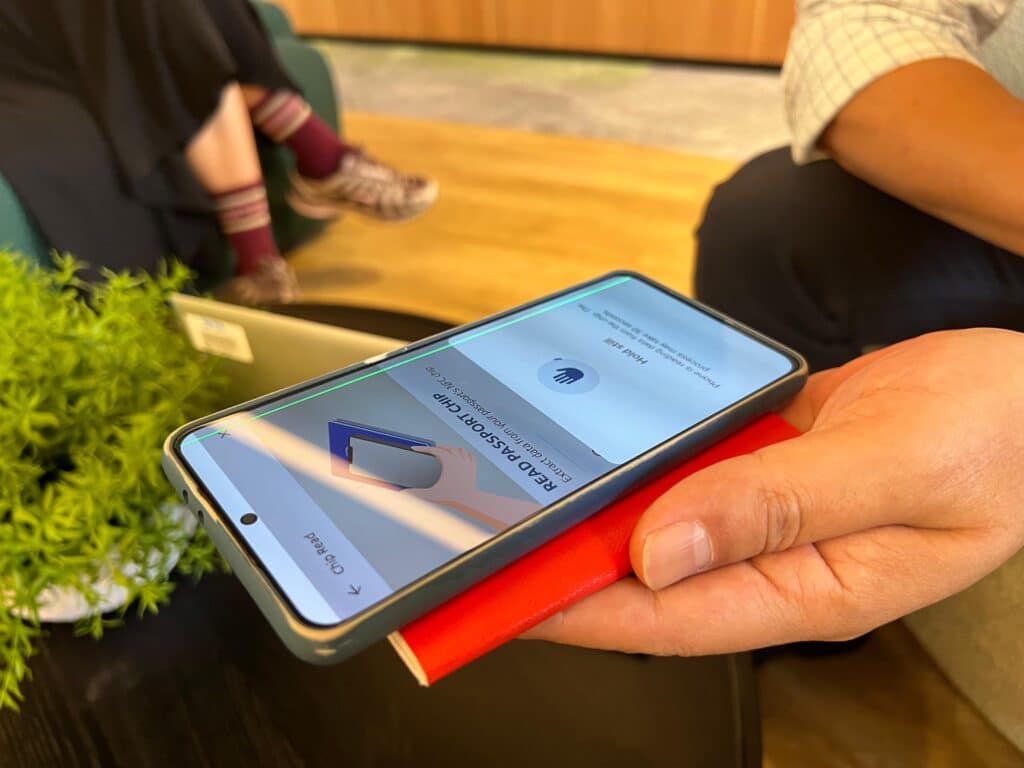
Under a Zero-Trust KYC architecture, identity verification takes place as close as possible to the point of presentation, with document capture, data extraction and cross-validation performed locally. Raw ID images and sensitive personal data remain in the browser or on the user’s device rather than being transferred to external systems.
The objective is not simply to add another security layer to an existing cloud workflow, but to reduce the amount of identity data available to be compromised. If an external provider does not possess a copy of the underlying identity data, a breach of that provider cannot expose data it never received.
As AI-assisted fraud makes document manipulation and impersonation easier to scale, client-side processing, in-browser verification and data-minimizing KYC architectures should play a larger role. The question is not only how securely identity data can be stored, but whether every participant in the verification chain needs to store it in the first place.
About the author
Vladimir V. Arlazarov, D.Sc., is the founder and Chief Executive Officer of OCR Studio. He holds a Doctor of Technical Sciences degree and is an Associate Professor.
Related Posts
-
 November 17, 2025
-
 September 10, 2026
-
 November 10, 2025
-
 September 25, 2026
-
 October 16, 2025
-
 July 23, 2026
Article Topics
digital identity | identity verification | KYC | OCR Studio | zero trust

Comments