
FinCEN digital credential guidance leaves banks responsible for identity assurance
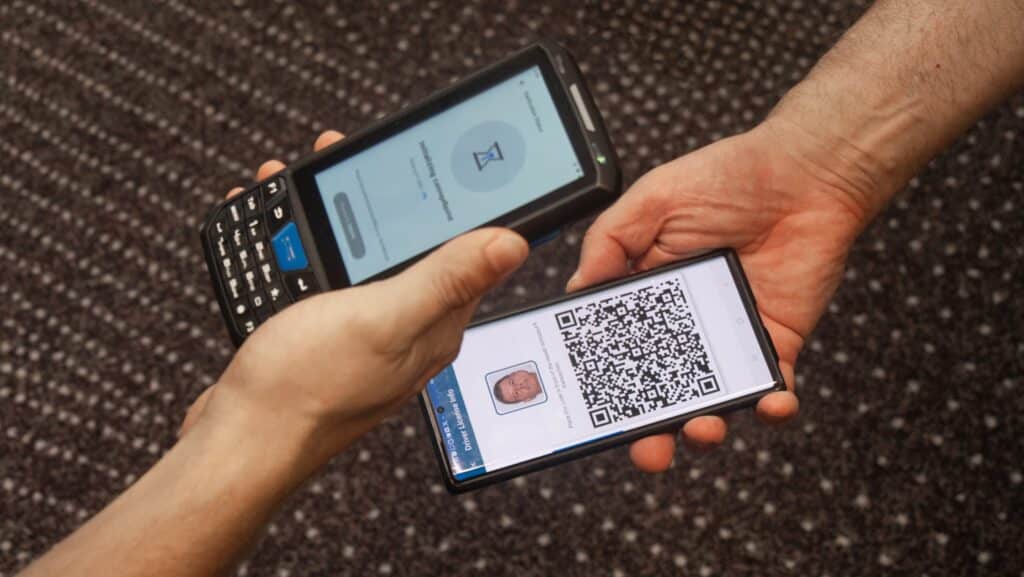
An article from Anderson Insights highlights an important distinction in digital identity: a digital credential is not simply an image of an ID, but “a data structure containing information about an individual that is digitally signed by the issuing source, cryptographically bound to a device, and protected by an activation factor.”
“Product requirements should not call both experiences ‘digital ID’ and assume they carry the same assurance.”
One of the more significant recent developments for digital credentials in the U.S. is the publication of FAQs by the U.S. Treasury Department’s Financial Crimes Enforcement Network (FinCEN) clarifying how banks and credit unions may use state-issued mobile driver’s licenses and other government-issued verifiable digital credentials to verify customer identity when opening accounts.
The guidance gives digital credentials a clearer role in bank onboarding, but accepting a government-issued credential does not automatically establish that a financial institution knows its customer’s true identity. Banks must still evaluate the credential, the verification process and any indications of fraud.
‘Trusted government ID’ does not mean fraud-proof
Anderson Insights cautions against interpreting FinCEN’s guidance as a blanket endorsement of government-issued digital credentials for customer identification.
An important distinction is that FinCEN’s FAQs permit – but do not require – a bank or credit union to consider an unexpired qualifying credential as a documentary method under the customer identification program rule. Nothing in the rule requires the acceptance of digital credentials.
Furthermore, the fact of being able to accept digital credentials has no bearing on the core project of “deciding whether a particular credential, system, and process supports a reasonable belief about a particular customer.” Just because an ID is digital – or just because a digital ID is from the government – doesn’t mean it is immune to risks associated with fraud: “a government-issued digital credential is not self-authenticating for every compliance purpose.”
“If the credential shows indications of fraud,” Anderson says, “the institution must consider that fact in deciding whether it can reasonably believe it knows the customer’s true identity.
That qualification should drive implementation.”
Institutions “should define what each technical validation or verification result actually means. Product and compliance teams should know which issuer keys or trust lists are used, whether the system checks credential status or expiration, what data is authenticated, how a photograph or similar safeguard is evaluated, and what happens when validation is incomplete.”
They should also understand to whom the guidance specifically applies: banks and credit unions. It should “not automatically be generalized to broker-dealers, investment advisers, money transmitters, or other financial institutions governed by different identification rules.”
What vendors can do: define scope, watch the numbers
The piece also addresses the question of third-party vendors providing onboarding technology. “A vendor can supply verification tools, but the regulated institution remains responsible for a compliant program,” it says. “Contracts and diligence should define what the vendor validates, which credentials and jurisdictions are supported, how trust materials are updated, what records are returned, and how incidents are reported.” The language of marketing should be specific, so as to avoid confusion about what is actually covered.
Anderson Insights recommends that institutions and their technology vendors clearly define which credentials, issuers, jurisdictions and verification methods are supported. Due diligence should also address security, credential status checks, privacy, accessibility, data retention and audit requirements.
Finally, “operational metrics can reveal whether the new method works equitably and reliably.”
The NIST National Cybersecurity Center of Excellence (NCCoE) recently published the initial public draft of its practice guidelines for financial institutions implementing mobile driver’s licenses (mDLs) for customer identity verification.
Related Posts
-
 December 22, 2025
-
 May 6, 2026
-
 November 7, 2025
-
March 24, 2026
-
 January 2, 2026
-
 November 21, 2025
Article Topics
financial services | FinCEN | identity assurance | mDL (mobile driver's license) | onboarding | verifiable credentials

Comments