
ICE contract reveals network infrastructure behind HSI surveillance operations
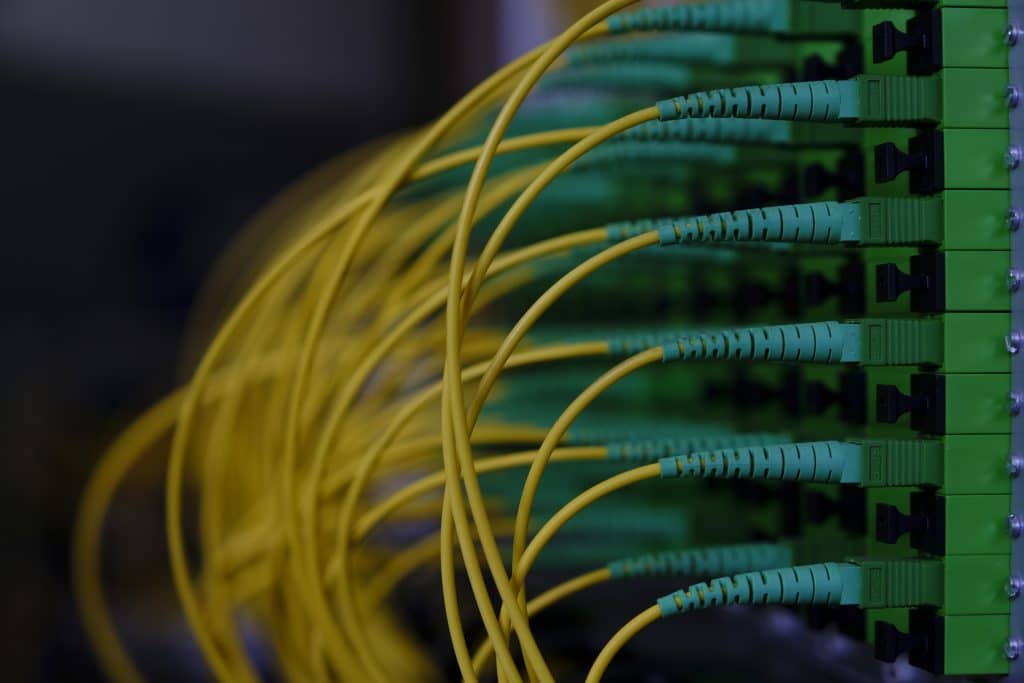
An inadvertent change to Immigration and Customs Enforcement (ICE) Homeland Security Investigations’ internet service provider caused months of downtime for HSI wiretaps in 2025, according to a procurement document that provides an unusually detailed look at the network infrastructure supporting the agency’s communications interception system.
ICE disclosed the disruption in justifying a new sole-source contract with Cox Virginia Telcom LLC, now part of Charter Communications operating under the Spectrum brand, to maintain dedicated Internet circuits for HSI’s Title III and Linguistics Unit.
The September 25 award has a potential value of about $702,885 over a base year and two option years.
Title III is the federal framework governing court-authorized interception of wire, oral and electronic communications. HSI’s Technical Operations arm manages the agency’s Title III and linguistics programs.
Federal contracting records say the circuits are “vital to the resilience and effectiveness” of the program.
Static IP addresses connect HSI to telecom providers
The sole-source justification shows how much of the resulting interception infrastructure depends on comparatively mundane networking technology.
HSI says its main site in Lorton, Virginia, and regional core sites act as routing hubs for Title III wiretaps and another capability ICE redacted from the document.
Intercept data arrives from telecommunications and electronic communications providers over connections tied to static internet Protocol addresses supplied by Cox. Those addresses are then provided to telecommunications companies so they can establish secure tunnels between their networks and HSI TechOps.
These connections allow investigative data to flow from the providers into the TechOps network and then to Title III investigative equipment.
ICE says its current static IP addresses are tied into connections with roughly 50 telecommunications providers.
That architecture became a problem in April 2025.
According to ICE, an inadvertent change to HSI’s internet service provider resulted in a new IP address, which in turn caused “months of downtime for wiretaps” and another redacted capability while the connections were painstakingly rebuilt.
ICE says the experience represents the worst-case scenario it is trying to avoid by retaining its current provider. Changing carriers now, it says, would again require HSI to obtain new static IP addresses and re-establish connections with roughly 50 providers, many of which will not pre-negotiate or pre-configure the replacement connections.
The procurement document does not identify the investigations affected by the 2025 outage or specify how many interceptions were unavailable.
ICE warns that losing Title III capabilities for weeks or months could disrupt criminal investigations and potentially affect the safety of undercover agents, officers and the public.
Spectrum currently provides connectivity to seven HSI sites. Two regional core locations are being relocated without changing the total number of sites.
A separate HSI procurement in Puerto Rico further underscores the importance of persistent IP addressing for interception systems. An August solicitation for internet service at HSI facilities in San Juan requires a static IP address at the Miramar office specifically “to maintain connectivity” of a Telephone Intercept Server.
Connectivity is one layer of a larger interception system
The Spectrum contract is only one layer of HSI’s communications interception infrastructure.
DHS describes ICE’s Title III Digital Collection System as supporting the interception, recording, and monitoring of telephone calls, emails, and other wire, oral, and electronic communications for ICE investigations, interagency task force cases, and investigations conducted by other federal agencies.
ICE awarded the Ottawa, Ontario, Canada-based JSI Telecom a sole-source contract in March 2025 to operate and maintain that Digital Collection System.
Federal award data show about $14.1 million obligated under that contract, which ICE describes as supporting HSI’s Cyber and Operational Technology Division and a system used for court-ordered interception of electronic communications.
JSI’s role in the system is longstanding. A 2011 ICE procurement sought JSI support for the VoiceBox Unified Collection Management system, which is used in the Title III Digital Collection System, indicating that the company’s interception technology has been embedded in the program for well over a decade.
ICE is also spending heavily on the software and personnel surrounding the collection system.
On the same day as the Spectrum award, ICE awarded Herndon, Virginia-based Procentrix a contract potentially worth about $35.4 million for operations, maintenance, enhancements, and releases of what contracting records call the agency’s “current T-III applications” supporting the Title III and Linguistics Unit.
ICE says those applications facilitate investigations and operations that use intercepts to dismantle complex criminal organizations. The competed order received two bids.
Separately, the Ashburn, Virginia-based KACE Company holds a five-year ICE order now valued at up to $126.9 million for monitoring, transcription, and translation services supporting HSI criminal investigations nationwide.
Together, the contracting records describe different pieces of the same operational environment: Spectrum provides dedicated connectivity between HSI locations and external providers, JSI maintains the digital collection system, Procentrix supports applications for the Title III and Linguistics Unit, and KACE provides large-scale monitoring, transcription, and translation services.
The infrastructure sits alongside other communications surveillance technologies used by HSI. Biometric Update reported earlier this year on ICE’s long-running relationship with PenLink, whose technology is used to collect and analyze court-authorized wiretap data, as well as other communications and location information. Lawmakers have also scrutinized ICE’s use of PenLink commercial cellphone location tools, warning that such data purchases may allow location surveillance without the judicial process associated with traditional wiretaps.
The Spectrum justification also makes a less obvious connection to a recent White House directive. ICE says the services support nationwide Title III operations “in support of Executive Order 14385,” signed February 6. The order itself does not mention Title III, wiretaps or communications interception. Its operative provisions focus on giving DHS access to criminal history information for screening and vetting and allowing certain exchanges of that information with foreign governments.
The procurement record does not explain the connection. The underlying wiretap infrastructure also predates the order: the previous Spectrum purchase order was awarded in August 2025, while the network failure ICE cites occurred in April 2025.
What the new filing establishes is narrower: ICE now describes an existing nationwide Title III capability as operating in support of the executive order, even though the public directive itself concerns criminal-history information and screening rather than electronic interception. A review by Biometric Update found no other public DHS or ICE document specifically connecting the order to Title III operations.
Related Posts
-
 February 24, 2026
-
 September 16, 2026
-
 May 5, 2026
-
 August 15, 2026
-
 July 24, 2026
-
 August 31, 2026
Article Topics
DHS | ICE - U.S. Immigration and Customs Enforcement | procurement | surveillance | telecom | U.S. Government

Comments