
Inside DHS’s RIVR: How identity document verification is put to the test
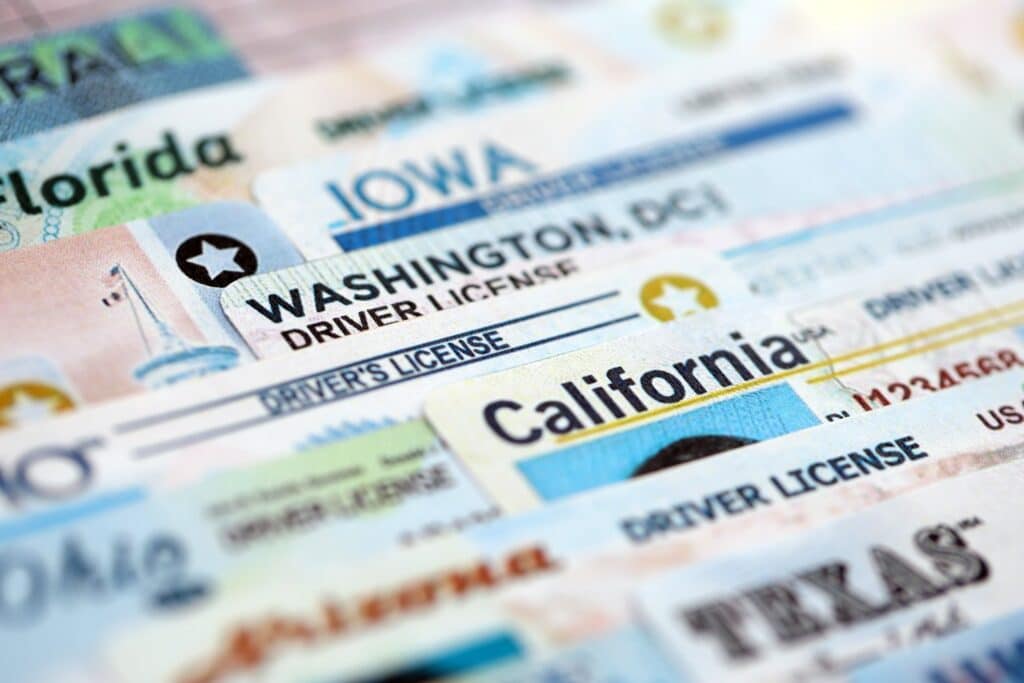
Even under controlled conditions, identity document verification software can struggle to distinguish genuine credentials from convincing counterfeits. The U.S. Department of Homeland Security’s Remote Identity Validation Rally (RIVR) is designed to measure those failures independently.
During an October 14 webinar hosted by Microblink, DHS biometrics advisor Arun Vemury explained how the department assembles genuine and fraudulent identity documents, tests commercial verification systems against them and measures errors across different smartphones.
RIVR covers three tracks: document validation (IDV), selfie-to-document matching (SMTD) and liveness detection (PAD). The webinar focused on the first: whether software can tell a genuine ID from a fake using smartphone images.
The document track is notable because DHS did not publish the results from its 2023 predecessor, the Remote Identity Validation Technology Demonstration (RIVTD), after finding high error rates. Independent data on document verification were also scarce. Microblink participated in the subsequent RIVR evaluation.
Building the gauntlet
DHS’s process starts with known genuine and fraudulent physical documents, photographs them using different smartphones under controlled conditions, and runs the same images against commercial systems isolated from the test data.
It then measures processing failures, false rejections and false acceptances. Where systems provide confidence scores, DHS also moves the decision threshold between zero and one to see how the balance between accepting fraud and rejecting genuine users changes.
Sourcing the real and the fake
DHS collected 2,032 genuine state-issued IDs from volunteers who gave informed consent.
The fraudulent documents came from the Homeland Security Investigations fraudulent document laboratory and CBP’s fraudulent document analysis unit.
These were physical credentials, not AI-generated images. Vemury said some cost only $50 to $100 and were difficult for him to distinguish from genuine documents.
“These are really good documents,” he said.
Counterintuitively, fraudulent documents can be easier for DHS to obtain than genuine ones. Collecting genuine credentials from the public requires informed consent and privacy approvals.
DHS cannot make the fraudulent dataset public. Some documents are connected to law-enforcement investigations, and they can also contain personally identifiable information.
Drawing the scope
The evaluation focused on what can be determined from visible-light smartphone images.
That means no ultraviolet or infrared inspection and no specialized document reader. Smartphone cameras may also have difficulty capturing optically variable security features.
The initial test used state-issued IDs, which do not contain the NFC chips or cryptographic signatures available in electronic passports.
The limitation gets to the heart of the problem.
“ID documents were not designed to be verified using smartphone cameras,” Vemury said.
Starting from the best case
DHS deliberately began with relatively clean, controlled images rather than trying to reproduce every possible real-world condition.
The idea was to establish a baseline before adding variables such as poor lighting and blur.
Even with good images, the earlier RIVTD evaluation produced double-digit error rates.
“If you’re seeing a 10 percent error rate on a lab-collected photo, it’s not like that’s going to get better in the back of a cab as a person’s driving to the airport,” Vemury said.
Testing across phones
DHS photographed credentials using an iPhone 14, Google Pixel 7 and Samsung Galaxy S22.
The aim was to determine whether systems were robust to differences among smartphone images or became “brittle,” performing well on one device and poorly on another.
The results showed device-related variation. They also varied across IDs issued by different states.
Lower-end devices could make the problem harder still. Vemury said lower resolution and camera or lens limitations could make document features more difficult to distinguish.
Sealing the software and forcing a verdict
Participating vendors supplied Docker containers that operated offline. The containers underwent security and vulnerability checks before DHS ran the evaluation.
That allowed DHS to feed test data into the systems without vendors seeing the dataset.
DHS also wanted an unambiguous output. Commercial systems can return multiple values rather than simply declaring a document genuine or fraudulent.
For the test, DHS required a clear decision and, where possible, a confidence score between zero and one.
Treating a failure as suspicious
Systems do not always produce an answer. They can crash, fail to process an ID or encounter something unexpected.
DHS calls its approach to those cases “failure is suspicious.”
A processing failure can stop someone presenting a fraudulent ID, but it can also block a genuine user from accessing a service or benefit.
DHS therefore tracked system errors rather than simply removing those cases from the evaluation.
Choosing the yardsticks
DHS measured three main errors: system error rate (SER), document false rejection rate (DFRR) and document false acceptance rate (DFAR).
System error rate captures failures to process the document. Document false rejection rate measures genuine IDs rejected or unable to complete the process, while document false acceptance rate measures fraudulent IDs accepted as genuine.
The terminology was deliberate. Vemury said “false rejection” and “false acceptance” communicate what happened more clearly than labels such as Type I and Type II errors.
A 10 percent-or-lower threshold was used as the benchmark for high performance. Vemury acknowledged that the figure surprised people when NIST published it because it was already high compared with more mature technologies.
The longer-term goal, he said, is to drive errors below 1 percent.
Moving the threshold
DHS did not stop at each system’s default decision point.
Where systems returned a confidence score between zero and one, DHS moved the threshold and plotted detection error trade-off, or DET, curves to see how false acceptance and false rejection changed.
The preferred shape is roughly an L, with an operating point toward the lower-left corner where both errors are low.
Some systems showed a useful sweet spot. Others produced curves closer to a straight line, meaning changing the threshold mostly exchanged one error for another.
That distinction shows whether a system can be improved by changing its operating point or whether its underlying ability to distinguish genuine from fraudulent documents is the limiting factor.
Keeping vendors anonymous
Participation in RIVR is voluntary.
To encourage companies to submit their technology without risking immediate brand damage from a poor result, DHS allows them to remain anonymous.
Document verification systems therefore appear under aliases such as DVS1 through DVS7.
Some vendors have publicly disclosed their aliases. Buyers can also contact DHS if they want an introduction to a company behind a particular result.
What the test could not see
Blind to ultraviolet and infrared
Visible-light smartphone images leave out security information available through other inspection methods.
Phone cameras cannot capture ultraviolet and infrared features and can have difficulty with optically variable elements.
The systems therefore have to make their decisions from a narrower set of information than might be available to a specialized document inspection system.
The phone in the user’s hand
Camera hardware introduces another variable.
Vemury expects older or lower-end devices to make verification more difficult because poorer resolution, lenses or other camera limitations can reduce the information available to the software.
That creates an accessibility problem: not every legitimate user has a recent high-end smartphone.
It also makes the capture device part of the risk calculation for organizations deploying remote verification.
Not necessarily the state’s fault
Results also varied across state-issued IDs, but Vemury cautioned against simply blaming the credential.
States use different security features and production processes. Machine-learning systems may also have substantially more training data for some IDs than others.
“If you don’t have a lot of samples of a specific state ID, it may be hard for you to figure out what a real one versus a fake one looks like,” he said.
Vemury said the responsibility ultimately falls on the verification provider to accommodate those differences and still reach the correct decision.
Results without reasons
Some variation is difficult to explain.
Vemury pointed to one system that showed a high false rejection rate for California IDs captured with one phone but a much lower rate with another, while the same pattern did not appear consistently across other states.
DHS can describe that behavior through benchmark testing. Determining exactly why a machine-learning system behaved that way can be much harder.
The errors operators never see
Production data have blind spots of their own.
A fraudster incorrectly accepted by a system may not be discovered until the organization suffers a loss. A genuine customer who is incorrectly rejected may simply leave rather than complain.
That makes it difficult for organizations to know their true false-acceptance and false-rejection rates from operational feedback alone.
RIVR 2 and beyond
DHS is expanding the methodology for RIVR 2.
The next evaluation will use newer smartphones, more genuine and fraudulent state-issued IDs and international passports.
Passports introduce cryptographically verifiable chips, but DHS still plans to test their optical features.
Vemury said a fraudster may avoid trying to defeat strong cryptography and instead present a passport with an unreadable or disabled chip. Since genuine passports can also have chip or antenna failures, optical verification remains relevant when the chip cannot be used.
DHS is also watching increasingly sophisticated attacks, including those enabled by generative AI, as it considers how future testing should evolve.
Further out, DHS is interested in mobile driver’s licenses and other verifiable digital credentials.
Unlike a smartphone photograph of a physical ID, an mDL built to standards such as ISO/IEC 18013-5 and 18013-7 can provide cryptographically verifiable information.
Vemury compared the difference with online payments.
“If I go buy something on Amazon, I don’t take a photograph of my credit card,” he said.
What it means for buyers and vendors
For buyers
Few businesses, small or large, evaluate vendors this way. Many choose on word of mouth, a referral or a demo backed by vendor-reported accuracy figures. “Somehow everybody had the ‘best’ product available,” Vemury said.
RIVR shows how much rides on that choice, from the phones customers carry to where their IDs come from, so buyers should not rush it. They can email DHS at peoplescreening@hq.dhs.gov to ask for an introduction to a top performer, then confirm the fit with their own proof of concept.
For vendors
Anonymity lets vendors test against a government-curated dataset they could never build themselves, find their gaps and fix them privately. Strong performers can drop the alias and say so.
The fakes will keep getting better. RIVR asks whether the software can keep up, and for the first time, buyers can see the answer.
Related Posts
-
 February 17, 2026
-
 December 2, 2025
-
 January 8, 2026
-
 April 14, 2026
-
 January 21, 2026
-
 November 14, 2025
Article Topics
biometric testing | biometrics | DHS S&T | digital ID | document verification | identity document | Microblink | Remote Identity Validation Rally (RIVR)

Comments