
Land crossings remain the missing link in US biometric border system
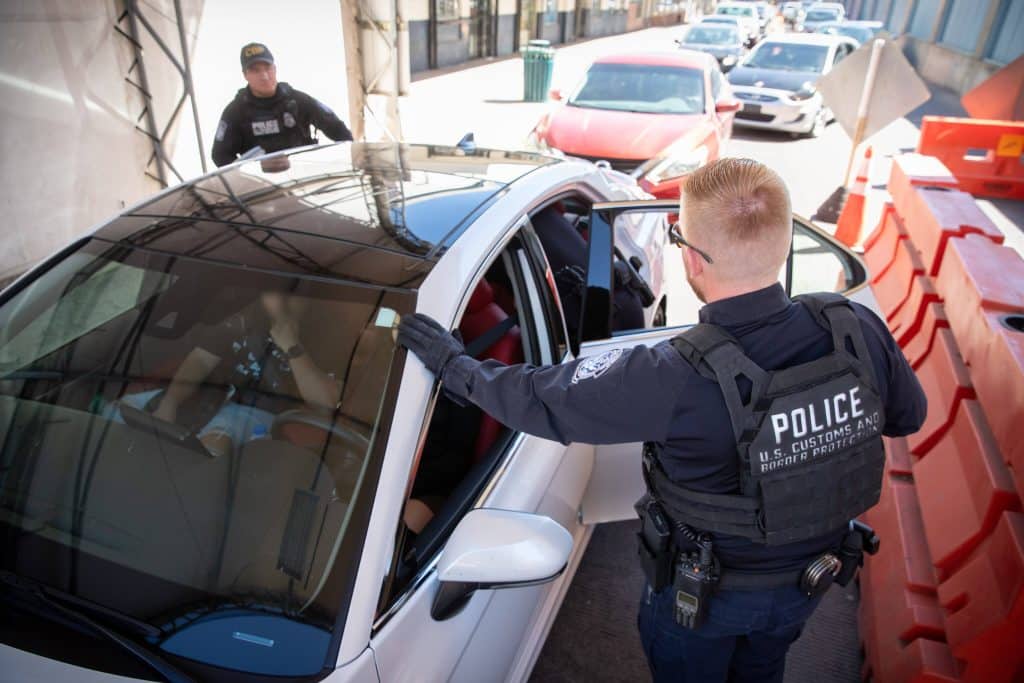
Twenty-five years after 9/11, the U.S. biometric border is still a work in progress. While biometrics have become routine at huge scale, tallying more than 1 billion face checks, land-border entry-exit remains an unfinished piece, and an ongoing challenge.
In a recent interview with the Biometric Update Podcast, Janice Kephart, who authored the foundational 9/11 Commission Report and Terrorist Travel Guidelines, says that the main challenge remaining is vehicular, but that pedestrian exits are also still incomplete.
Customs and Border Protection (CBP), she says, is still testing pedestrian biometric exit, and has deployed biometrics for pedestrians at several key crossings. But “they’re not nearly as far as they need to be on vehicular.” Not that she’s blaming them: “it’s very understandable,” she says. “There’s never been any infrastructure for that,” and while the technology is getting better, “multiple people in a vehicle is a very difficult problem to solve on many levels.”
That said, CBP is committed to solving it. This past September marked the federal deadline for biometric exit implementation. While it remains incomplete, the system has evolved to cover several key land crossings, and to reflect CBP’s aggressive push to collect biometrics and build profiles on foreign nationals leaving by land.
Simplified Arrival achieves technical match rate of 99%
Biometric border crossings are sold as fast and accurate, a system for reducing the irritant of friction and the hassle of handling documents. An article in The Travel, reporting on U.S. land crossings where CBP’s facial biometric lanes are already live, says the transition to biometrics “represents a major modernization effort aimed at balancing national security with the need for efficient movement across some of the busiest ports of entry in the world.”
The piece cites official data from 113 of the 165 land ports of entry that currently utilize the Simplified Arrival face biometrics system. “The system has achieved a technical match rate of over 99 percent,” it says, ensuring that “most pedestrians and vehicle occupants can proceed through inspections with minimal delay.”
Simplified Arrival deployments featured in the Travel profile include southern crossings at Progreso International Bridge, the San Ysidro Land Port of Entry in California, the Gateway International Bridge in Brownsville, Texas, the Juarez-Lincoln International Bridge in Laredo, and the Paso del Norte International Bridge connecting the downtown areas of El Paso and Ciudad Juarez. Northern border crossings include the Peace Bridge in Buffalo and the Pacific Highway Port of entry in Blaine, Washington.
Momentum across the biometrics spectrum turns to land borders
Recent developments at CBP, House Intelligence and within the industry show where policy is headed. A recent House Intelligence Committee review of the post-9/11 biometric architecture says the government still has not finished the job, concluding that “a comprehensive biometric entry-exit system remains one of the major unfinished pieces.”
The International Biometrics and Identity Association (IBIA), meanwhile, wants Congress to expand biometric screening at U.S. land borders, fund comprehensive vehicle inspection systems, and impose enforceable restrictions on intelligence profiling.
And, at the Progreso International Bridge, CBP is exploring the ultimate biometric verification solution for pedestrian crossings: a walk-through system that can capture people as they cross, without necessitating a stop. To make it happen, it has $3.45 billion appropriated to it through September 2029, under the Secure America Act.
The evident takeaway is that the U.S. border control complex knows it has a land-crossing gap to plug – and, having spent 25 years laying foundations and implementing biometrics in air travel, it is now turning its attention to that gap. Reconfigured political relationships between the U.S. and its adjacent neighbours will also be a factor in shaping biometric infrastructure for land crossings.
The transformation of airports began with a security crackdown and evolved into a system that enables a safer and more frictionless passenger journey. One might reasonably expect the story to play out similarly at land crossings: a first, hard imposition of biometric security fueled by immigration panic and political and economic tension, maturing – perhaps more quickly than happened with air – into a system that travelers prefer for its convenience.
Potential misuse a ‘legitimate concern’
Problematically, one might just as reasonably expect that the same forces animating cross-border hostilities will be able to do plenty of systemic damage as long as they are in charge. The House Intelligence Committee report includes a warning that the U.S. “must not replicate the surveillance architectures employed by totalitarian and authoritarian regimes.” Rigorous oversight is necessary.
Kephart believes that close scrutiny has forced CBP, DHS and other government agencies controlling the border to toe the line. “DHS has come under so much fire from privacy groups over the years that, even if this administration doesn’t care about the due diligence and the privacy and everything else, these programs have been built around implementing them in such a way that they are scoped properly for what they’re supposed to do,” she says.
Nonetheless, she concedes that the current moment concerns her. “Having helped build the governance around use of biometrics by government, when you have this cowboy mentality of doing whatever needs to be done to go after who they’ve defined as the bad guy, that’s where you have the opportunity for misuse.”
The next few years, then, will be a test of how strong those governance mechanisms actually are when faced with the pressures of creeping authoritarianism, political and economic tension between neighbours, and operational stress, as the U.S. moves to put the last of its biometric border controls in place.
The Biometric Update Podcast is running a special series, After September, to explore how travel policy has evolved in the 25 years since 9/11. Watch your feed or check Podbean for forthcoming episodes covering the legal, technical and operational aspects of the issue.
Related Posts
-
 October 6, 2026
-
 September 17, 2026
-
 August 20, 2026
-
 February 3, 2026
-
 May 12, 2026
-
 June 23, 2026
Article Topics
biometric exit | biometrics | border security | CBP | facial authentication | Janice Kephart | Simplified Arrival | U.S. Government | United States

Comments