
Australia, Europe and US move to restrict smart glasses over privacy concerns
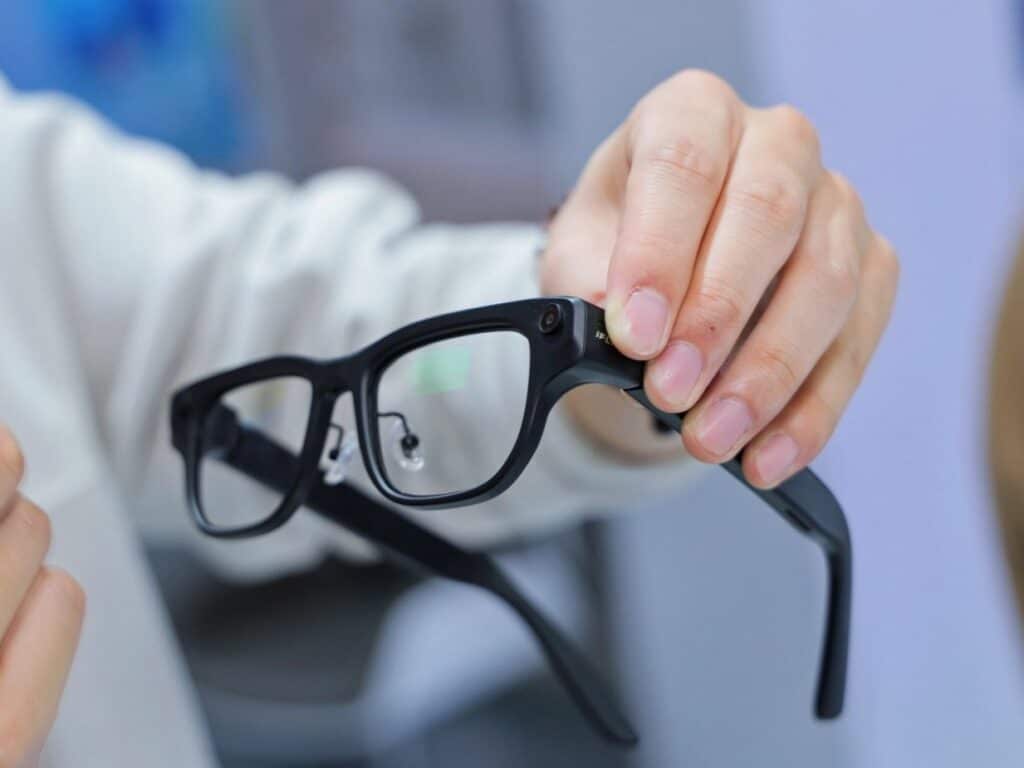
Australia’s privacy regulator has opened a formal investigation into the Chinese company behind an app used across a wide range of low-cost smart glasses, escalating scrutiny of wearable cameras as governments and institutions in Europe, Australia, and the U.S. move toward restrictions on where these devices can be used.
The Office of the Australian Information Commissioner (OAIC) said it is investigating Shenzhen Qingcheng Future Technology Co. Ltd., the developer of the HeyCyan mobile application. The software is used with Kmart’s Anko smart glasses and with inexpensive models sold through Big W Marketplace, Amazon, and other retailers.
The investigation follows preliminary inquiries the regulator began in August into five companies in the smart-glasses market: Kmart, BDI Technology, Shenzhen Qingcheng, Meta, and Google. The OAIC asked the companies how their glasses collect and record information, who can access it, and where it is stored.
Australian Privacy Commissioner Carly Kind said Shenzhen Qingcheng’s lack of response left her without assurance that the company was protecting Australians’ personal information as required by the Privacy Act.
Tuesday morning, Kmart removed its $89 Anko camera glasses from online sale after backlash over Australia’s privacy regulator probe. The company sold out at one point this past summer.
Opening a commissioner-initiated investigation gives the OAIC access to compulsory information-gathering powers. If it ultimately finds serious or repeated privacy interference, the commissioner can seek civil penalties in federal court.
The regulator said it has also written to retailers that sell HeyCyan-enabled devices and urged them to consider whether continuing to offer the products is appropriate.
The action follows an ABC News investigation into the low-cost glasses, which, during independent testing, found more than a dozen security weaknesses in the glasses, the HeyCyan app, and the associated website.
Researchers found that a nearby attacker could connect to certain glasses over Bluetooth without a password, take control of the device, copy stored photos and videos, and, in some cases, intercept images and audio transmitted between the glasses and a phone.
A device identifier broadcast over Bluetooth could also be combined with a separate website vulnerability to expose a user’s email address and date of birth.
The testing also found that, in some cases, information submitted to the glasses’ built-in AI functions was routed through servers in China. Researchers could not ultimately determine how the information was used.
The OAIC’s action is narrower than an industry-wide enforcement case. In a companion assessment of smart glasses, Kind said the agency has not decided to investigate Kmart, BDI, Meta, or Google at this stage and cautioned that this should not be read as a conclusion that they comply with the Privacy Act.
Kind’s analysis also highlights a regulatory problem created by wearable cameras.
Australian privacy law generally applies to the entity that holds personal information, so a retailer or hardware manufacturer may not fall under the relevant requirements if another company operating the software collects and stores the data.
Whether an image or voice recording legally qualifies as personal information can also depend on whether an individual is “reasonably identifiable.” Kind said that can include circumstances in which an organization can single out a person, rather than necessarily attaching a legal name to them.
Australia’s proposed second tranche of Privacy Act reforms would broaden the statutory definition from information “about” an identifiable individual to information that “relates to” one.
The HeyCyan investigation comes as Australia is moving on several other fronts.
Public Service Minister Katy Gallagher has asked the Australian Public Service Commission for advice on whether camera-equipped smart glasses should be prohibited in Commonwealth workplaces and on which exemptions should apply.
The government has so far rejected calls for a national import ban, instead encouraging workplaces, businesses, and local governments to establish restrictions appropriate to their facilities. Local governments have begun doing so.
In September, the City of Sydney voted to review and update its conditions of entry to prohibit the use of smart glasses at council leisure centers, libraries, childcare, and community centers, while preserving exemptions for people who need the devices because of disabilities.
Sydney’s Inner West Council subsequently resolved to ban AI smart glasses and other wearable recording devices in pools, changing rooms, childcare centers, and public toilets, also with accessibility exemptions.
Melbourne’s Yarra Council moved to restrict smart glasses at leisure centers, childcare centers, and playgrounds, while the Brisbane City Council banned non-consensual use of camera-enabled devices at all 21 of its public swimming pools.
Australia also already has national rules governing digital devices in early childhood education and care. Changes that took effect February 27 restrict personal devices capable of capturing, storing or transmitting images, with official guidance expressly identifying smart glasses among the covered devices.
Staff and volunteers in center-based services generally cannot use or possess personal devices while working directly with children.
Western Australia has gone further in schools. The state government announced in September that smart glasses would be banned at all public schools from the first day of Term 4. The restriction applies to students, staff, parents, carers, visitors, and contractors and covers both use and storage of the devices on school property.
Europe and beyond
The Australian moves are part of a broader international shift from debating the risks of wearable cameras to establishing rules for where they may be used.
Norway’s government said this week it will propose a temporary ban on AI-enabled glasses in select public places while an expert group develops recommendations for permanent national regulation. Potential locations include parks, beaches, museums, shopping centers, public events, schools, kindergartens and playgrounds.
Norway had already urged schools and workplaces to adopt policies and, in August, raised the possibility of banning technologies such as facial recognition in public spaces. Oslo has also banned smart glasses during the school day.
Courts are also treating smart glasses differently from conventional phones and cameras because they can be worn continuously and may provide less obvious evidence that a recording is underway.
Courts and tribunals in England and Wales have barred Meta glasses, and the UK Cinema Association says many operators prohibit or restrict camera-equipped smart glasses due to privacy and film-piracy concerns.
Regulatory pressure is spreading across continental Europe. In June, France’s data protection authority, the National Commission on Informatics and Liberty, launched a smart-glasses initiative, warning that wearable cameras and microphones raise significant privacy and societal concerns.
French authorities have also moved beyond regulatory guidance. The Paris prosecutor’s office opened a criminal investigation into allegations that smart glasses were used to film women without their consent and to distribute the footage online.
Investigators obtained and tested smart glasses while examining how the technology could be used in alleged sexual harassment. The brand involved in the case was not identified.
In August, the digital rights group HateAid filed a criminal complaint with the Frankfurt prosecutor’s Central Office for Combating Internet Crime, arguing that the sale of Ray-Ban Meta smart glasses violates provisions of Germany’s Telecommunications Digital Services Data Protection Act that prohibit disguised devices capable of covert recording.
The prosecutor’s office confirmed receiving the complaint and said it would conduct a preliminary examination.
“Whether on the subway, at work, or in the sauna, people are nowhere safe from smart glasses,” said Josephine Ballon, CEO of HateAid. “You have to expect to be filmed and then publicly shamed online at any time.”
The Netherlands’ Autoriteit Persoonsgegevens has meanwhile opened an exploratory examination of providers of AI wearables, including camera glasses, and of the AI systems running on those devices.
The Dutch regulator warns that covertly filming people with camera glasses can be illegal and that filming other people or public streets unnecessarily may violate privacy law.
It also urges employers to prohibit camera glasses in workplaces where appropriate. It is working with other European regulators on a European Data Protection Board statement about smart glasses.
At the European Union level, the European Data Protection Board is examining the social acceptability and privacy implications of smart glasses.
European lawmakers had already pressed the European Commission over Meta’s devices and reports that contractors outside the EU could review the data they captured.
The Commission responded in April that processing data through AI-enabled glasses remains subject to the General Data Protection Regulation and that enforcement in individual cases rests primarily with national data protection authorities and courts.
Smart glasses have also become a formal subject of coordination among the G7 privacy authorities. Their 2026 action plan identified smart glasses for joint “horizon scanning,” and at their June meeting, regulators considered a CNIL-compiled comparison of national approaches.
The resulting G7 communiqué identified the covert collection of images and voices and a heightened risk of “general surveillance” in public and private spaces as concerns raised by the technology.
South Korea’s Personal Information Protection Commission has taken a similar preemptive approach.
The regulator has launched an internal research task force to examine smart glasses, begun working-level contacts with major domestic and foreign manufacturers, and said it intends to develop data-processing standards and privacy guidance tailored to these devices. Legislative changes are also under consideration.
The Korean regulator has separately pressed for international coordination on privacy risks from smart glasses through the G7 privacy process.
Canada has adopted a more restrictive approach in sensitive government environments.
The Department of National Defense and the Canadian Armed Forces prohibit AI glasses and similar smart eyewear in all Operations Zones, Security Zones, and High Security Zones, with no exception, even if a device is switched off or put into airplane mode.
The military also stopped allowing personnel to use their vision-care entitlement to purchase AI glasses such as Ray-Ban Meta and Oakley Meta devices.
New Zealand’s Privacy Commissioner issued guidance specific to smart glasses in August, warning about covert recording and stating that organizations using the technology must comply with the country’s Privacy Act.
The commissioner also urged organizations to consider policies governing their use.
Luxembourg’s National Commission for Data Protection has likewise issued guidance outlining potential obligations for smart-glasses manufacturers, suppliers, and professional users under European data protection law.
U.S. restrictions spread beyond New York courts
In the U.S., restrictions have developed largely through courts, government workplaces, and security policies rather than through comprehensive legislation.
New York’s Unified Court System has prohibited the use of prescription and non-prescription smart glasses in court facilities since July 20.
A growing number of federal courts have adopted similar rules. The Fourth U.S. Circuit Court of Appeals prohibits visitors from possessing smart glasses in its courthouse and annex without express permission.
The U.S. District Court for Minnesota requires visitors to switch off smart glasses and other electronic devices and place them in locked storage when entering its courthouses in Minneapolis and St. Paul.
Beginning November 2, the U.S. District Court for Maryland will generally prohibit visitors from bringing smart glasses and other portable electronic devices into its Baltimore and Greenbelt courthouses.
The Middle District of Florida treats smart glasses as recording devices and prohibits their use throughout its courthouses, including prescription models.
The Northern District of Georgia similarly prohibits smart glasses, including those with prescription lenses, inside its district courthouse.
The Illinois Supreme Court amended its statewide portable electronic-device policy on September 29 to expressly add “smart eyewear” to the devices covered by the policy.
Restrictions extend beyond courthouses. The U.S. Air Force amended its dress and appearance rules in January to prohibit personnel from wearing smart glasses with photo, video, or artificial-intelligence capabilities while in uniform.
Meta, meanwhile, argues that its glasses include safeguards not found on most ordinary cameras. The company says a front-facing capture LED flashes when photos or video are being taken, and that, beginning with its second-generation glasses, covering the LED automatically disables the camera.
Meta said in July that it was extending that protection so the camera will also shut down when it detects physical tampering with or destruction of the LED.
The recording indicator itself was strengthened after earlier regulatory pressure.
Ireland’s Data Protection Commission said in its 2023 annual report that its engagement with Meta led the company to more than double the size of the external privacy LED, add a blinking recording pattern, introduce protections against accidental activation, and add measures intended to make tampering more difficult.
Those safeguards have not resolved the broader problem regulators face. The privacy question is no longer simply about what the wearer chooses to record, but about what companies behind the devices collect and process, whether people nearby know it is happening, and what rules should apply when a camera can be embedded in an object people wear all day.
Related Posts
-
 February 13, 2026
-
 April 14, 2026
-
 April 21, 2026
-
June 15, 2026
-
 July 27, 2026
-
 August 31, 2026
Article Topics
Australia | data privacy | Europe | Meta glasses | Office of the Information Commissioner (OAIC) | regulation | smart glasses | United States | wearables

Comments