
Tariq Malik says countries should export DPI mistakes, not just expertise
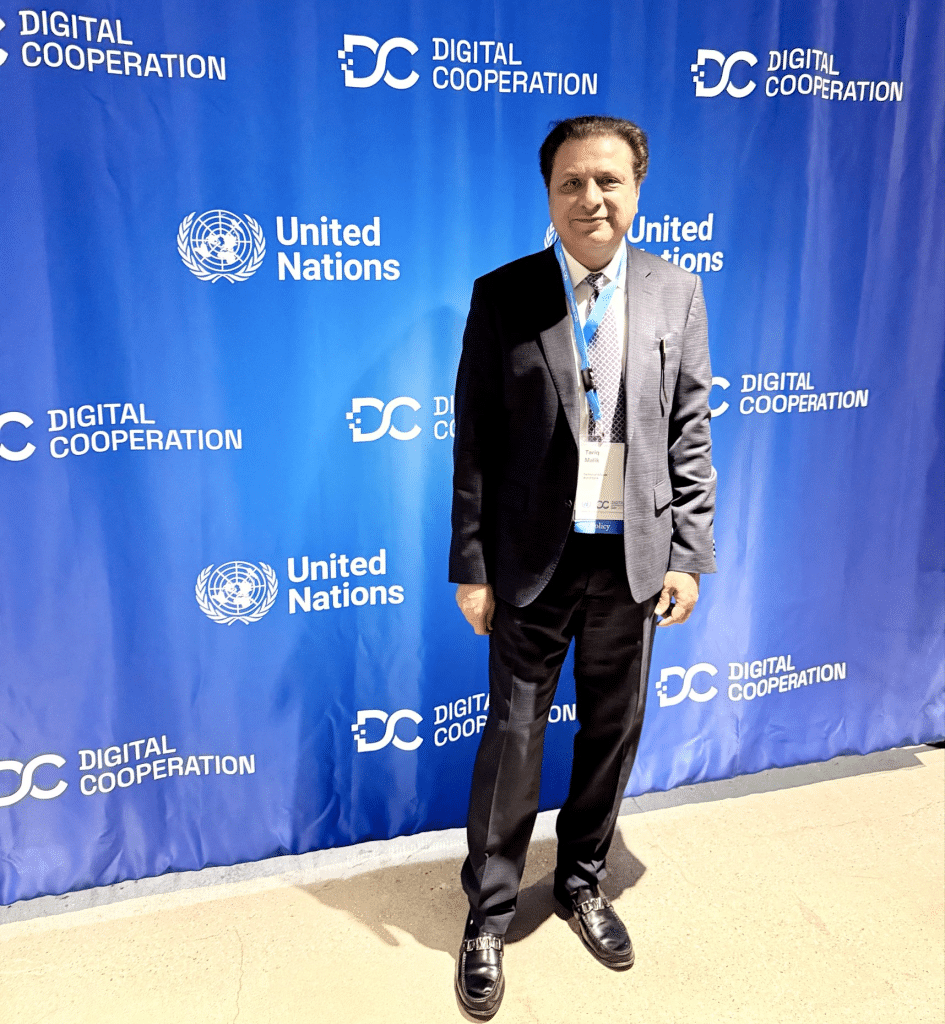
World Bank Identity for Development (ID4D) expert Tariq Malik argues that countries must be ready to export the uncomfortable stories of their digital public infrastructure (DPI) journeys, not just their successes.
Malik made the comments to Biometric Update shortly after being listed among 50 public figures influencing the course of DPI around the world. The list was published recently by Apolitical in collaboration with the World Economic Forum’s Global Future Council on GovTech and Digital Public Infrastructure.
His comments come as the export of DPI knowledge through government-to-government partnerships grows, with countries increasingly packaging their experience in digital identity, data exchange and other public infrastructure for use elsewhere.
“Countries should export their mistakes, not just their roadmap or expertise. The uncomfortable lessons like building world-class technology faster than the accountability around it must be written and shared,” Malik said.
He added: “An identity agency without legal protection from politics is one election away from capture. That is worth more to a new country than any demo,” he noted.
Malik proposes an ‘exit test’ for DPI partnerships
Malik said DPI knowledge export is not a new phenomenon, recalling that Pakistan, through the National Database and Registration Authority (NADRA), was among the first to open South-South collaboration with many countries.
Malik pointed to NADRA’s history of South-South cooperation, including work on driver’s licences in Bangladesh, identity management in Nigeria, passports in Kenya, civil registration and national ID in Sudan, electoral rolls in Fiji and DPI in Somalia. He noted that Ethiopia, India, Estonia and other countries are also increasingly sharing DPI expertise through international partnerships.
“I propose a simple test for any DPI partnership: the exit test. Can the receiving country eventually operate, audit, improve, and if it chooses, replace what was built without asking permission from whoever built it? If not, it is not cooperation; it is dependence with better branding. The best exporters will be the ones whose partners need them less every year,” he stated.
This approach to DPI collaboration, according to Malik, is important because, as he put it, the next decade of DPI will be judged by its worst day, not by the day it was launched.
He cited the example of Pakistan, where in 2023, about four million people were struck off the electoral roll as dead . He said NADRA’s data showed that many of them had recently renewed passports, received COVID vaccines, or collected BISP payments.
Malik said the problem drew attention only after sitting MPs and senators were found among those incorrectly listed as dead.
“So, I would ask every country to publish one number: time to redress. How long does it take an ordinary person to get a mistake fixed? A system that enrols 100 million people but takes months to correct an error is not infrastructure, it is a gate. Governance must scale as fast as the technology, or convenience becomes control.”
Africa’s path to sovereign DPI
While building systems that make it easier to correct mistakes, Malik believes Africa’s path must be unique, given its particular challenges and infrastructure constraints. He said countries of the continent do not need to copy anyone’s path. Instead, they should be able to try to build DPI with governance designed in from the start, rather than added later.
Malik cited Malawi, whose national digital ID he helped build. He said in 2017, the country was one of only a few in Southern Africa without a functioning national registry. Malawi now boasts near universal identity coverage.
“Working with 4,500 Malawian registration officers, the National Registration Bureau registered over nine million adults in about 180 days for roughly $52 million. We skipped the pilot because, in my experience, the pilot too often becomes the project. The registration was the easy part. The hard part is linking identity to birth and death registration so the system stays accurate and making the credential useful across a lifetime of services.”
Malik advised that for identity systems to be more inclusive and sovereign, they must be able to work offline, offer assisted routes for people without smartphones, and stay open and modular so that no vendor owns a core public function.
“Every project should answer one question before it starts. When the consultants leave, who can run it, scrutinize it, and improve it?”
Consent becomes more important as AI enters DPI
Malik sees AI as making consent and delegation more important to identity infrastructure.
“The next identity question is not who are you, but who is acting on your behalf. AI agents will soon apply for benefits, open accounts, and file documents for people. Identity systems built to verify humans must now verify delegation: which agent is acting for whom, with what authority, for how long?” he said.
Pakistan, he mentioned, has a head start. “At NADRA, we built Ijazat Aap Ki (“your permission”), which sent citizens a one-time password before anyone could verify their identity. The State Bank asked us to delay it because institutions were not ready for that accountability.”
In the age of agents, that consent layer becomes essential, he said. He added: “AI can also widen inclusion. Our Tasdeeq service lets elderly citizens with faded fingerprints verify themselves by answering AI-generated questions drawn from their own records, but a model can flag a case. It must never be the final word on whether a family eats.”
On blockchain, Malik took a pragmatic view: “Identity systems must be able to correct mistakes, so personal records do not belong to an immutable ledger.”
Related Posts
-
 September 7, 2026
-
 April 8, 2026
-
 October 20, 2025
-
 August 26, 2026
-
 January 7, 2026
-
 May 11, 2026
Article Topics
Africa | digital public infrastructure | Identification for Development (ID4D) | Pakistan | Tariq Malik

Comments