
When neighbourhood watch becomes a biometric surveillance network
By Professor Fraser Sampson, former UK Biometrics & Surveillance Camera Commissioner
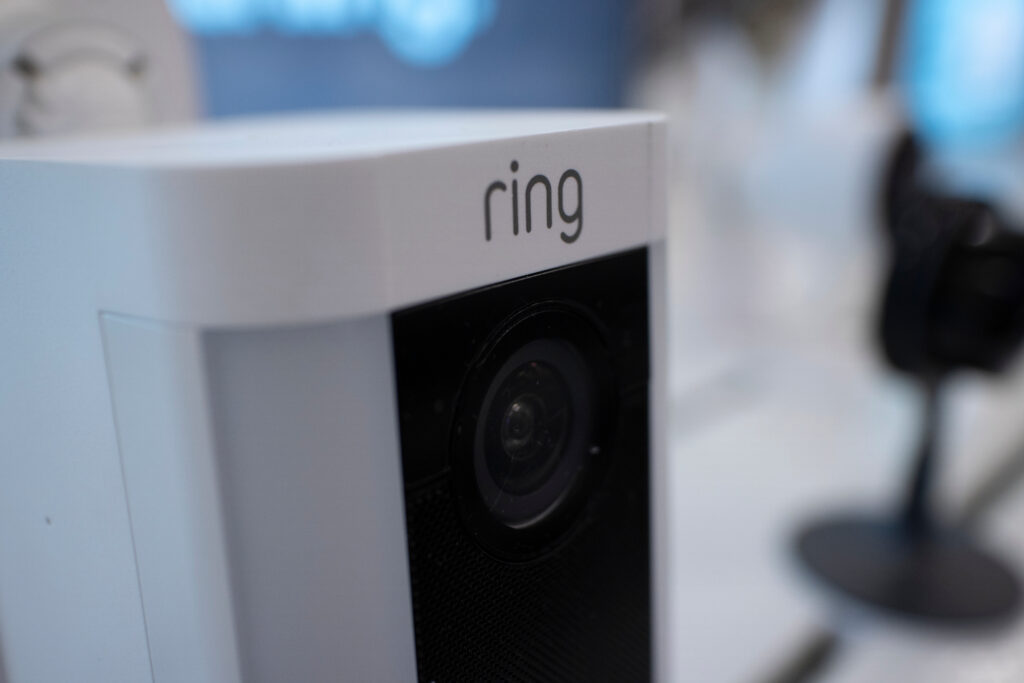
From this month, householders in the UK can join a free message board offered by Amazon’s Ring doorbell. Designed to replace community WhatsApp groups, the Neighbours app is a follow-on from the increasingly popular Ring device – which, on any view, is a sophisticated biometric surveillance system masquerading as door furniture.
Quaintly, the app is being marketed as a replacement for the “village noticeboard” which is a bit like marketing the Tesla as a replacement for the horse. The quantum leap from tacking paper on a board to feeding an AI moderated, interactive platform linked to biometric cameras, sharable globally with law enforcement is hardly phylogeny.
There is nothing sinister about self-formed community groups looking out for each other – Neighbourhood Watch traces its origins to New York City and has been active in England and Wales for 6 decades. Claiming to be the country’s largest volunteer-led crime prevention charity, it has over 2 million supporter households. But community groups using AI to collate and share biometric data is a step change and raises some important questions. For example, we’re told the app’s AI moderation and ‘people coaching’ will generate content to ensure the “right sort of post”; will it also ensure we only watch out for and report the ‘right sort of people’?
Some push-and-pull services are ‘not immediately’ available in the UK and should be greeted with care when they inevitably arrive. The Neighbours Verified feature will let local emergency services push ‘advisory messages’ to subscriber communities. This facility might be useful for managing civil contingencies like floods and food shortages but are the police going to include watchlists of people and vehicles? The Community Requests feature allows the police to request and upload data captures from cameras we’ve put on an ever expanding list that now includes coffee makers and cockroaches.
Community watch groups know there’s a big difference between reporting and responding. Remote biometric technology like facial recognition (FRT) is helping businesses report suspected criminal activity, quickly and cheaply but doing something meaningful with the shared information is a police resourcing decision – often one where the main risk lies in not following it up. Growing volume means that soon the AI will have to provide part of the response.
From the citizen’s perspective, the whole point of community watch groups is to keep strangers out (or at least under scrutiny) and this latest offer is another among many, but neighbour-on-neighbour surveillance is not always benign. Press coverage in the UK has homed in on the app’s utility for locating lost pets but amid political talk of building ‘shields’ to protect our national security, the latest arrival in biometric curtain twitching chimes with some established community surveillance programmes elsewhere. China’s Golden Shield and Sharp Eyes programmes rely heavily on neighbourhood participation and these citizen-led “overlapping … technological surveillance projects” are not puppy finding forums.
Aside from the generic societal problems of network exclusion and what this means for households that can’t join in, there’s the ever-present cyber threat. The app is being sold as an alternative to existing chat groups but, just as WhatsApp communities are now being used by scammers, it’s a fair bet that Neighbours groups will be targeted – in a domestic surveillance setting, any disruption or denial-of-service (DoS) attacks can feel uncomfortably close to home.
Surveillance is culturally sensitive and it’s interesting to see the policy approaches emerging on each side of the Atlantic. In the UK, an explosion in privately captured biometric data has completely changed the surveillance relationship between the citizen and the state. By issuing ‘spit kits’ to staff, transport services and retailers are beginning to adopt forensic biometrics like DNA analysis and police appeals already ask for ‘doorbell footage’. Any use that the police make of all this privately shared material is unregulated by their biometric and surveillance frameworks. The processing of biometric data is subject to general safeguards; ‘purpose limitation’ is one of them. However, if your purpose is the prevention and investigation of all forms of crime and disorder, the prosecution of offenders, the promotion of community safety, protection of property and national security, that isn’t much of a constraint. In the use of our biometric data for ‘policing purposes’, the state enjoys a lot of latitude.
In contrast, the regulation of biometric data varies from state to state and the US Senate has just received a bill proposing a moratorium on federal agencies’ use of FRT and other remote biometrics. While the bill is unlikely to become law, its significance lies in the fact that it recognises the growing risks from the state piggybacking on private devices. As drafted, it would also stop the government from accessing or using information from a biometric surveillance system operated by someone else.
If you do engage enthusiastically on a neighbourhood surveillance network, be prepared for a ‘welfare visit’ when you’ve calmed down or had enough. AI content gatekeepers parse chat threads looking for keywords and activity indicating vulnerability. Going quiet can trigger alerts because, paradoxically, asserting our privacy has become evidence of our need to be found.
None of these features are showstoppers and this latest app will surely have a coalescing effect, especially among those already using technology to watch, record and share everything going on around their homes. But we should be clear: this is nothing like putting up a notice in the post office offering a reward for a missing tortoise or announcing a garden fête. Increasingly we’re all making surveillance decisions that the state has been grappling with (and often getting wrong) for generations. It’s too early to measure the impact of community curated biometric surveillance – the acid test will probably be the next global health pandemic. But anyone who thinks this will stop at surveillance crowdsourcing for cats hasn’t been paying enough attention.
About the author
Professor Fraser Sampson is the former UK Biometrics and Surveillance Camera Commissioner, Professor of Governance and National Security at CENTRIC, non-executive director at Facewatch, strategic advisor to the Alan Turing Institute’s Centre for Emerging Technology and Security (CETaS), and a longtime Biometric Update columnist. He is also the author of the Springer Nature book How AI-Driven Surveillance is Changing our World: Do Robots Have the Right to Remain Silent?, which explores the legal, ethical and societal implications of AI-driven surveillance.
Related Posts
-
 May 5, 2026
-
 February 13, 2026
-
 July 22, 2026
-
 May 18, 2026
-
 August 18, 2026
-
 March 5, 2026
Article Topics
Amazon | Amazon Rekognition | Amazon Web Services (AWS) | biometrics | facial recognition | law enforcement | Ring doorbells | smart homes | video surveillance

Comments