
Where commercial value can actually be created around the EUDI Wallet
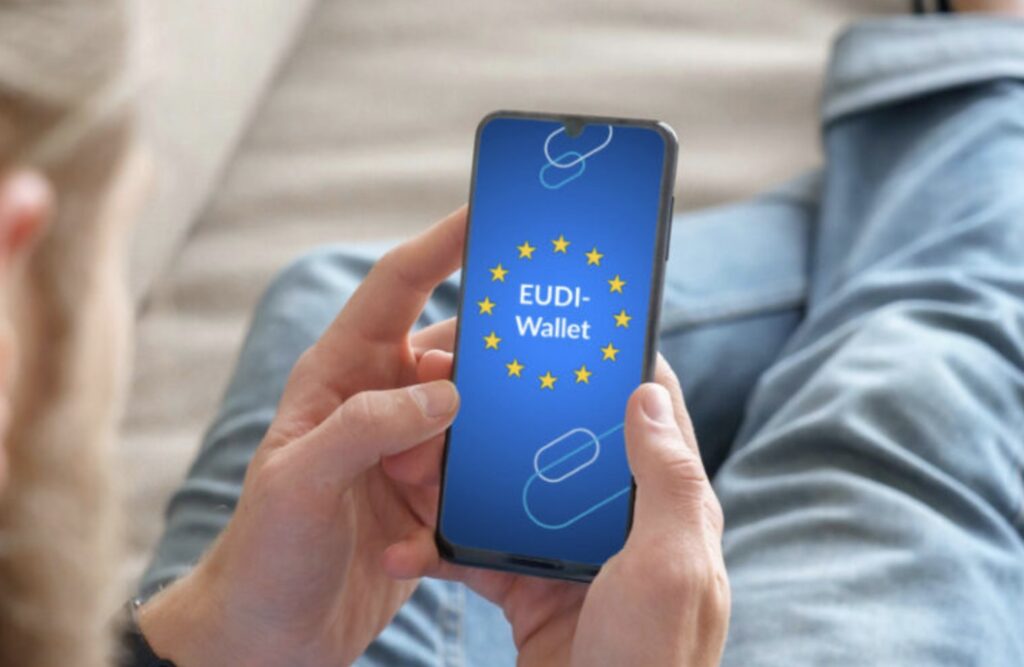
Much of the discussion around the European Digital Identity (EUDI) Wallet has focused on its stakeholders and their roles. Once the trust infrastructure is in place, the commercial questions go further: what value does each participant create, who benefits and how does the participant get paid?
Dock Labs explored these questions in its webinar, Building a Business Model Around EUDI Credentials, featuring Richard Esplin and Agne Caunt. This analysis draws on that discussion to assess which models have the strongest commercial case. The examples below illustrate how those models work.
The strongest near-term opportunities involve reducing existing verification costs, incorporating credentials into established services and supplying acceptance technology. New payment flows require additional evidence of demand.
The regulation settles three things before any business model does
Basic identity is free. The wallet arrives with state-backed identity data, and its issuance, use and revocation must be free for natural persons. Private issuers cannot build a business on selling core identity. Their opening is in attributes the state does not supply: qualifications, income, membership and professional authorization.
Some acceptance is mandatory, on a separate timetable. Certain private relying parties must accept EUDI wallets, including covered services requiring strong user authentication and very large online platforms under specified conditions. The obligation is distinct from the end-of-2026 wallet availability deadline. Article 5f gives covered private relying parties a 36-month timetable from the relevant implementing acts, excludes micro and small enterprises from that provision, and requires acceptance upon the user’s voluntary request. Mandatory acceptance creates an implementation requirement; it does not guarantee usage or savings.
Usage tracking is heavily constrained. Selective disclosure lets users prove an attribute, such as an age threshold, without sharing a full document. The regulation also limits how wallet providers can collect and combine usage data. Business models that depend on following identifiable holders across services or linking credential presentations over time therefore face significant constraints.
These rules explain most of the assessments that follow. Models that need no new payment flow and no usage data are the easiest to build.
Verifiers: the strongest near-term case
Verifiers gain first because their return needs nobody else’s payment. Today a business may pay repeatedly for document checks, biometric comparison or database verification each time a new customer is onboarded.
For example, a lender accepts an income credential in place of collecting and assessing supporting evidence. The return is indirect: lower verification costs, less manual work, faster onboarding, better completion rates and lower fraud exposure.
The condition is that the credential replaces a process. A verifier that keeps every existing check and adds credential acceptance on top has added cost, with little saved.
Direct revenue is less certain. Illustrative examples include a stadium charging a small fee for fast entry or a retailer charging monthly for express checkout, with a credential proving entitlement. In both cases the customer pays for the time saved, and the credential is only one way to deliver it.
Referral models sit in between. A hotel could verify a guest’s loyalty credential and pass that guest to partner restaurants or spas for a fee. That works only if partners value the customers they receive.
Issuers: value where the cost fits an existing fee or budget
Issuers create value by turning information they have already established into evidence others can rely on. Whether they can charge for it depends on who benefits.
The models most likely to work attach the credential to money that already moves: A university bundles a digital diploma into an existing administrative fee; an employer funds staff credentials out of lower administrative costs; a hotel group treats loyalty credentials as a customer acquisition cost; governments can fund credentials they are already responsible for issuing, such as digital driving licences.
Charging the holder directly is plausible for narrow cases, such as a professional paying for a qualification credential that employers ask for.
Verifier-pays-issuer faces a harder question: why would a verifier pay for a credential the holder already possesses and presents? A lender compensates an income-credential issuer each time an applicant presents its credential. It faces two open questions. The holder already has the credential, so the verifier needs a reason to pay for it. And billing per use has to be done without revealing which holder presented which credential.
Credential type adds a cost decision. Electronic Attestations of Attributes (EAAs) cover information such as membership or qualifications. Qualified attestations (QEAAs) come from qualified trust service providers and carry specific legal effects. Qualification pays for itself only where a relying party needs that assurance, such as a regulated transaction. For a loyalty program, qualified issuance needs an additional justification.
Issuers should confirm which credentials businesses will accept before investing in them. A credential nobody accepts has no commercial value.
Ecosystem providers: large value, but only after both sides join
Ecosystem providers establish shared credential formats, trusted issuers, participation rules and commercial terms. Their value lies in reducing separate negotiations and integrations between participants. Certification bodies, technology integrators and referral partners also contribute to these networks.
The likely value is not the wallet itself, but reducing the cost of connecting issuers, verifiers and credential types.
Revenue models include governance, certification, membership, revenue-sharing and marketplace fees. Their analogies are Visa and Mastercard scheme fees, card interchange, SWIFT’s KYC Registry and app stores.
The card analogy shows both the prize and the obstacle. Card schemes earn fees because merchants and cardholders are both already present in large numbers. A new credential network cannot assume either side is already present: issuers need a reason to join, and verifiers need useful credentials.
Sector networks with committed participants have the stronger early case. Open marketplaces face greater coordination and adoption costs.
Wallet providers: the most constrained role
Wallet providers have the least room to charge. Notified EUDI wallets must be free for natural persons to obtain, use and revoke, and providers are barred from observing transactions. Charging natural persons simply for obtaining, using or revoking the notified wallet is not available as a business model.
Illustrative examples include a pathology laboratory wallet whose test-result credentials patients share with hospitals and healthcare providers, reducing repeated forms and transcription when receiving systems import the results, or a bank wallet combining customer credentials and payment cards. The value depends on acceptance and workflow integration. Neither example establishes demand for a separate consumer subscription.
The speakers discuss user subscriptions, premium features, issuer fees, verifier fees and business-wallet functionality. Business offerings have the clearest case because organizations already pay for integration, management and support. The free-service requirement for natural persons does not apply in the same way, although relevant regulatory obligations remain.
Wallet providers also have no automatic claim on revenue they enable. A stadium’s fast-lane fee belongs to the stadium unless an agreement shares it.
What models outside the EUDI framework show
U.S. mobile driver’s licences support a cautious commercial reading. California offers a free wallet and supports major phone wallets, while AAMVA provides free access to its issuer certificate list. These arrangements demonstrate value for verifiers and downstream services without establishing a payment to the issuer for every presentation.
Issuance alone does not create utility: acceptance varies by wallet and service. EUDI’s acceptance obligations offer an advantage, but working integrations determine the benefit. Online credentials have a clear process to replace—document-and-selfie collection—while in-person savings depend on volume, staff effort and assurance needs.
Free wallets and basic readers also raise the bar for paid offerings. The stronger opportunity is helping businesses use credentials through integration, management and specialized workflows, rather than charging consumers simply to hold them.
Bank-led schemes. Nordic BankID systems have banks issue the identity and relying parties pay per transaction. They are the clearest proof that verifier-pays can work, and they worked only after issuers covered nearly the whole population. Australia’s ConnectID follows the same design.
What to watch as wallets launch
Three signals matter: verifiers retiring existing checks, businesses paying for acceptance infrastructure or valuable attributes, and sector networks securing fees that participants accept.
Organizations must also choose between open and closed ecosystems. University qualifications accepted across industries gain wider reuse. Staff credentials restricted to an employer’s systems offer greater control and a clearer route to internal savings. Open networks expand reach but require broader interoperability and commercial coordination.
The practical starting point is one existing customer journey: what information it needs, which issuers and credential types meet its requirements, and what work disappears when that evidence arrives through a wallet. That provides a firmer commercial foundation than introducing a fee simply because credentials can be exchanged.
Related Posts
-
 April 9, 2026
-
 May 21, 2026
-
 July 28, 2026
-
 October 7, 2025
-
 April 24, 2026
-
 May 12, 2026
Article Topics
digital ID | digital wallets | Dock | EU Digital Identity Framework | EU Digital Identity Wallet | Europe

Comments