
World Bank finds Haiti’s biometric ID infrastructure underused as 3M lack credentials
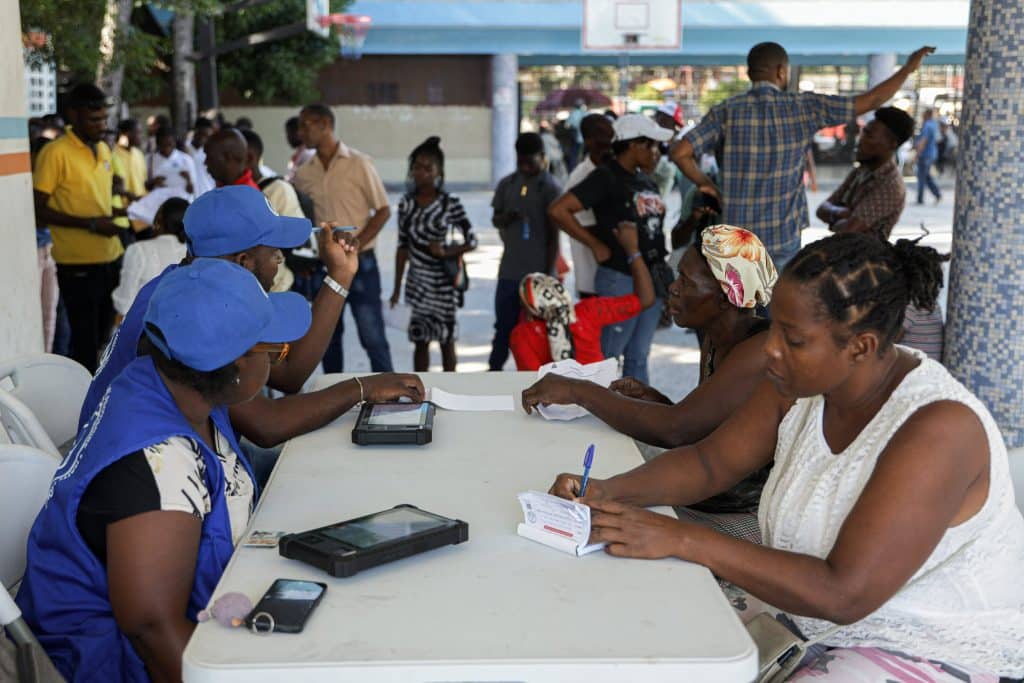
An estimated 2.7 million to 3.1 million Haitian adults lack valid national identification cards, according to a new World Bank diagnostic calling for sustained funding, broader enrollment and stronger identity infrastructure to expand access to public and private services.
The World Bank estimates that Unique National Identification Cards have been issued to approximately 67 percent of Haitian adults, leaving roughly one in three without a valid credential.
The report, Diagnostic of ID Ecosystems: Haiti, emphasizes that national ID enrollment is not enough. It underlines that this must go hand in hand with other vital aspects, such as accessible civil registration, reliable identity verification infrastructure, effective governance mechanisms and robust data protection legislation.
Haiti has made progress through its national ID reforms, including a 2020 decree introducing biometric chip-enabled identity cards, alongside efforts to decentralize card printing and expand service points.
However, the report reveals that card distribution remains a major challenge. As of May 2025, more than 650,000 national ID cards, representing about 11 percent of the total produced, had not been delivered to their holders. The World Bank attributes the backlog partly to centralized printing in Port-au-Prince, logistical difficulties and insecurity, which have made it difficult to get cards to enrollment and distribution centers.
Among children under five, 85 percent have had their births registered, but only 77 percent hold a birth certificate, according to the World Bank. The gap illustrates why expanding national ID coverage also requires improvements to the underlying civil registration system.
Anne Lucie Lefebvre, World Bank Group Country Manager for Haiti, said, “Investing in the ID ecosystem is not only a matter of fulfilling a basic right, but also a strategic opportunity to foster inclusive and sustainable access to jobs in Haiti.”
She added: “Improving the ID system so that public and private service providers can use it will enable key identity verification and authentication services, such as verification of uniqueness, authenticity of credentials, and validation of identity information.”
The report also underlines the need to focus on people most at risk of exclusion, such as poorer households, those living in remote or insecure areas, women who face cultural barriers to registering births, and people displaced by insecurity, including deportees, returnees and internally displaced persons.
Although national ID cards are officially free, informal fees, travel expenses, repeated visits and lost income can make registration costly. The World Bank recommends bringing services closer to rural and insecure communities, simplifying late birth registration and reducing obstacles faced by single mothers registering their children.
As in many other countries, legal identity is an important gateway to economic participation, the report states. It calls on Haiti to ensure that progress in issuing ID cards translates into wider access to legal identity, helping remove barriers that millions of adults face in accessing financial services, formal employment and public services.
Another major challenge identified by the World Bank is the lack of interoperability between the country’s civil registration, national identification and statistical systems. Haiti does not yet have an operational national data-sharing infrastructure or a centralized or federated population register. Although the National Identification Office (ONI) has biometric deduplication and digital verification capabilities, these remain underused across government services, leaving many institutions dependent on manual identity checks and separate databases.
The World Bank also warns that weak links between civil registration, identification and statistics systems hinder reliable population estimates, complicating public policy and service planning.
The recommendations are organized around three pillars: inclusion, system design and governance. They include comprehensive data protection legislation, streamlined birth registration, expanded enrollment campaigns, clearer institutional responsibilities, predictable funding and modernization of the legal framework governing the national ID system.
On the technical side, the World Bank recommends introducing a unique identification number from birth, establishing a national data-sharing infrastructure and developing verifiable digital credentials. It also proposes expanding remote identity verification capabilities and strengthening the technical capacity of government institutions to operate and maintain the systems. The report warns that dependence on external financing and proprietary technology suppliers could undermine the long-term sustainability of the national ID infrastructure.
Haiti has received assistance from international partners in its legal identity push. In August, the OAS-Japan agreement provided for a US$3 million grant from Japan to support the procurement of 350,000 blank biometric ID cards, expand outreach and improve electricity and internet connectivity at ID offices.
Haiti’s challenges echo those facing other countries seeking to modernize foundational identity infrastructure. Cameroon is confronting a substantial funding gap in its civil registration reforms, while Madagascar is working to reach underserved communities through its legal identity strategy.
Related Posts
-
 September 7, 2026
-
 January 22, 2026
-
 August 5, 2026
-
August 18, 2026
-
 August 21, 2026
-
 January 7, 2026
Article Topics
biometrics | digital ID infrastructure | digital identity | identity infrastructure | identity management | national ID | World Bank

Comments