
Africa’s AI ambitions depend on stronger digital public infrastructure, expert says
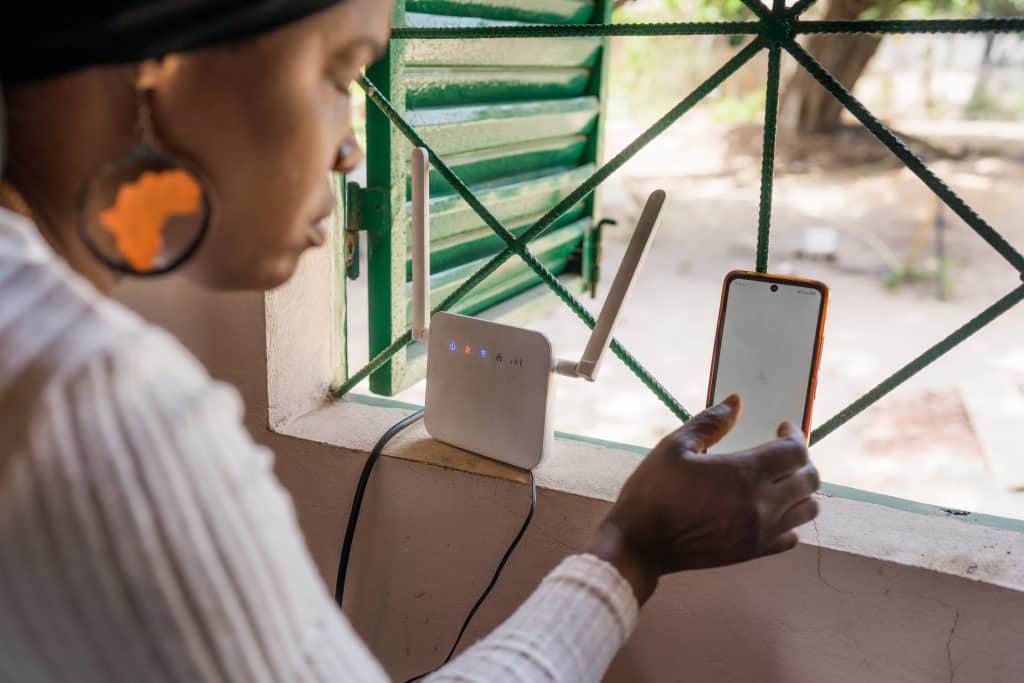
Certified AI governance specialist Remy Takang has warned that African countries must not rush to unveil or draft national AI strategies without first building the reliable digital public infrastructure (DPI) foundations the technology needs to run on.
The Belgium-based Cameroonian lawyer gave the caution in an interview with Biometric Update, in which he discussed efforts by African governments to develop or implement national AI strategies, the priorities, what to keep at the back of their minds, the risks, as well as potential rewards. Takang advises on AI assurance and data protection through his own practice at RTivara Advisory, and also works with A-Law International Law Firm.
As of April, 22 African countries had published national AI strategies, while a further 21 were in the process of drafting one, according to the African AI Governance Index tracker.
To Takang, such efforts would be of little consequence if governments do not first build reliable, interoperable and properly governed DPI. AI cannot deliver meaningful public value without these foundations.
“DPI is the road and AI is going to be the vehicle. AI is only as good as the route we build it on. If you want to build AI, there should be some foundation. If that foundation is shaky, the AI is going to be shaky and will fall. But if that foundation is strong, the system is going to be strong as well, and it will succeed. So, DPI is supposed to serve as the route on which we should build this AI system,” he said.
Takang described DPI as a shared set of digital systems and rules on which a country operates. He cited the three commonly-recognized pillars: digital identity which enables people to prove who they are online; digital payments which allow people to move money quickly and cheaply; and data exchange systems through which government and even private sector systems can communicate securely.
Why African governments are pursuing AI
According to the expert, African governments must avoid adopting AI or drafting AI strategies simply because neighboring states or Western countries are doing so. He said it is important to first establish why they wanted to adopt the technology.
He used the analogy of a journalist who buys a plumber’s high-end toolbox that might be impressive to hold, but would be useless to him as a news reporter. Similarly, he said, nations must identify the specific local problems they intend to use AI to address.
Takang stated that it was not enough to pursue AI strategies. The real issue, according to him, is whether governments are able to translate those strategies into functioning infrastructure, institutional capacity and services that address the problems citizens face. Recently, the Carnegie Endowment for International Peace released a policy brief which noted that efforts to improve digital infrastructure in Africa have been a priority for the last 30 years.
In terms of reliable infrastructure, he cited the need for dependable electricity, stable internet connectivity and adequate computing capacity. He argued that weak systems are likely to undermine AI deployment and even affect the performance of existing digital services.
“AI needs a lot of computing power, electricity, and internet connectivity. Governments have to make the necessary financial sacrifices. If you don’t have those structures in place, whatever effort you make is going to crumble,” he said.
He cited Cameroon, where citizens sometimes struggle to access digital services because of unstable electricity and internet connectivity problems. Cameroon, like many other African countries, he said, has the potential to generate more electricity from its rivers and other water resources, but exploiting this potential would require substantial investment, especially in connectivity infrastructure projects like the announced data center to be financed by Cybastion.
Benefits of AI-DPI integration
Once the necessary infrastructure is in place, Takang believes integrating AI with DPI could facilitate access to services across several sectors.
He cited the example of a farmer in Cameroon with a trusted digital ID, a mobile payment account and shared agricultural data. These could enable the farmer to receive AI-generated advice in their own language, get warnings about potential pest outbreaks and secure credit or subsidies without queuing at a bank.
“Most of these farmers are in the rural area. They might not have that time because some of these financial institutions are in the urban areas. But integrating AI into the system will allow them to be able to do all of these things online with less stress.”
The example resonates with India’s digital agriculture initiative, which aims to improve farmers’ access to subsidies and agricultural inputs while providing AI-powered pest advisories and information about climate-related threats. India’s emerging DPI 2.0 approach also incorporates AI-powered, local-language voice interfaces to make digital services more accessible. Takang has written about lessons Africa can learn from India’s efforts to build sovereign AI capacity.
In the healthcare sector, Takang said an AI system integrated into a sound DPI ecosystem could help identify diseases early, particularly conditions disproportionately affecting African communities, and detect outbreaks.
“If these digital infrastructures are there, you can use all of that to create an AI system so that if there should be an outbreak, you can easily identify which condition the particular person is suffering from, and also make the necessary recommendation.”
AI systems could also prove useful for social protection schemes, he said. “AI can assist to analyze the vast amount of data, to look at the person’s capability, and also help the government prevent fraud. Someone might try to claim what they are not in order to obtain all of those benefits. Using an AI system can help discover who is fit for such support or not. So, AI has a lot to do, but the digital public infrastructure needs to be strong.”
Governance, rights and inclusion
Developing AI strategies is not necessarily a bad idea, according to Takang. Dwelling on the Cameroon example, he cited a policy brief he wrote in September 2026, in which he reviewed the country’s efforts to develop its national AI strategy.
He said his findings at the time revealed limited progress in implementing the strategy. A proposed AI authority, presidential council, regulatory sandboxes and national computing infrastructure, which were envisaged as part of the strategy, were not in place at the time of his research.
African countries drafting AI strategies must consider several factors, including the need for a proper framework and mechanisms that guarantee people the right to seek remedies when they are harmed.
Takang recommended a rights-based legal framework for high-impact AI systems, with particular emphasis on the right to redress. He noted that even some Western regulatory frameworks do not adequately address this right.
Governments, he insisted, must aim to establish systems through which people harmed by AI applications can easily seek redress.
“When we talk about high-impact AI systems, we are talking about systems that have great impact on us humans. We are talking about privacy violation, discriminatory outcomes, inaccurate classification, exclusion from public service, and also unfair decision-making. Once these systems make decisions wrongly, they are going to affect somebody’s life. It can lead to depression, it can lead to psychological trauma, it can lead to death,” he stated.
Takang’s argument is reflected in recent research which found that grievance redress mechanisms for 15 interoperable DPI systems remain fragmented. The research recommended that redress mechanisms should be as interoperable as the services they support.
The expert also stressed the importance of inclusivity, particularly ensuring that people in rural areas can access and use AI-powered digital systems.
“If we want to talk about inclusivity, even those in the rural areas must be able to use these systems. But do we have a constant supply of electricity, strong internet connection?” he asked.
No big need for single AI law
On the regulatory side, Takang argued that African countries do not necessarily need a single, comprehensive AI law. Existing sector-specific laws, he argued, could instead be amended to accommodate AI.
“It doesn’t mean that you should try to create something really big. Some of our countries already have dedicated frameworks. We have amendments, we have existing laws. Some of these laws just need to be tweaked a little bit so AI can be factored into them,” he said.
Also, he cautioned countries against simply copying the European Union’s AI Act, arguing that it was designed for a specific context and set of realities that might not directly apply to African countries.
He also called on governments to build on the direction provided by the African Union’s continental AI strategy, launched in 2024. The strategy, among other objectives, sets a target for member states to develop national AI strategies by 2030. Most African countries are working on their strategies within this timeframe.
Takang also highlighted the need for cross-border collaboration, continent-wide data classification standards and harmonized rules on data flows. This aligns with previous calls for African countries to strengthen regional DPI collaboration and interoperability, and with the growing recognition that connectivity matters for DPI adoption across the continent.
Such collaboration, he said, is vital because AI systems trained on African data need African data governance standards rather than imported ones.
“We need strong cross-border collaboration within African countries, just like here in the EU. That’s something that we can also do in Africa. We already have the African Union. Why are we not doing such collaboration to ensure that things work or function the way they’re supposed to function? In an era of AI, we badly need that collaboration.”
Related Posts
-
 September 7, 2026
-
 July 20, 2026
-
 October 1, 2026
-
 September 16, 2026
-
 March 4, 2026
-
June 18, 2026
Article Topics
Africa | AI DPI integration | digital public infrastructure | identity governance | identity infrastructure | interoperability

Comments