
UNICC reuses biometric identity technology to expand its DPI footprint
The United Nations International Computing Centre (UNICC) started off as a shared-services facility so that different UN bodies could split the use of a mainframe computer. More than 50 years later, its role has evolved into that of the UN system’s largest partner for digital and cybersecurity services, providing technical expertise, shared IT infrastructure and digital solutions across more than 100 international organizations.
As such, UNICC plays a role in many initiatives related to biometrics, digital identity and digital public infrastructure (DPI), Head of Open Source Program Office and Digital Public Solutions Emily Bennett tells Biometric Update in an interview.
UN client agencies make up UNICC’s management committee, and dictate its roadmap for developing services and products. The needs of those organizations span back office functions and supporting work toward the Sustainable Development Goals (SDGs).
“In the case of identity, you see use cases that bridge both of those functions,” Bennett says.
One example is the development of the beneficiary verification solution for the United Nations Joint Staff Pension Fund, which completed biometric presentation attack detection (PAD) assessments from BixeLab at both Level 1 and 2 earlier this year. UNJSPF Deputy Chief Executive of Pension Administration Dino Cataldo Dell’Accio described the app’s role in securing a pension system with 80,000 beneficiaries all around the world in a recent interview with Biometric Update.
UNICC also operates as a public cloud service broker at scale, and has built UN-operated open-source compute infrastructure and AI capabilities. It also provides learning and training programs, and cybersecurity services throughout the stack.
The Digital Delivery division of the organization has built a wide range of solutions, including for biometric and digital identity applications. They are usually not built from scratch, but with open source libraries and components, and UNICC is a member of Linux Foundation Decentralized Trust and Digital Public Goods Alliance.
UNICC’s work on digital wallets is based on “both open-source and UN-built components that are composed and then deployed for specific client cases, both the wallet as well as the use cases for the wallet product.”
Training includes hands-on opportunities for the people who will operate DPI systems. “That case is where many countries want that competency locally,” Bennett says.
Relative value of open-source
UNICC business model operates on a cost-recovery basis, with clients among UN system entities and other international organizations.
The organization’s mandate means that it is often building technology for use by multiple agencies and countries, and therefore often uses open-source tech to take advantage of its transferability.
From the perspective of building UNICC capabilities, Bennett notes that in some cases licensed technologies “when shared, provide an enormous efficiency at scale.” In these cases it would take an enormous dedication of resources to build up products with the same robustness and comprehensive capabilities.
“For us to be able to scale and operate multiple technologies, to give the option of choice, some aspect of neutrality in that, and certainly the possibility to avoid lock-in, that is highly of interest.”
Sometimes that means using open-source technology, sometimes it’s “a buy and share decision.”
Shared capabilities
Sharing technology also improves efficiency when operational capacity can be “built in one or two places” instead of many siloes, and helps keep total cost of ownership low.
Bennett says UNICC’s identity journey started in collaboration with and investment by UNJSPF, for which UNICC is grateful for their partnership.
“Evolution of products for us is also because of trusted partners like UNJSPF,” she says. “They helped us to be able to build with them, build for them, and build foundational pieces that then go on to benefit others.”
The solution built for UNJSPF has since become a significant foundation for UN digital ID, according to Bennett. “We’re using similar components and reusing them and repackaging them for UN digital ID and scaling that, and with other UN partners country deployments and DPI.”
UNICC and UNJSPF started working together in 2019, and Digital ID Solution Architect Pablo Arribas explains that the UNJSPF’s challenge was to establish liveness, presence and location, anywhere in the world, through the existing phones and networks.
“It was a solution that required the highest level of privacy preservation,” Arribas says, which required very specific and private compute infrastructure.
UNICC investigated various technologies, including open-source computer vision libraries and on-device machine learning frameworks. Arribas describes the process as lengthy, including many iterations, a proof-of-concept and a pilot. The iteration process has continued through the production rollout based on the real-world information gathered.
The organization even considered using voice biometrics, but ultimately abandoned the modality in favor of face.
W3C Verifiable Credentials were incorporated into the production solution, alongside open-source distributed ledger components. A VC attests the creation of the Digital Certificate of Entitlement for “bullet-proof auditability,” Arribas says.
UNICC adapted and improved some open-source face verification code and submitted its algorithm to NIST’s FRTE 1:1 in 2024.
Building blocks
The organization also applies 1:N facial recognition for deduplication and presentation attack detection (PAD) to protect against fraud.
Arribas describes a system of layered protections against spoof attacks and other kinds of fraud, with mitigations and defenses built into various points in the identity lifecycle.
He credits UNJSPF’s leadership with taking a proactive approach to third-party evaluations of the technology, like the one performed by BixeLab earlier in the year.
What UNJSPF did not want to do is stand up an entire mobile development team, or internal expertise in computer vision technology. UNICC meets those technical and business needs, providing the ability to not only develop and deliver the technology, but also help find other opportunities to deploy the same technology.
UNICC proceeds in each of these projects based on the needs and specifications of the partner organization, and Arribas notes that “if there’s MOSIP or some components of MOSIP,” for example, already in place, the organization will work to make its component fit seamlessly.
The need for fast innovation that is tested and trusted often leads UNICC to turn to “open-source components and even fully-built products,” Bennett notes, but its mandate is to work with its partner organization’s existing technology ecosystem.
UNICC regularly updates its solutions, and long-term support is often necessary, Arribas says, but not always.
“Typically identity projects tend to involve a long-term commitment,” he says, between regular updates to keep up with new security threats and the need to integrate with other newly-adopted technologies.
One area where UNICC differs significantly from standard digital identity industry practice is in its fee model. Some private companies charge per identity transaction.
“We’ve actually seen systems where the cost rises very, very high, when you try to deduplicate a population of hundreds of thousands of people,” Arribas says. UNICC avoids these kinds of fast-scaling costs, keeping the total cost of ownership manageable for clients.
Shared systems mean multi-organizational governance, with UNICC playing a role that sometimes includes proposing technology updates.
A growing DPI footprint
“We would love to see more organizations benefit from this, because we see the efficiencies that it’s brought for the organizations that it’s serving,” Bennett says, as well as the broader benefits that come with the process. She refers to a friend who has begun using the pension system as an example of someone who has already saved significant time by using the app.
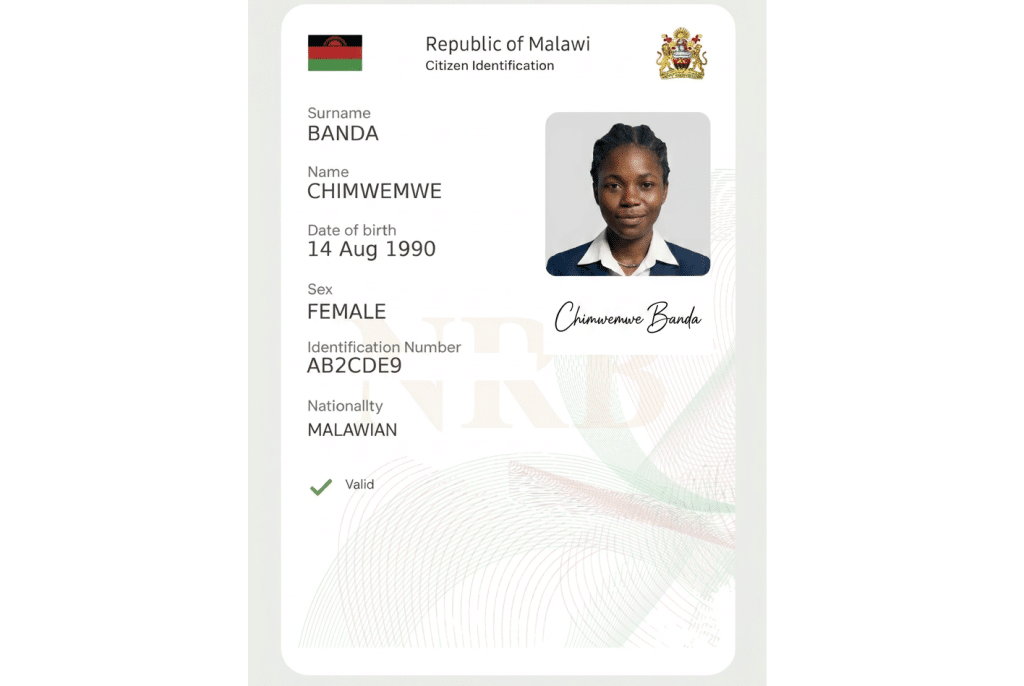
UNICC worked with UNDP and Malawi on the country’s digital ID wallet, Nzika, which officially launched on International Identity Day, September 16.
The DPI Safeguards report published in April by UNDP and partners details the system and its use of digitally signed biometric QR codes.
Arribas sees UNICC’s future work on identity as continuing to explore how interoperable Verifiable Credentials can support a wider range of use cases, including areas such as disaster response and humanitarian action.
Interoperability is central to UNICC’s methodology, as well as to how identity is utilized in service delivery through the other technology building blocks the organization works on and with.
“UNICC has proven our capabilities at scale in countries that are well-known for digital public infrastructure and goods deployments serving their populations,” Bennett says, “but we’re really interested in supporting our Partners and Clients reaching the people who don’t have access to those resources.”
She mentions a long and dynamic list of ways UNICC can support DPI and digital maturity, but the bottom line, according to Bennett, is that “UNICC has so much potential to help.”
Related Posts
-
 September 7, 2026
-
 July 17, 2026
-
 August 21, 2026
-
 April 10, 2026
-
 July 6, 2026
-
 July 8, 2026
Article Topics
biometrics | cloud services | digital identity | digital public infrastructure | identity infrastructure | United Nations | United Nations International Computing Centre

Comments