
Ring’s partnership with Flock raises privacy alarms
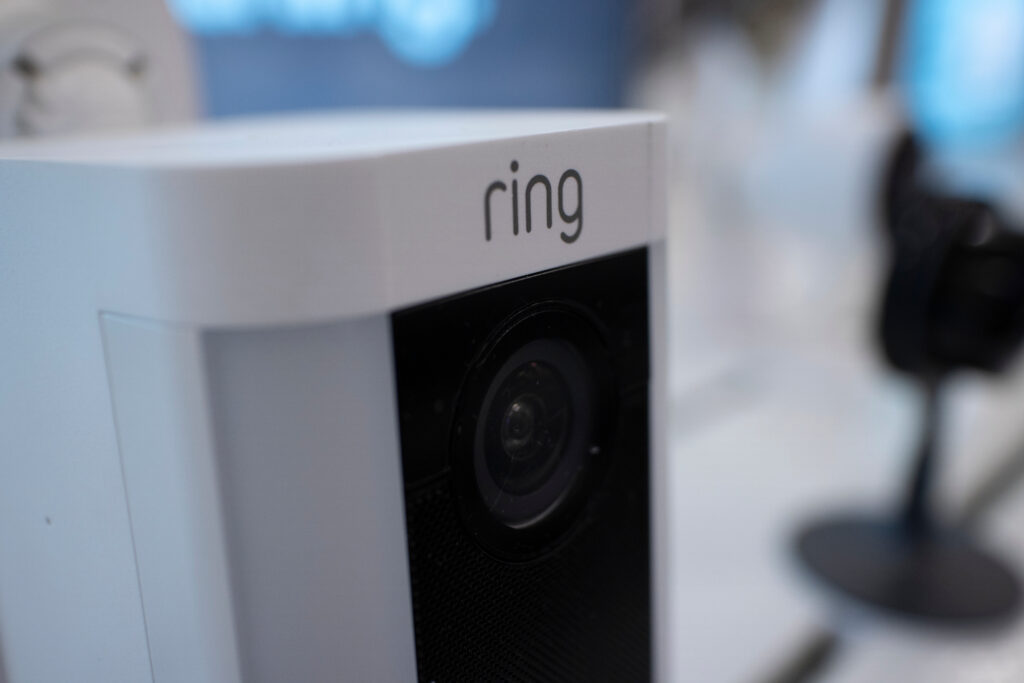
Amazon’s home-security subsidiary Ring is joining forces with Flock Safety, the Atlanta-based maker of automated license-plate readers (ALPR) and networked surveillance cameras.
The partnership, announced in mid-October, creates a direct bridge between the country’s largest consumer doorbell-camera network and one of law enforcement’s fastest-growing data-collection platforms. Civil liberties advocates say the partnership could expand government surveillance under the guise of neighborhood safety.
Under the deal, agencies that use Flock’s Nova or FlockOS investigative platforms will soon be able to post Community Requests through Ring’s Neighbors app, asking nearby residents to share doorbell footage relevant to an investigation.
Each request includes a case ID, time window, and map of the affected area. Ring says participation is voluntary and that residents can choose whether to respond, and agencies cannot see who declines. Users can also disable the feature entirely in their account settings.
Ring emphasized that the integration “simply streamlines” how local police seek community help, but privacy researchers counter that it blurs the boundary between voluntary cooperation and crowd-sourced surveillance.
Flock, which says its systems operate in over 6,000 communities and capture billions of license-plate scans monthly, has marketed the partnership as an efficiency upgrade for investigators.
Law-enforcement agencies using Flock’s tools will now be able to aggregate road-facing plate-reader data with residential video within a single digital workflow.
The companies have not specified whether Ring uploads pass through Flock’s servers or separate evidence repositories. Privacy experts note that once footage is submitted, users have no clear mechanism to retract it from law enforcement case files.
Investigations have revealed that agencies including U.S. Immigration and Customs Enforcement, the U.S. Secret Service, and the U.S. Navy had pilot or data-sharing access to Flock’s camera system, contradicting earlier company assurances that its data were limited to local policing.
Reports have suggested that Flock reassessed or paused certain federal pilot programs, including those involving immigration and homeland security components, amid scrutiny over compliance with state privacy laws and data-retention limits.
At the same time, Flock has promoted new features such as Nova, an AI-assisted interface that searches across plate reads, conventional video, records-management systems, and even open-source or data-broker feeds.
Another product, FreeForm, offers natural-language search capabilities that let investigators query video networks using descriptive phrases such as clothing or vehicle details. Civil rights experts say those capabilities invite dragnet searches based on vague descriptors, increasing the risk of racial or behavioral profiling without judicial oversight.
On Capitol Hill, Senator Ron Wyden has emerged as Flock’s most persistent critic.
Wyden says the company failed to honor its commitment to shield reproductive-health and immigration-related data from out-of-state or federal queries and misled local governments about sharing their data with the Department of Homeland Security.
In an October letter to Flock CEO Garrett Langley, Wyden wrote that “abuse of Flock cameras is inevitable, and Flock has made it clear it takes no responsibility to prevent or detect that.” He urged local officials to “remove Flock from their communities.”
Wyden’s office has said most Flock-using agencies participate in its National Lookup feature, which is a cross-jurisdictional search tool that many municipalities may not have realized enabled other departments to query their local data.
Flock, in a written response, disputed Wyden’s characterization, calling misuse “exceedingly rare” and maintaining that its data practices comply with applicable law.
Meanwhile, several cities have begun reevaluating their contracts with Flock. The City of Eugene, Oregon recently voted to deactivate its Flock cameras pending a privacy review.
In California, lawmakers advanced a bill that would have shortened ALPR data-retention periods, required case-number tracking, and limited vendor access. Governor Gavin Newsom vetoed the measure in early October, saying tighter restrictions could impede investigations.
Ring’s move to re-engage police partners comes less than two years after the company shuttered its Request for Assistance portal in January 2024, following years of backlash over secretive data-sharing with law enforcement.
Under the new system, police must post public, geofenced requests instead of privately contacting individual users. The company also now requires warrants for footage access except in emergency situations, a carve-out civil-liberties advocates say is vulnerable to abuse.
Ring’s own security practices have drawn federal penalties. In 2023, it paid $5.8 million to settle Federal Trade Commission (FTC) allegations that employees and contractors had unfettered access to customer videos and that lax safeguards led to account breaches.
The FTC ordered Ring to pay $5.8 million to settle allegations of lax security and unauthorized employee access.
Privacy and equity advocates warn that combining Flock’s vehicle-tracking grid with Ring’s residential footage creates an ecosystem of continuous visibility that lowers the friction for police to identify, pursue, or stop a “vehicle of interest” based on incomplete or biased data.
The concern is especially acute in communities of color, where studies show disproportionate targeting when algorithms flag ambiguous matches. Cross-jurisdictional data-sharing also raises fears that local data could be repurposed for abortion or immigration enforcement, even in sanctuary or privacy-protected states.
Flock’s marketing describes its operations as a nationwide, fixed network of automated license plate readers that captures billions of scans each month. The company promotes tools that let investigators trace a vehicle’s movements, identify possible associates, and pivot from one subject to another through patterns of shared sightings across its interconnected camera grid.
When paired with Ring’s consumer cameras critics argue it enables warrant-less surveillance by consent, eroding meaningful privacy under social pressure to “help” an investigation.
In Washington, Wyden and other Democrats have hinted at renewed federal oversight if voluntary promises continue to fall short. In statehouses, lawmakers are testing retention caps, audit mandates, and warrant or case-number requirements that could set de-facto national standards.
Both Ring and Flock insist that participation is voluntary and bounded by law, but without independent audits, deletion protocols, and cross-jurisdictional safeguards, privacy experts warn that these private surveillance webs risk evolving beyond public control.
Related Posts
-
 November 8, 2024
 -
 January 15, 2025
 -
 February 4, 2025
 -
 May 1, 2025
 -
 October 6, 2025
 -
 July 29, 2025
Article Topics
Amazon | Amazon Web Services (AWS) | data privacy | data sharing | facial recognition | Flock Safety | law enforcement | Ring doorbells | video surveillance

Comments