
Christmas brings chaos to EES airport rollouts
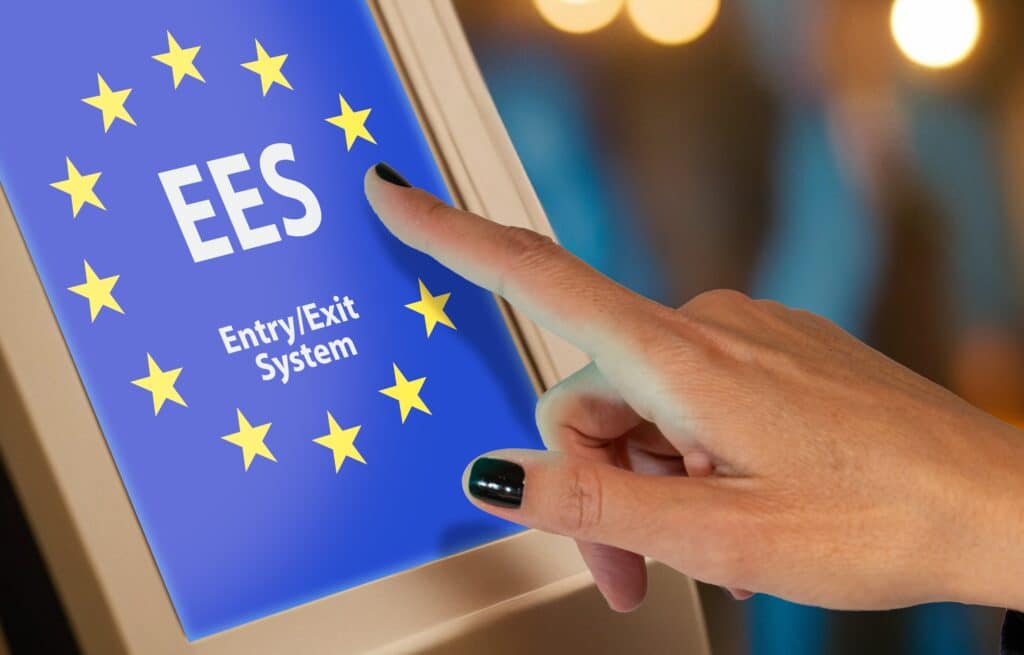
European airports are experiencing significant disruptions due to the EU’s Entry-Exit Systems (EES) as thousands of travelers head for the Christmas holidays. Airports Council International (ACI) Europe has called upon the European Commission, eu‑LISA, Frontex and Schengen Member States to urgently address operational issues related to the border schemes.
European airports recorded an increase in border control processing times of up to 70 percent, while waiting times have risen to three hours at peak traffic periods, the Brussels-based organization said last Wednesday.
“The EES cannot be about mayhem for travelers and chaos at our airports,” says Olivier Jankovec, ACI Europe director general. “If the current operational issues cannot be addressed and the system stabilised by early January, we will need swift action from the European Commission and Schengen Member States to allow additional flexibility in its roll‑out.”
Airports in France, Germany, Greece, Iceland, Italy, Portugal and Spain have been especially impacted, the organization notes.
Swiss Geneva Airport recorded four-hour delays due to holidaymakers rushing to the mountains for skiing. Although Switzerland is not a part of the EU, the country is a part of the Schengen area.
The border registration scheme began its gradual rollout on October 12th and is due to be fully implemented by April 2026. Although the threshold for registering third-country nationals is currently set at only 10 percent, travelers are already experiencing significant discomfort, says Jankovec.
The current plan requires that the registration threshold be raised to 35 percent on January 9th. This, however, will “inevitably result in much more severe congestion and systemic disruption for airports and airlines,” notes Jankovic.
“This will possibly involve serious safety hazards,” he warns.
ACI cites several reasons for the situation, including regular EES outages, which undermine the predictability of border operations. The system is also going through persistent configuration problems, including partial deployments and unavailability of self-service kiosks for biometric data capture.
The EES requires third-country nationals, including British citizens, entering the 29 Schengen area countries to submit biographical and biometric data, including fingerprints and a facial image.
Another issue is the lack of Automated Border Control (ABC) gates for EES at many airports, as well as the lack of an effective pre-registration app. Airports have also failed to deploy border guards at airports in sufficient numbers due to “acute staff shortages,” according to the ACI.
UK travelers hit by EES
British travelers may be the most affected. Last Friday, the UK Civil Aviation Authority said this will be the busiest Christmas season for air travel on record with about 3 million passengers departing from the country’s airports.
“The airports have had a long time to prepare, including an extra year (compared to the initial launch) during which they already had the kiosks and could have run any number of simulations and tests with volunteers,” Nick Brown, a data scientist studying the EES, told The Independent.
Meanwhile, the UK government has reminded that UK Service Personnel, assigned under the NATO Status of Forces Agreement (SOFA) or bilateral defence arrangements, are exempt from registering for the EES when travelling on duty. The exemption includes those working for diplomatic organizations, UK civil servants and their immediate family.
When traveling for non-duty reasons, all personnel may be subject to EES checks at borders, the government notes.
Related Posts
-
 June 9, 2025
 -
 February 6, 2025
 -
July 7, 2025
-
March 12, 2025
-
 January 28, 2025
 -
 October 1, 2025
Article Topics
biometrics | border security | Entry/Exit System (EES) | Europe | identity verification | UK

Comments