
Moscow Metro to expand Face Pay biometric service as customer base grows

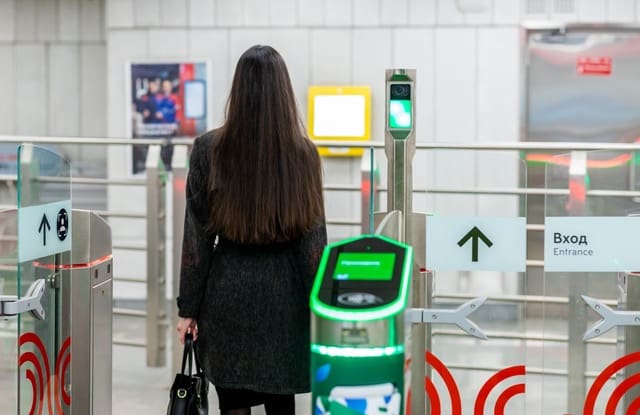
Officials of the Moscow Metro say they plan to add 330 more turnstiles to the Face Pay system from this month as modernization efforts of the biometric payment system continue.
According to an announcement, the move is being made with the objective to make the travel experience even more comfortable for metro users, whose numbers keep going up.
“More passengers are choosing the most convenient way to pay their fare — with biometric technologies. We will begin to connect another 330 turnstiles to this system from January 2023. In total, there will be more than 900 of them in the Moscow Metro,” says Maksim Liksutov, deputy mayor of Moscow for transport.
“Biometrics is used by more than 220 thousand users, who have made more than 43 million rides. Passengers use the system around 110 thousand times a day.”
The plan to increase turnstiles at the Metro follows the modernization of 249 turnstiles of the Moscow Central Circle which has not only rendered the ticket payment process faster, but has improved user experience especially for people with visual impairment, according to the transit operator.
The new turnstiles are designed with QR-code readers and also have large screens which make it possible for users to verify the status of their tickets such as their balance, the number of trips, and when the ticket expires.
Meanwhile, in another announcement, Metro officials say the Face Pay biometric system was used 32 million times in 2022, with over 220,000 new users having registered on the system in the course of the year.
“We will continue to implement Russian digital technologies in urban transport. We plan to launch biometrics on surface and river transport, on the Aeroexpress trains and on the MCD. There will be a possibility to link social cards to biometrics, including those for students. Facial recognition technology is the property of the Government of Moscow, so it is guaranteed safe,” comments Liksutov.
There are also plans to link social transport cards to biometrics for students and others, the announcement notes.
Article Topics
biometric payments | biometrics | consumer adoption | facial recognition | Russia | transportation

Comments