
US-backed $2.4B airport biometrics proposal faces scrutiny in Pakistan
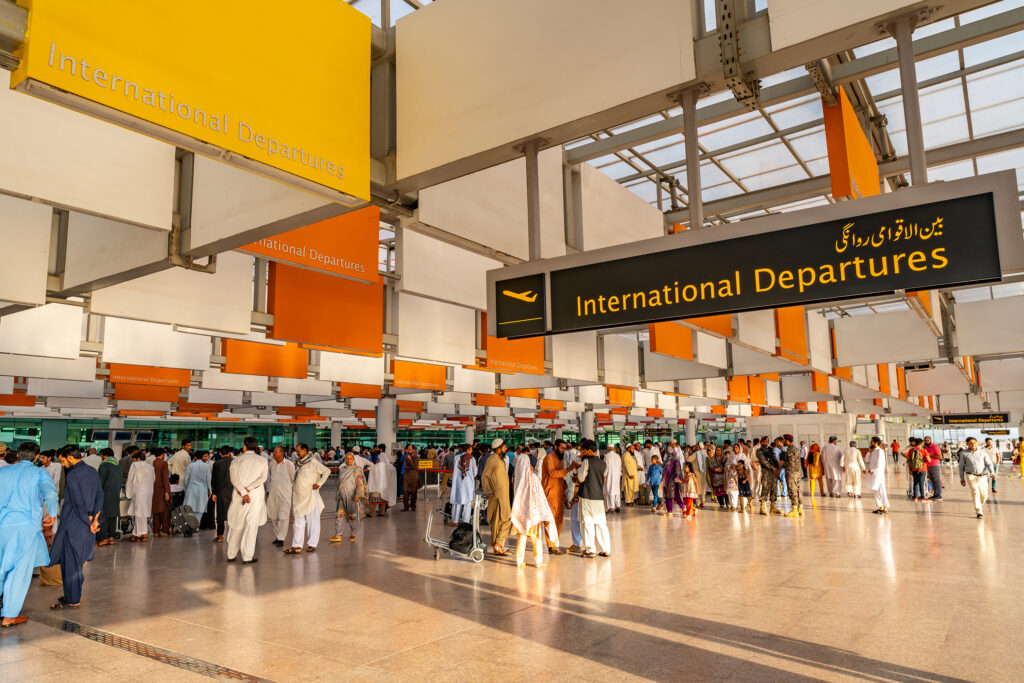
The U.S. government has backed a $2.4 billion proposal from Securiport to deploy biometric e-gates and passenger screening systems across Pakistan’s airports, as authorities face growing scrutiny over procurement processes.
According to official correspondence, U.S. Chargé d’Affaires to Pakistan Natalie A. Baker has urged Pakistani authorities to consider Securiport’s offer to install an Advanced Passenger Information (API) system and Passenger Name Record (PNR) capability.
These technologies are used to identify high‑risk travellers and detect transnational threats. The systems would enable real‑time data transfer from airlines to government agencies while allowing Pakistan to retain full ownership of all biometric and travel data, according to a report by The Express Tribune.
Securiport’s proposal, backed by the Trump administration, positions its biometric and identity screening systems as a turnkey alternative. In her letter of support, Baker wrote that Securiport’s technology can “detect and interdict criminal and transnational threats in real-time at the border,” and emphasized that Pakistan would retain full data custody with around-the-clock operational support.
Securiport’s proposal includes a $2.4 billion investment over 25 years, covering all upfront costs for deploying biometric-enabled e‑gates, identity verification tools and threat detection systems. Securiport provides biometric border security systems worldwide, and the company’s offer says its API and PNR platforms would be run by Pakistan’s Federal Investigation Agency (FIA) within an integrated, biometric‑enabled border management plan.
Securiport plans to recover costs through a government‑mandated passenger security surcharge and intends to establish a local subsidiary to train more than 1,000 Pakistani personnel in biometric and border security technologies.
The offer comes as Pakistan attempts to modernize its airport infrastructure with automated border control systems. The Pakistan Airports Authority (PAA) has been pursuing its own e‑gate project, which would use biometric passport scanners and facial recognition technology to reduce immigration processing times from several minutes to under 45 seconds.
The e‑gates would integrate with the Federal Investigation Agency’s exit‑control lists, PNR systems and Interpol databases to enable real‑time identification of high‑risk travellers.
However, the PAA initiative has faced scrutiny. Pakistan’s Senate Standing Committee on Defence raised concerns earlier this year about whether the procurement process complied with Public Procurement Regulatory Authority (PPRA) rules. Transparency International Pakistan contacted the Prime Minister’s Office over alleged violations of the PPRA rules over the e‑gate contract.
The U.S. Embassy in Islamabad and Pakistan’s Defence Minister Khawaja Asif have not responded to questions about whether Pakistan intends to move forward with the offer, according to The Express Tribune.
Pakistan’s broader effort to deploy automated border‑control systems has also drawn attention from international lenders. The International Monetary Fund has recommended that Pakistan withdraw PPRA provisions allowing direct contracting with state‑owned enterprises as part of its governance and anti‑corruption reforms.
Related Posts
-
 June 11, 2025
 -
 December 9, 2025
 -
 October 1, 2025
 -
 November 14, 2025
 -
 February 10, 2026
 -
 February 3, 2026
Article Topics
airport biometrics | biometrics | border security | Pakistan | procurement | Securiport

Comments