
Brazil’s busiest airport modernizes with new SITA biometric gates
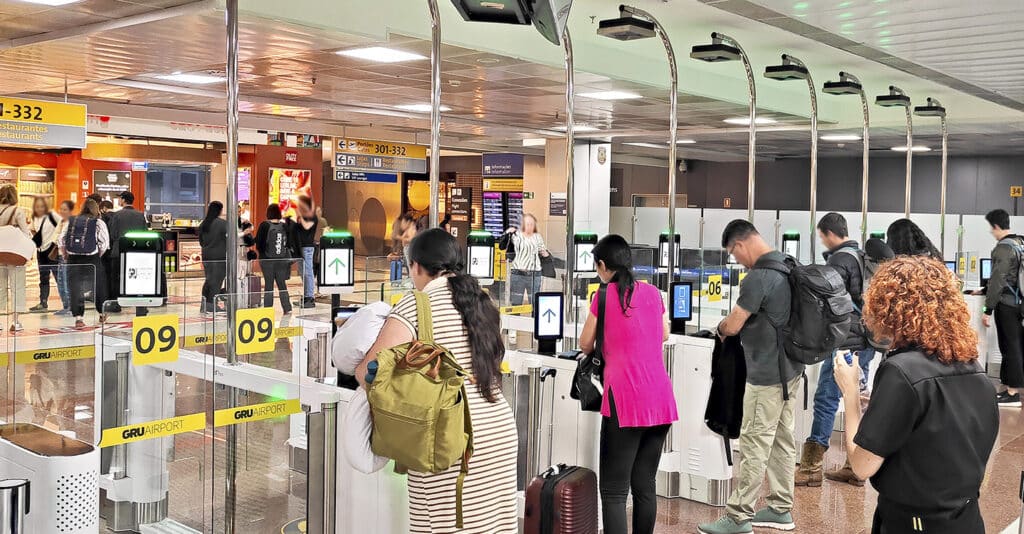
São Paulo–Guarulhos International Airport (GRU), Brazil’s busiest air hub, has launched the country’s largest airport automation initiative as it upgrades its border‑control infrastructure in Terminal 3.
In partnership with SITA, the airport has completed the first phase of installing 42 new Automated Border Control (ABC) gates, replacing older systems in the international terminal with modern biometric‑powered equipment and updated software. The new gates combine facial recognition cameras, fingerprint readers and biometric passport inspection for a single transaction that takes most passengers about 10 seconds to clear.
“We are pleased to take another step towards a more efficient, agile and secure journey for travelers at São Paulo International Airport,” says Marcelo Vasconcellos, director of operations at GRU Airport.
“The installation of the new ABC Gates, in collaboration with SITA, reinforces GRU Airport’s commitment to continuous innovation and offering the best passenger experience.”
The international arrivals at GRU can exceed 4,000 passengers per hour at peak times. Initial trials show the biometric upgrade increases passenger throughput by 40%, cutting queue times significantly.
The rollout is being handled with Digicon, a Rio Grande do Sul–based Brazilian technology firm, which is supporting the deployment and integration of the new biometric border‑processing systems.
“Border control is one of the most critical points in the airport journey, where efficiency and security need to go hand in hand,” said Daniel Granado, director of SITA Brazil. “By modernizing GRU’s ABC Gates with state-of-the-art biometric solutions, we are showing how technology can help airports and authorities manage the growth of passenger flow safely and efficiently.”
Phase two of the project begins in February 2026 with the installation of an additional 28 biometric gates and the launch of a smart security pilot incorporating CT scanners and biometric boarding.
Related Posts
-
 November 25, 2025
 -
 January 29, 2025
 -
 June 11, 2025
 -
 July 1, 2025
 -
 February 12, 2025
 -
July 29, 2025
Article Topics
ABC gates | airport biometrics | biometrics | border control | Brazil | face biometrics | passenger processing | SITA

Comments