
The US counter-cartel fight is becoming an identity intelligence war
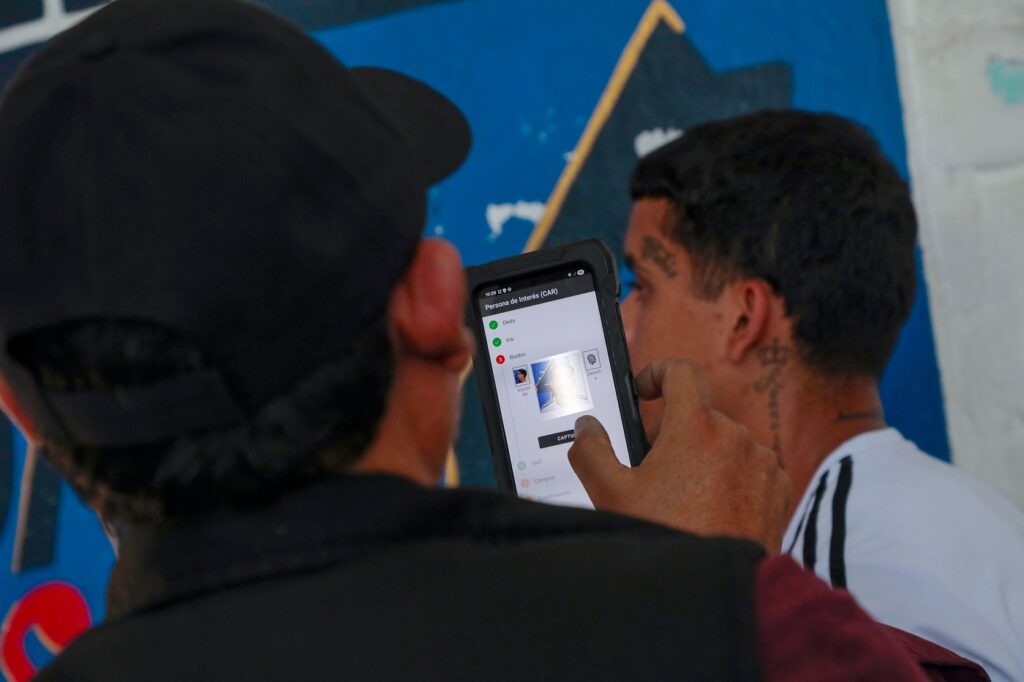
The creation of the Joint Interagency Task Force-Counter Cartel (JIATF-CC) under the U.S. Northern Command (NORTHCOM) marks more than another escalation in Washington’s campaign against Mexican cartels and transnational criminal organizations (TCOs)
It shows how biometric identification, identity intelligence, law enforcement databases, military targeting methods, and foreign partner information-sharing are being pulled into a single operational architecture aimed not simply at identifying suspects, but at mapping and dismantling entire criminal networks.
Established on January 15, NORTHCOM says the new organization is the next step in a “whole-of-government” approach to “identify, disrupt, and dismantle” cartel operations along the U.S.-Mexico border, coordinating the efforts of the Department of Defense (DoD), Department of Homeland Security (DHS), Department of Justice (DoJ), and Intelligence Community (IC).
It was announced in March that the Defense Threat Reduction Agency also is lending its expertise to JIATF-CC.
“This task force construct is the first of its kind … consolidating all of U.S. law enforcement, military, and intelligence efforts into a targeted effort in combatting these threats,” FBI Director for National Security Operations and former director of the Terrorist Screening Center Michael Glasheen told Congress last December.
A year earlier, Navy Reserve Cmdr. Jonathan K. Corrado, PhD, wrote in Military Review that “a U.S. piecemeal strategy [had] developed that [had] fail[ed] to provide required unity of command. Defense and law enforcement organizations [did] not collaborate or share information toward the common objective of combating transnational criminal organizations in the United States.”
“Inadequate resources and tools preclude[d] successful eradication of TCOs,” Corrado said.
Working with the Homeland Security Task Force National Coordination Center, co-led by DHS and FBI, JIATF-CC is a synchronization hub for intelligence, operational planning, and interagency action against what the command calls “narco-terrorist networks.”
Tuesday, the FBI said that since April it and its interagency partners had carried out 423 operations and arrested 1,343 cartel members.
The JIATF-CC model reflects a broader shift in which identity systems are moving beyond verification and into network analysis where biometric, biographic, forensic, device, document, travel, encounter, and intelligence data are used together to understand how TCOs function.
The question is no longer only whether a person is who they claim to be, but who they are connected to, where they have appeared before, what documents or devices are associated with them, what routes they use, what facilitators support them, and whether a new encounter can be linked to an existing intelligence picture. It’s all about connecting the disparate dots.
Identity intelligence uses biometric matches as anchors for fusing other information. A fingerprint collected in one country, a face image captured during an encounter, a document recovered during an investigation, a phone number tied to a logistics cell, or a forensic trace from a stash house can become part of a larger intelligence product.
JIATF-CC doesn’t operate its own biometric database, but rather is designed to sit on top of an existing identity ecosystem that already spans DoD, DHS, DoJ, FBI, IC, and foreign partners.
The core architecture is DoD’s biometrics enterprise, which DoD policy says supports tactical and operational decision-making across military operations, intelligence, law enforcement, security, force protection, homeland defense, and counterterrorism missions.
It also explicitly calls for DoD biometric and intelligence enterprises to be integrated and interoperable through identity intelligence capabilities, including biometric-enabled intelligence.
DoD policy encourages biometric collection during military operations and military intelligence activities where legal and appropriate, and treats biometric, biographic, behavioral, and contextual data collected by DoD components, along with resulting biometric-enabled intelligence products, as DoD data that can be shared under applicable authorities, arrangements, and agreements.
The principal DoD repository is its Automated Biometric Identification System (ABIS), maintained through the Defense Forensics and Biometrics Agency’s (DFBA) Biometrics Operations Division, with DFBA carrying out Army executive agent responsibilities for biometrics and forensics.
DoD directives provides for making biometric and associated biographic and contextual data collected during military operations available to its other U.S. government partner agencies for national security screening and vetting to the fullest extent permitted by law.
JIATF-CC supported Mexico’s February takedown operation against Nemesio Oseguera Cervantes, “El Mencho,” the leader of the Jalisco New Generation Cartel, by helping compile and organize information on cartel leadership networks and operational infrastructure.
Mexican forces planned and executed the raid, but U.S. officials said the task force contributed intelligence support and that U.S. partner agencies assembled a detailed target package drawing on law enforcement and national security organizations. The CIA also provided key support.
The task force is adapting lessons learned from counterterrorism campaigns against Al Qaeda and ISIS to map cartel structures, logistics networks, and support personnel.
The intelligence fusion process then links identities to locations, devices, associates, documents, financial patterns, recovered materials, prior encounters, and known networks.
In Afghanistan and Iraq, this was framed as denying anonymity to insurgent networks. In the cartel context, the same logic is being applied to traffickers, facilitators, logisticians, corrupt enablers, money movers, firearms suppliers, human smugglers, and leadership nodes.
A counter-cartel identity system is not limited to border crossers or known cartel members. It can reach into families, associates, drivers, document vendors, stash-house occupants, suspected money couriers, communications contacts, and people who appear in proximity to targets.
When identity intelligence shifts from individual verification to network mapping, the circle of people pulled into government systems can expand quickly.
There are also accuracy risks. A biometric match can be powerful evidence, but identity intelligence is not the same as identity certainty. Records can be incomplete, stale, misattributed, or collected under uncertain circumstances.
Watchlist and derogatory information also can be opaque. Foreign partner data may be gathered under standards that differ from U.S. constitutional, statutory, and privacy norms. Once fused into a target package, weak data can acquire the appearance of corroborated intelligence.
The public record does not answer several key questions. It does not specify whether JIATF-CC has direct access to DHS and FBI biometric databases, or whether checks are conducted through participating agencies.
It does not identify the task force’s data retention rules, audit procedures, minimization requirements, or redress mechanisms. And it does not explain how information compiled on U.S. citizens is handled when cartel networks intersect with domestic contacts, financial systems, communications platforms, or local law enforcement investigations.
It is also unclear whether intelligence derived from Section 702 authority carried out by the National Security Administration, and the Treasury Department’s Financial Crimes Enforcement Network, are included, though the latter is strongly suspected.
JIATF-CC can be considered an early test case for where government identity systems are heading. The future is not a single biometric database used at a checkpoint. It is an interoperable identity layer that connects encounters, records, agencies, and countries.
In this model, a person’s face, fingerprints, documents, travel history, associates, devices, and prior encounters become pieces of a larger operational map.
For counter-cartel operations, the government’s argument is straightforward. Cartels are adaptive, violent, transnational criminal networks that exploit seams between agencies and borders, and the state therefore needs an identity system capable of seeing across those seams.
The civil liberties and governance concern is just as straightforward, however. Once military, intelligence, law enforcement, and foreign partners operate from a shared identity picture, the machinery built to dismantle cartel networks can also normalize a more expansive form of identity surveillance, with uncertain limits and uneven oversight.
Related Posts
-
 October 25, 2025
 -
 April 14, 2026
 -
 January 8, 2026
 -
 January 9, 2026
 -
 July 31, 2025
 -
 April 1, 2026
Article Topics
biometric identification | biometrics | Department of Defense | DHS | FBI | identity intelligence | national security | U.S. Government

Comments