
Africans’ identity security a key driver of economic development, democracy, livelihoods and dignity
By Nat Pisupati, regional sales director MEA at HID FARGO
Africa’s development story will increasingly be shaped not only by roads, ports and power-stations, but also by something less visible, yet equally transformative: trusted identity systems. Across the continent, governments are recognizing that identity security is no longer simply an administrative function, but rather the foundation of economic participation, state capacity, democratic inclusion and public trust. This was underscored by discussions at the 10th annual ID4Africa AGM, held last month in Abidjan, Côte d’Ivoire. I attended the event, along with around 1,800 government decision-makers, international development organizations, industry players and civil society representatives. What returned in conversation after conversation was a question that sounds simple but carries enormous consequence: what does a citizen need before they can access anything else? The answer, consistently, was a trusted credential.
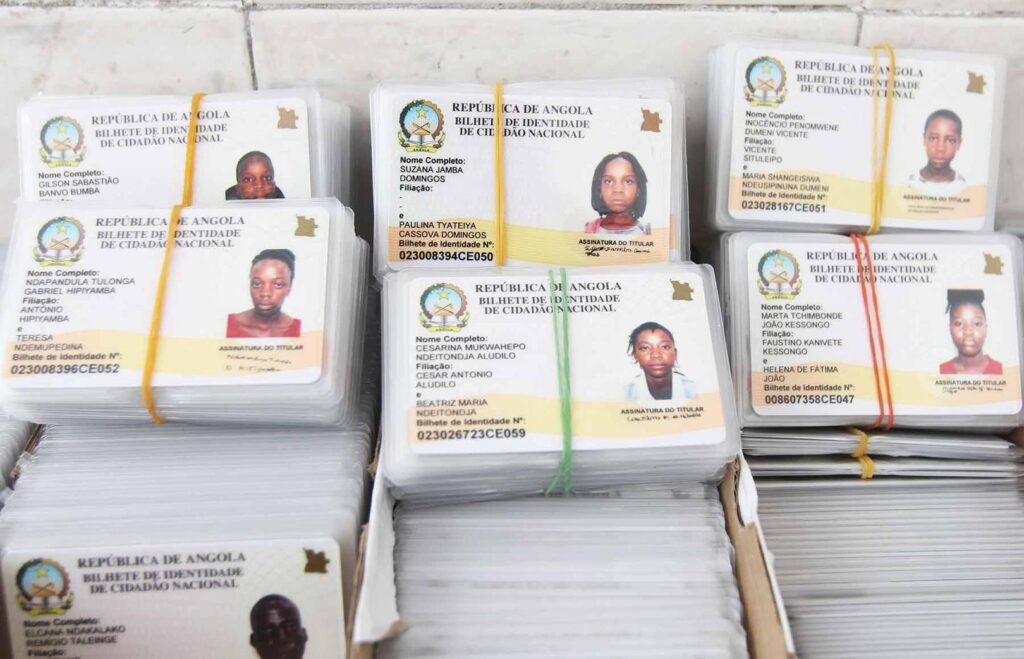
Delegates heard that for millions of Africans, the absence of secure identification remains a daily barrier to opportunities for aspirations, dignity and livelihoods. Around 500 million people in sub-Saharan Africa lack any form of official identification, and without proof of identity, citizens can struggle to access healthcare, enroll in schools, receive social grants, vote, travel, or formally participate in the economy. In essence, entire populations effectively remain invisible to the state. This is where identity security becomes a development issue rather than merely a security concern. The physical credential — a national ID card, a voter registration document, a healthcare card — is the entry point to that participation. Before any digital layer can function at scale, citizens need a tamper-resistant, government-issued document that institutions will accept. HID works with governments across Africa and the wider MEA region to deliver secure issuance programs that produce physical identity credentials at the scale national ID schemes require, with the fraud resistance and durability that these environments demand. Trusted identity systems allow citizens to prove their identities and access essential services like healthcare, education, and finance. This statement captures the core economic argument for modern identity infrastructure: people cannot fully participate in a modern economy unless they can reliably prove who they are.
In practical terms, secure identity systems reduce friction throughout society. Governments can distribute welfare payments more accurately, reducing corruption and eliminating “ghost beneficiaries”. Healthcare systems can better track patient histories and vaccination programs, educational institutions can issue verifiable credentials that are harder to forge, and businesses can onboard customers faster and more securely.
Secure physical credential issuance is the mechanism that makes these gains possible at scale. A nationally issued ID card produced through a robust, centralized or distributed issuance program gives a citizen standing before the state and before the private sector. In environments where internet connectivity remains inconsistent, a physical credential does not depend on a working network to prove its validity. The card itself carries the authentication. This is particularly relevant across much of sub-Saharan Africa, where the physical document remains the primary verification tool for health workers, border officers and election officials alike.
It is no overstatement that the economic implications are profound, especially because Africa is rapidly digitizing: e-commerce, digital government services and cross-border trade are expanding quickly. Yet digital economies require trust. Without secure identity verification, fraud proliferates, confidence weakens and investment slows. Thus identity security becomes a form of economic infrastructure, as important in the digital age as railways and the telegraph were during the industrial era.
Joseph Atick, executive chairman of ID4Africa, described digital identity as essential to digital transformation, arguing that “meaningful digital transformation cannot happen without digital identity”. He is correct: Africa’s ambitions around smart cities, e-government and digital trade depend on trusted identity systems that work across both physical and digital environments.
There is also a compelling continental integration argument. The success of the African Continental Free Trade Area depends partly on the ability of people, goods and services to move more efficiently across borders. Secure digital travel credentials and interoperable identity systems could significantly reduce friction at border posts and airports. Physical travel documents with embedded security features remain the primary verification tool at most of the continent’s entry points, and the integrity of those documents depends entirely on the quality and security of the issuance process behind them.
Yet identity security is not only about development. It is also deeply tied to democracy. At its best, secure identification strengthens democratic participation. Accurate voter rolls reduce election fraud. Biometric verification can limit duplicate registrations and improve confidence in election outcomes. Citizens who possess recognized legal identities are more likely to participate in civic life because they are visible to the state and able to exercise their rights.
HID has previously described secure issuance systems as helping citizens “exercise their civic rights and duties”. This is particularly important in emerging democracies where mistrust in electoral systems can fuel instability. Transparent and secure identity systems can reinforce confidence in democratic institutions by making voter registration and authentication more reliable.
However, this is precisely where the conversation becomes more nuanced. Identity systems can strengthen democracy, but only if they are implemented responsibly. The same technologies that improve service delivery can also enable surveillance, exclusion and political abuse if governance frameworks are weak. The Atlantic Council recently warned that biometric systems across Africa increasingly sit at the intersection of governance, elections and surveillance. In some countries, poorly designed systems have excluded rural populations, elderly citizens or marginalized communities. In others, concerns have emerged around privacy, data protection and the misuse of facial recognition technologies.
This means Africa faces a critical choice. The continent can either build rights-based digital identity systems that empower citizens or allow identity technologies to become instruments of control. The distinction lies not in the technology itself, but in governance. Strong democratic safeguards are essential. Citizens must know how their biometric and personal data is collected, stored and used. Independent oversight bodies must monitor identity programs. Data protection laws must be enforceable. Procurement processes must be transparent. Participation must remain inclusive, especially for remote and vulnerable populations who may lack access to technology or documentation.
Most importantly, identity systems must be designed around citizenship and dignity rather than state control alone and there are encouraging signs. African governments are increasingly approaching digital identity as part of broader digital public infrastructure strategies rather than isolated technology deployments, and many are working with international standards bodies, private-sector specialists and multilateral organizations to build systems that balance security with accessibility.
The private sector also has a crucial role to play beyond simply supplying technology. Companies operating in this space should actively support responsible standards, interoperability, privacy protections and local capacity building. Having worked with governments across the MEA region on physical identity programs, I have seen what separates a deployment that delivers from one that stalls. The truth is that it is rarely the technology itself. It is the governance architecture around it, the capacity to maintain systems over time and the political will to prioritize inclusion. Technology providers who understand this are the ones worth choosing as partners.
Africa’s demographic trajectory makes the stakes even higher. The continent has the world’s youngest population and one of its fastest-growing digital economies. If secure and inclusive identity systems are implemented correctly, they could reduce corruption, improve governance and deepen democratic participation for hundreds of millions of people.
Conversely, if implemented poorly, they risk entrenching inequality and weakening civil liberties, so the future of identity in Africa cannot simply be about technology procurement. It must be about institution building, democratic accountability and inclusive economic participation.
Africa is already building its identity infrastructure, and that process is already well underway. The important consideration is whether the physical foundations of those systems — the credentials that hundreds of millions of people will carry, present and depend upon — are issued with the security, durability and integrity that citizens deserve. Governments, technology providers and development partners who take this seriously will build the kind of public trust that makes everything else possible.
About the author
Nat Pisupati is Regional Sales Director MEA at HID FARGO, a leading line of ID card printers and issuance systems produced by HID Global.
Related Posts
-
 May 27, 2026
 -
 July 10, 2025
 -
 January 26, 2026
 -
 March 4, 2026
 -
 October 14, 2025
 -
 September 16, 2025
Article Topics
Africa | digital identity | digital inclusion | HID | identity document | identity security

Comments