
Local developers, mobile credentials and QR Codes take ID4Africa spotlight
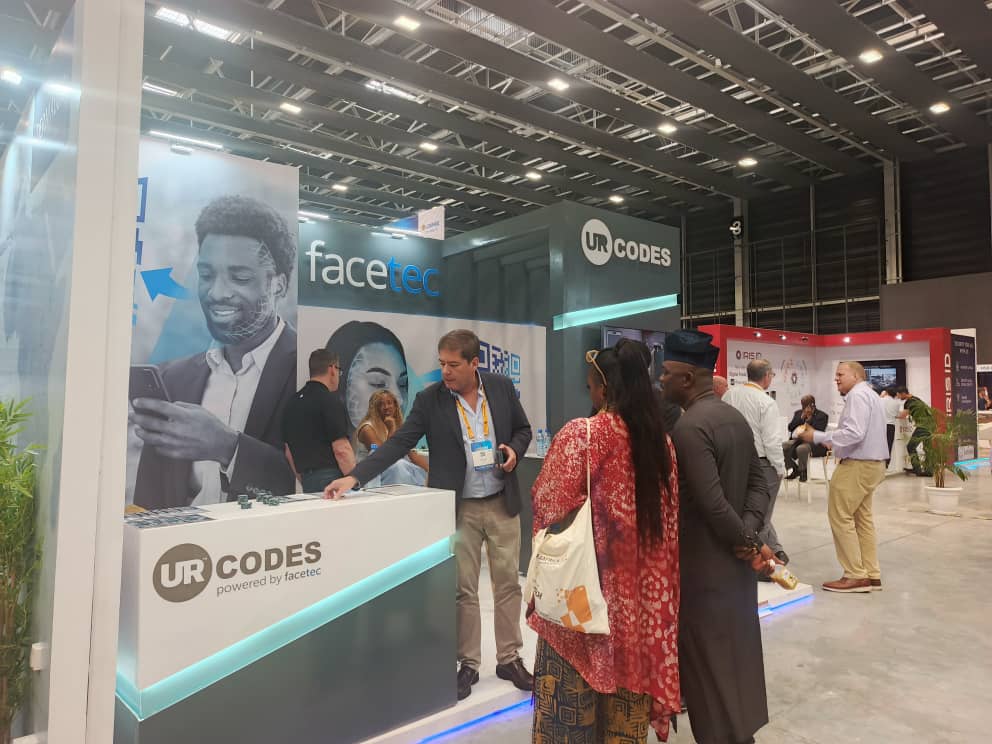
The suitcase-sized biometric enrollment kits that dominated the exhibitions at ID4Africa’s early AGMs are gone. Instead, exhibitors at ID4Africa’s 2026 AGM told Biometric Update that the leapfrog ahead of many Western countries to mobile identity credentials that can be read on or offline for high-assurance verification is now underway.
Improvements in capacity and knowledge-sharing has created demand for new technologies that can be implemented in digital identity applications more closely aligned to people’s actual needs. The response of most of the 110-plus identity technology providers in the exhibition hall at ID4Africa’s AGM to that market shift could be seen on the display tables and heard in conversation with vendors.
To hear more complete conversations with the biometrics and digital identity insiders mentioned below, check out the latest episode of the Biometric Update Podcast.
New and experienced market participants
Familiar faces at the exhibition for ID4Africa’s 12th year included Xperix, Innovatrics, FacePhi, Integrated Biometrics, Identy.io, Laxton, GET Group and Toppan, plus new participants like Image Match Design.
There were more African technology providers than ever before, including Senegal-based Oumou Group, Impact Palmares, Smile ID, Margins ID Group, Seamfix and Egypt Trust.
The African Digital Identity Hackathon 2026 final was held in a meeting room beside the main exhibition area, and demonstrated the fast-growing capabilities of African students to develop applications that use digital identity to improve people’s daily lives.
Trust-ID Innovators from Senegal won the competition, and team member Papa Tahibou Tall told Biometric Update that with the foundation of the TrustSeal solution validated, they plan to scale the solution in late-2026. The team will then target partnerships with infrastructure players like MOSIP.
Tall said the top benefit to he and his colleagues has been meeting identity ecosystem stakeholders, including some from his home country’s government who offered to help bring TrustSeal to production.
FaceTec was the event’s top sponsor and provided WiFi to attendees as the company promoted its cryptographically signed biometric visible digital seals, UR Codes. The potential for these kinds of machine-readable seals to serve the practical needs of African people and government programs was a major theme of the ID technology discussions at the AGM, as seen below.
Leapfrog to mobile digital ID
Hard-won experience and knowledge-sharing combined with the drive to solve real-world problems through identity recognition has led government buyers in Africa to view technology procurement differently, according to Iris ID CRO Mohamed Murad.
“They have very interesting questions because now they’re going beyond, ‘hey; I want to capture and I want a very simple device.’ They’re looking at ‘how can I provide immigration services? How can I make it easy for my citizens to enter the country?’”
Murad also notes the strides local integrators like Iris ID partner Margins have made in addressing local issues they have greater familiarity with than international providers, echoing a key take-away from the Hackathon.
“From the Western side, we think that they’re not looking at the advanced applications: They are very much looking at the advanced applications,” Murad says. “They are very much looking (at) how can they have more services for their citizens that biometrics can offer.”
Thales VP of Sales for Identity and Biometrics Solutions in West and Central Africa Alain Yana says governments across Africa more and more interested in a holistic approach to identity.
“That’s one point where Thales is relevant, because we have an end to end solution that we are able to provide to customers from enrollment through identity management to identity document issuance,” Yana says. “We cover the full scope of the identity lifecycle and process. That’s what’s interesting to our customers and prospects here at ID4Africa.”
Yana and Murad are aligned in seeing Africa leapfrog Europe and North America, largely passing over physical-first credentials in favor of mobile IDs.
Similarly, Cognitec VP of Sales and Marketing Mikael Fagerland told Biometric Update that “the interesting part with Africa is that they might not be stuck in the legacy systems that we are in other parts of the world.”
This allows African governments to go “straight to mobile” and innovative solutions.
In addition to its popular facial recognition solutions for airports and borders, Cognitec was displaying its facial age estimation at the event.
In terms of interest in biometrics enrollment, there are big difference between sub-regions, according to Yana. Countries in North and East Africa have mostly advanced quite far in their enrollment processes, but there is “still a lot progress to make” in many Central and West African nations.
The main issue they have is still the civil registration issue, which is impacting the rest of the identification process,” Yana points out.
The changes in priorities and increasing maturity in African identity systems have also led to shifts in the popularity of different delivery models, Regula Head of Business Development for Digital Identity Verification Products Yury Padrezenka says.
Regula has adapted its portfolio based on these modern market needs, and Padrezenka notes that “there a lot of projects where you can’t just come with a SaaS” offering at this point.
As digital IDs shift to mobile devices and software delivery models change, physical ID credentials are evolving as well.
Riaan Du Plessis, business development manager for HID’s FARGO printers, acknowledges that RFID is great, du Plessis, as “you can lock in your biometrics with encryption and keys and all of that, and that’s fantastic, but there’s a lot going on when it comes to integration and making that work.”
However, he says, “An easier approach and a more cost effective approach, for Africa especially, is for us to focus on QR codes.”
Du Plessis estimates that 90 percent of officials start by saying they want a card with a microchip. But despite design considerations, like ensuring sufficient space is left on the credential to make a QR Code large enough to include the necessary encrypted data, the choice can shorten timelines by eliminating custom materials and a complex integration with the personalization printer.
“The cost saving is massive,” he emphasizes. “You still have a high security card, you still have the same functionality when it comes to verification of those cards, but it’s also QR Codes so no expensive chips.”
A growing consensus among technology suppliers from across Africa and around the world is converging with the approach of a market that has matured significantly over the past several years. As African identity systems leapfrog the secure ID document approach popular in much of the Norther Hemisphere, expect to see more machine-readable seals like QR Codes, mobile credentials and local integrators.
Related Posts
-
 January 8, 2026
 -
 August 4, 2025
 -
 July 29, 2025
 -
February 11, 2026
-
 August 19, 2025
 -
 October 7, 2025
Article Topics
Africa | biometric enrollment | biometrics | digital identity | ID4Africa | ID4Africa 2026 | QR code

Comments