
EES faces scrutiny over border delays, proportionality
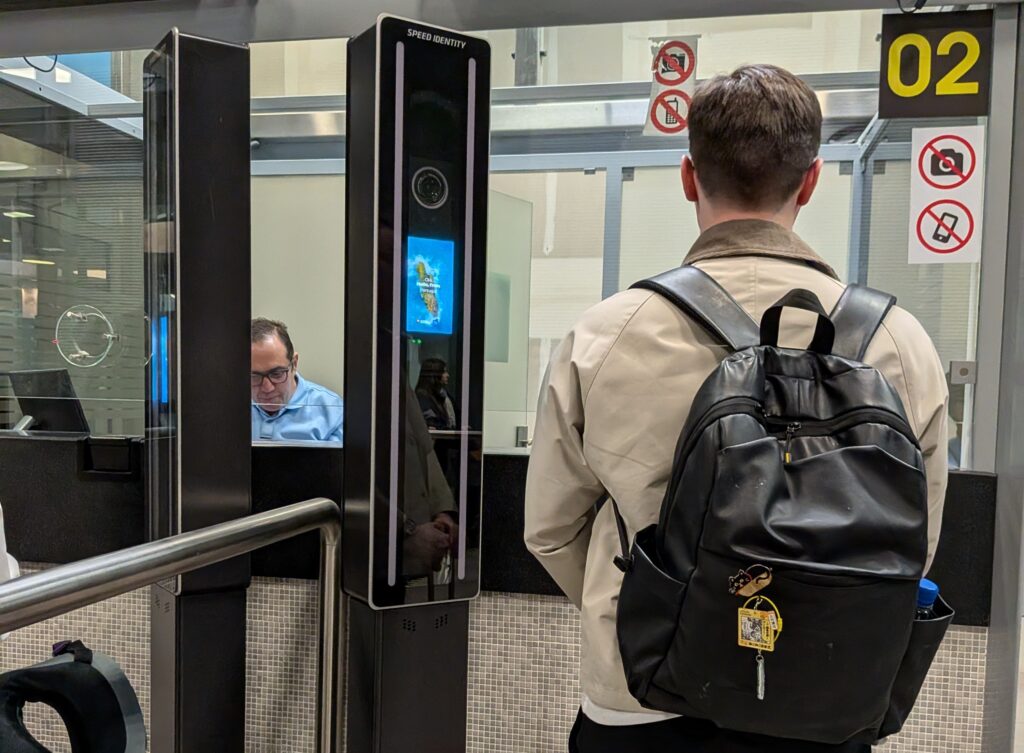
After Greece announced last week that it will no longer apply biometric registration for British passport holders, questions are arising whether other European countries will follow suit in exempting certain nationalities from the Entry-Exit System (EES). At the same time, legal experts are also debating whether border biometric data collection meets the proportionality requirements under EU data laws.
Will more countries follow Greece’s suspension for British tourists?
UK media reports note that more British holidaymakers are attempting to avoid long EES queues by switching to non-Schengen destinations. According to a survey by travel booking platform Holiday Extras, 35 percent of Brits changed their travel plans because of the EES, up from 31 percent in September.
Other countries may follow Greece’s example if they witness long queues during the May holiday period, Paul Charles, founder and CEO at the PC Agency, told The Telegraph. The first week of Europe’s EES, which fully rolled out on April 11th, was marred by hours-long wait times, missed flights and suspensions of biometric enrollment at some airports.
Several factors are working to pressure EU tourist destinations to consider EES exemptions and suspensions, most stemming from the Israel-U.S. war against Iran. Airlines are facing flight cancellations and increased jet fuel costs, while European countries are experiencing a decline in visitors from Asia and the Middle East. Many European travelers are also concerned about safety amid geopolitical volatility.
Popular destinations such as Spain, however, have denied they are considering exemptions for British tourists, per The Telegraph. Spanish airport operator AENA has reportedly issued instructions to stagger flight arrivals and temporarily divert families and passengers with reduced mobility to traditional stamping queues if the biometric queues exceed 25 minutes.
EES is ‘mass surveillance,’ says German lawmaker
In other EU states, different considerations regarding the EES are at play.
German Bundestag member Clara Buenger, a member of the oppositional Left Party (Die Linke), criticized the EES last week, stating that the system violates travelers’ fundamental rights and collects massive amounts of data without sufficient justification.
“The EU is merging massive databases without oversight and undermining the constitutional restrictions on data use,” Buenger told Anadolu news agency.
The former human rights lawyer and activist argues that law-abiding travelers are subjected to mass surveillance and that the line between migration and criminal prosecution is being blurred.
Debates about the proportionality of EES are not confined to the German Bundestag.
The EES is integrated with European databases such as the Visa Information System (VIS), the European Travel Information and Authorization System (ETIAS) and the shared Biometric Matching Service (sBMS). The integration allows law enforcement authorities and Europol to access the system’s data, including biometrics, during investigations into terrorist offenses and “other serious crimes.”
The latter term is broad enough to offer no meaningful limits in practice, legal researcher Samay Jain argues for the European Law Blog. The availability of biometric templates across the sBMS means the underlying architecture is “constitutively disproportionate.”
“Once biometric data is captured at the border for one stated purpose, it becomes permanently available across linked systems for purposes that were neither the original basis for collection nor ever subjected to an independent necessity assessment,” he writes.
This puts the EES in tension with several European regulations, including the EU Charter of Fundamental Rights, the proportionality doctrine developed by the Court of Justice in Digital Rights Ireland and Schrems II, Jain concludes.
Related Posts
-
 June 9, 2025
 -
July 7, 2025
-
 March 30, 2026
 -
 October 1, 2025
 -
 November 14, 2025
 -
 February 10, 2026
Article Topics
biometrics | border security | digital travel | Entry/Exit System (EES) | Europe

Comments